
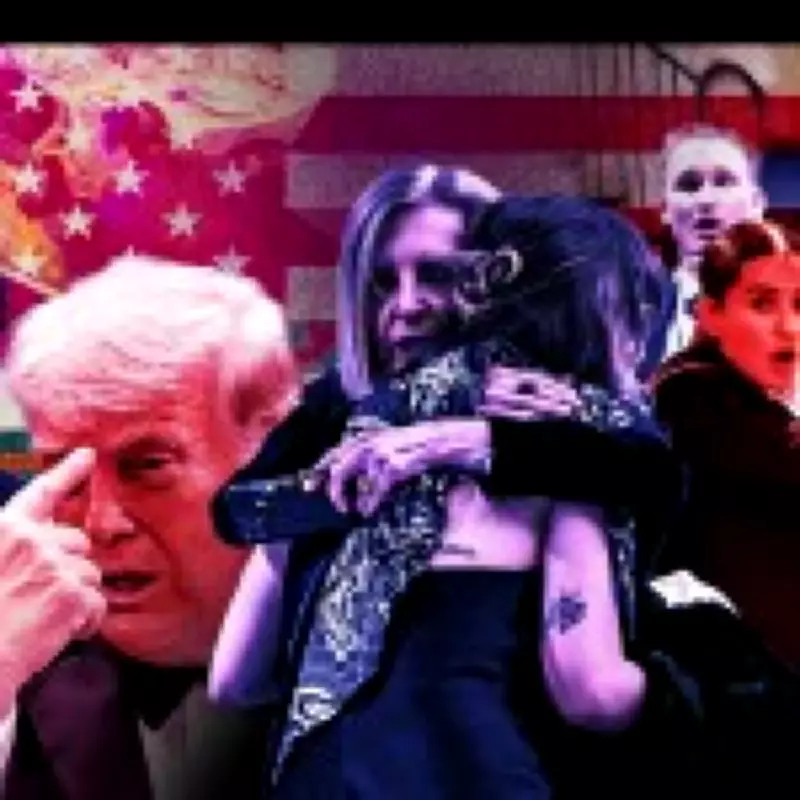
A journalist has revealed how she and many Americans have become numb to political violence, describing a feeling of helpless indifference when confronted with yet another shooting. Sarah Hooper, writing for Metro, recounted her reaction to reports of a gunman near Donald Trump over the weekend: she barely felt anything.
The Rise of Political Violence in Trump's Second Term
Since Trump retook office in January 2025, the United States has seen a surge in political violence and extremist actions. Hooper notes that this is not a new phenomenon, referencing a 1960s activist who said, 'Violence is as American as cherry pie.' She argues that layers of divisive elections, social media, and the chaos of the 2020s have desensitized a generation.
Personal Encounters with Violence
Hooper describes specific incidents: learning of Charlie Kirk's shooting while at a cocktail bar in Hoxton, hearing about Minnesota state representative Melissa Hortman's murder on a train, and receiving news of the Butler, Pennsylvania shooting at a birthday party. In each case, the initial shock faded quickly into numbness.
Psychological Explanations for Numbing
Dr Sanam Hafeez, a neuropsychologist, told The Cut that Trump's second term has taught Americans a 'learned passiveness'. She explains that this leads to a 'numbing effect' with passive doomscrolling and reduced engagement.
Dr Darren O'Reilly, a psychologist and AuDHD expert, adds: 'When you’re exposed to a threat over and over again, the brain just stops reacting at the same intensity. It’s not that people don’t care, it’s that they can’t stay switched on to that level all the time.'
The Role of Doomscrolling
Doomscrolling—endlessly reading gloomy news—exacerbates the problem. Dr O'Reilly explains that seeing ten or twenty distressing headlines back to back makes the brain process them as a constant threat, reducing the impact of each event.
'What may look like apathy is often overload. People aren’t disengaging because they don’t care; they’re disengaging because they’ve reached their limit,' he says.
Historical Context of Political Violence
Dr Dafydd Townley, a Senior Teaching Fellow in International Security at the University of Portsmouth, notes that 'political violence was normalised in the United States a long time ago.' He points to the American Revolution as its origin and Abraham Lincoln's assassination as a turning point, arguing that violence has always been a quiet undertone of American politics.
Hooper concludes that the numbness Americans feel is not due to a lack of empathy, but because they are inundated with chaos 24/7. The constant exposure has made political violence seem expected, even normal.




