
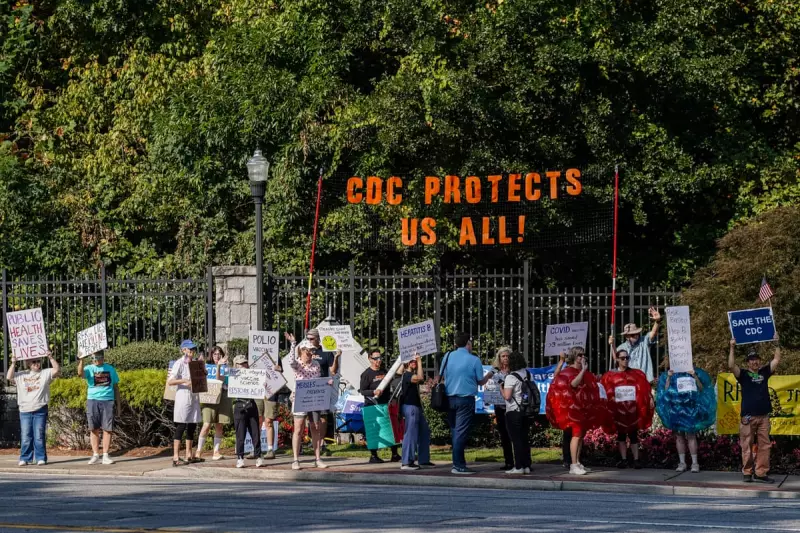
A controversial federal advisory panel in the United States could vote as early as this week to recommend scrapping the hepatitis B vaccine for newborn babies. This would mark a dramatic reversal of a public health policy that has been in place for over three decades.
A Radical Shift in Immunisation Policy
The two-day meeting of the Advisory Committee on Immunization Practices (ACIP), which concludes on Friday 19 September 2025, is being closely watched. The panel, now chaired by Dr Kirk Milhoan, was handpicked by the US Health Secretary, Robert F Kennedy Jr, who has long expressed distrust of established vaccine science.
Speaking to the Washington Post, Milhoan confirmed the committee would vote on whether to push for ending the requirement for newborns to receive a hepatitis B dose within 24 hours of birth. Instead, they are considering delaying the first shot by an unspecified interval.
The panel also plans to investigate whether the mandated childhood vaccine schedule has contributed to a rise in conditions like asthma, eczema, and other autoimmune disorders. "We're looking at what may be causing some of the long-term changes we're seeing in population data in children," Milhoan told the newspaper.
Scientific Backlash and Public Health Concerns
The potential policy change has alarmed much of the medical community. A 2023 study in the official journal of the US surgeon general found a 99% decline in acute hepatitis B cases among young people between 1990 and 2019, directly crediting infant immunisation.
The CDC and American Academy of Pediatrics first recommended the shot for all newborns in 1991. Any rollback is seen by experts as a dangerous disregard for proven science.
Kennedy's influence is already evident. Last month, the CDC, at his direction, altered its website to distance itself from decades of scientific consensus that vaccines do not cause autism. His appointed panel has also already advised people to consult a doctor before a Covid-19 jab and delayed the schedule for the combined MMRV vaccine.
Wider Political Battle Over Vaccines
Kennedy's efforts to overhaul US vaccine policy since his narrow Senate confirmation in February have met fierce resistance. At a heated congressional hearing in September, Democrats accused him of a "reckless disregard for science and the truth" and demanded his resignation.
Critics point to recent tragedies, such as three unvaccinated infants in Kentucky who died from whooping cough and unvaccinated children in Texas dying from measles, as evidence of the dangers of undermining immunisation programmes.
William Matthew London, editor of Quackwatch, stated: "The Centers for Disease Control and Prevention... is no longer a trustworthy source of health information." The panel's recommendations will go to the CDC's acting director, Jim O'Neill, for a final decision, placing the agency at the epicentre of a deepening political and public health storm.




