
Navy Withheld Critical Plutonium Data for Nearly a Year
The US Navy stands accused of concealing dangerously high levels of airborne plutonium at San Francisco's Hunters Point Naval Shipyard for almost a year before notifying city officials. Public health advocates allege the navy discovered radioactive material during testing in November 2023 but only informed authorities in October 2024.
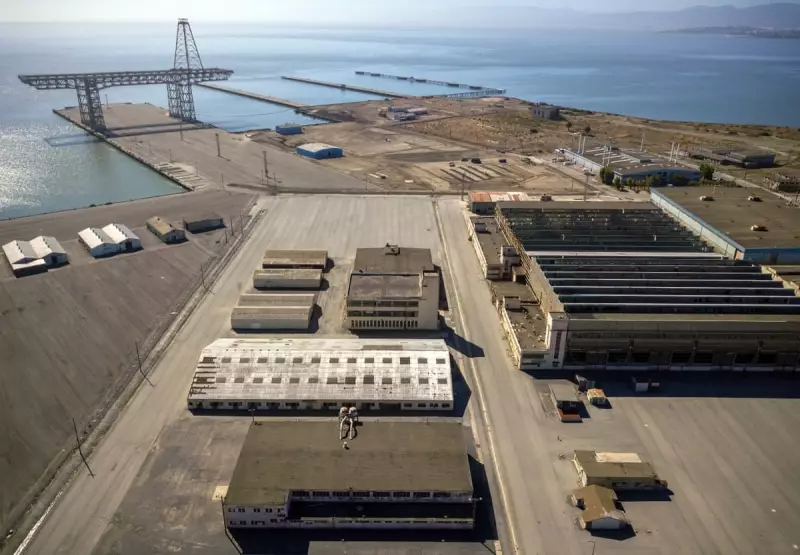
The detected plutonium levels exceeded federal action thresholds at the heavily contaminated 866-acre site, situated alarmingly close to residential neighbourhoods containing condominiums and public parks. This discovery represents the latest in a series of controversies surrounding radioactive material at Hunters Point, where the city plans to build up to 10,000 housing units alongside new waterfront commercial districts.
A History of Radioactive Negligence
Jeff Ruch, senior counsel with Public Employees for Environmental Responsibility, claimed the navy is attempting to avoid spending billions on proper cleanup. "It's been one thing after another after another," Ruch stated. "What else is in the closet? We don't know and we're not going to search the closet to find out."
The property served as a staging ground for nuclear weapons testing during the 1950s, when the navy decontaminated 79 ships irradiated during Pacific Ocean nuclear tests. This operation spread radioactive waste throughout the shipyard, leading the Environmental Protection Agency to designate it as a Superfund site in 1989, marking it among America's most polluted locations.
Lethal Legacy and Ongoing Health Risks
Nuclear experts estimate approximately 2,000 grams of plutonium-239 remains at Hunters Point, one of the most lethal substances known to humanity. Air exposure can cause cellular damage and radiation sickness, while inhaling just one-millionth of an ounce virtually guarantees cancer development.
The site contains numerous other toxic substances, including strontium-90 from secret navy research laboratories where animals were injected with radioactive material. In 2023, the navy and a contractor faced accusations of falsifying strontium-90 test results.
According to Steve Castleman, supervising attorney of Berkeley Law's Environmental Law Clinic, the navy collected 200 air samples in November 2023, with one sample registering twice the federal action threshold for plutonium. The navy subsequently claimed retesting showed non-detectable levels and maintains current exposure levels are safe, though they haven't provided supporting data to the public.
Michael Pound, the navy's environmental coordinator overseeing cleanup, apologised for the delayed disclosure at a recent community meeting. "I've spent a fair amount of time up here getting to know the community, getting to know your concerns, transparency and trust, and on this issue we did not do a good job," Pound admitted.
Inadequate Cleanup and Lasting Consequences
The EPA asserts it has "requested all of the data used by the navy so our agency could verify the findings ourselves" and will "prioritize the review of the Pu-239 results to make a final determination on what risk there is to the public."
However, Ruch characterised the EPA as a "98lb weakling" failing to protect residents. He revealed that the navy claims it didn't conduct nuclear work on 90% of the site, thus the EPA doesn't require radiation searches in those areas, despite radioactive material appearing throughout the shipyard.
Historical cleanup efforts were shockingly primitive, with workers initially using brooms to clean irradiated ships before sandblasting them and reusing the contaminated grit around the yard. The navy also sent ships carrying goats into blast zones, potentially spreading radioactive material through animal waste or incineration.
One parcel has already been transferred to developers, with residents reporting cancer clusters and other health problems they attribute to unremediated contamination. The proposed solution of capping the property with four inches of clean soil has been criticised as insufficient, particularly since several thousand tons of radioactive grit remain unaccounted for and buried in unknown locations.
As Castleman questioned regarding the navy's credibility: "Can you trust them to report this honestly?" The community continues seeking answers while living alongside one of America's most troubling nuclear legacies.




