
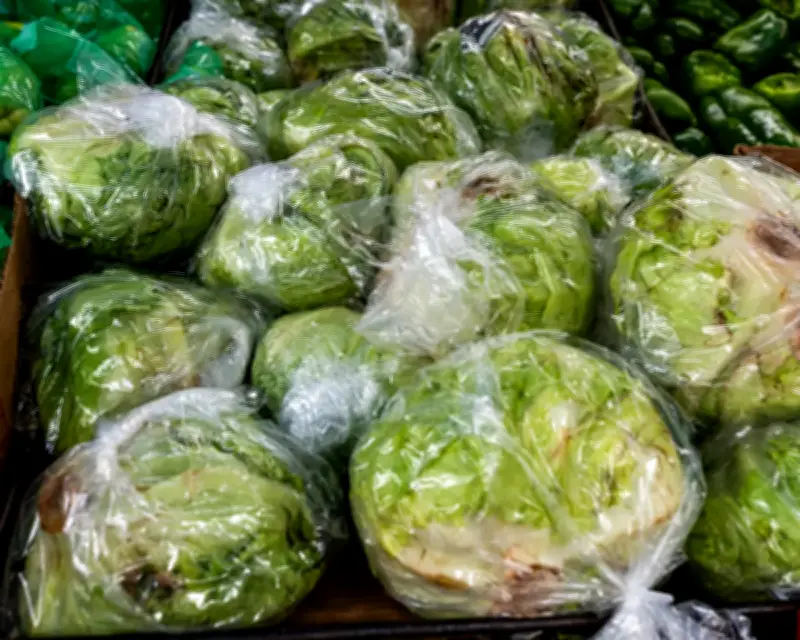
The US food traceability rule, which would help federal agencies quickly pinpoint sources of foodborne illness outbreaks, has been delayed for 15 years and is now set to take effect in 2028, months after a cyclosporiasis outbreak sickened more than 24,000 people and killed two in the Midwest. The rule, part of the Food Safety and Modernization Act (FSMA) of 2011, was originally set to go into effect in January 2026, but lobbying by retailers and food industry groups led to a 30-month delay announced in March 2025, and Congress later prohibited enforcement until July 2028.
Delayed Rule Could Have Prevented Outbreak
Consumer advocates argue that the delay undermines the law's purpose. "Congress recognized this issue in 2010 and asked [the Food and Drug Administration, or FDA] to develop solutions," said Sara Sorscher, an attorney specializing in food safety at the Center for Science in the Public Interest. "We are now 16 years in, and we still don't have enforcement of this rule that's meant to deal with exactly this type of situation."
The traceability rule requires enhanced record-keeping for high-risk foods—such as soft cheese, leafy greens, eggs, and peanut butter—for persons who manufacture, process, pack, or hold foods. This would allow the FDA to trace contaminated products back to the farm more quickly and accurately. However, implementation has faced resistance from some in the food supply chain, particularly retailers and manufacturers, according to lobbying reports.
Industry Lobbying and Delays
From 2024 to 2025, lobbyists for the Food Industry Association (FMI), Publix Super Markets, the National Retail Federation (NRF), and the International Food Service Distributors Association lobbied on the rule. NRF, whose board includes Albertson's, Walmart, and Target, requested inclusion of language in the FY24 Agriculture Appropriations bill to require FDA to work collaboratively with industry, and expressed concerns to the House, Senate, FDA, and CDC.
In March 2025, the FDA announced a 30-month delay in enforcement. In November 2025, Congress ended a historic 43-day government shutdown with a budget bill that included a provision prohibiting enforcement until July 2028. Consumer groups, including 11 advocates, sent a letter to lawmakers this month asking them to rescind the provision, citing a "crisis in consumer confidence" from the cyclosporiasis outbreak.
Impact on Outbreak Investigation
The current tracking system, derived from the Bioterrorism Act of 2003, relies on "one up, one back" record-keeping, which makes tracebacks difficult. David Lennarz, co-founder of Registrar Corp, noted that packaged salads often contain greens from multiple sources, complicating traceability. De Ann Davis, vice-president of science for the Western Growers Association, said farmers have collected data voluntarily for over a decade, but without a mandatory rule, tracing is incomplete.
Bill Marler, a leading food safety attorney representing more than 400 people sickened in the outbreak, said, "It's probably getting close to 30,000 people – 95% of all the illnesses occur in the 15 states that have Taco Bell and Taylor Farms." He supports the groups' letter and criticized the delays: "These grown white men who run these organizations are acting like 2-year-olds… They just don't want to be told what to do."
Industry Response and Future Outlook
FMI defended the delay, stating that the rule is "extraordinarily complex" and requires unprecedented coordination across the supply chain. They said they look forward to working with the FDA to ensure compliance without increasing costs or disrupting goods. The FDA has not commented on the new timeline.
As the rule's enforcement is now set for July 2028, food safety advocates continue to push for earlier implementation, arguing that faster traceability would reduce illnesses and restore consumer confidence. The cyclosporiasis outbreak, which led to a 16% drop in lettuce prices in July, underscores the urgency. Without the rule, the FDA must rely on voluntary cooperation, leaving gaps in the food safety net.




