
A damning report has concluded that all four UK governments failed to grasp the scale of the threat posed by COVID-19 or the urgency required in their initial response. As the nation reflects, we trace the complete timeline of how the pandemic unfolded across the United Kingdom.
The Early Days: First Warnings and Initial Lockdown
The crisis began far from British shores. On 9 January 2020, a 61-year-old man died in Wuhan, China, marking the first known death from a new coronavirus that would soon sweep the globe.
The virus arrived in the UK unnoticed. The first known UK victim was 84-year-old Peter Attwood from Chatham, Kent, who died on 30 January. Just days prior, on 10 February, the UK government had declared the virus a "serious and imminent threat to public health".
By 3 March, Prime Minister Boris Johnson published his government's Coronavirus Action Plan. In a move that would later be heavily criticised, Mr Johnson publicly stated he was continuing to shake hands, a practice he demonstrated with TV presenter Phillip Schofield and rugby captain Owen Farrell.
The economic impact became starkly clear on 19 March, when the Bank of England slashed interest rates to a record 0.1% and launched a £200bn quantitative easing programme. The next day, Chancellor Rishi Sunak unveiled the unprecedented furlough scheme, pledging to cover 80% of employees' salaries.
The most significant step came on 23 March, when the Prime Minister placed the nation into its first lockdown, telling people to stay at home or face fines. Pubs, restaurants, and non-essential shops were forced to close, and social mixing was banned.
Political Turmoil and Public Health Measures
The virus reached the highest levels of government. On 27 March, Boris Johnson, along with Health Secretary Matt Hancock, tested positive for COVID-19. The Prime Minister's condition worsened, and he was admitted to hospital on 5 April, spending three nights in intensive care. He later said "things could have gone either way."
That same day, the Queen delivered a rare special address to the nation, her fifth during her reign, thanking key workers and expressing confidence that the UK would succeed in its fight.
As restrictions began to ease in early June, the government faced its first major political scandal. The Prime Minister's chief adviser, Dominic Cummings, held a press conference on 25 May to defend his decision to drive from London to County Durham during lockdown, stating he had behaved "reasonably" and would not resign.
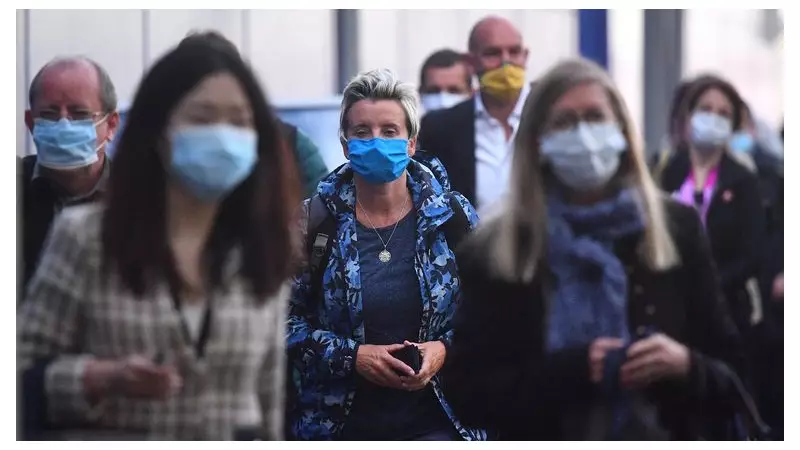
New public health measures became part of daily life. Face coverings became mandatory on public transport in England on 15 June, and in shops across the UK in the subsequent weeks and months.
Hope arrived in the form of vaccines. On 20 July, the UK secured access to 90 million doses through deals with pharmaceutical giants. This was followed by the triumphant start of the vaccination rollout on 8 December, when 90-year-old Margaret Keenan from Coventry became the first person in the world to receive the Pfizer/BioNTech jab.
A Long Road to 'Freedom Day' and Beyond
The path out of the pandemic was not straightforward. A planned relaxation of rules for Christmas 2020 was dramatically scaled back due to a new, fast-spreading variant. On 19 December, the Prime Minister announced tough new Tier 4 restrictions for London and the South East, effectively cancelling Christmas for millions.
With infection rates soaring, a third national lockdown was imposed on 6 January 2021. The grim milestone of 100,000 deaths was passed later that month, making the UK the first European country to reach such a tragic figure.
The exit from lockdown was cautious and phased, beginning on 8 March 2021. The much-anticipated "Freedom Day" finally arrived on 19 July 2021, when most legal limits on social contact were removed in England.
The pandemic's final chapter in the UK saw one last political casualty. Health Secretary Matt Hancock resigned on 26 June 2021 after admitting he had broken coronavirus rules. The emergence of the Omicron variant in December 2021 prompted a brief return to 'Plan B' measures, including compulsory face masks in indoor venues.
Finally, on 21 February 2022, Prime Minister Boris Johnson announced the lifting of the last domestic COVID restrictions in England, drawing a formal close to nearly two years of unprecedented rules that reshaped British society.




