
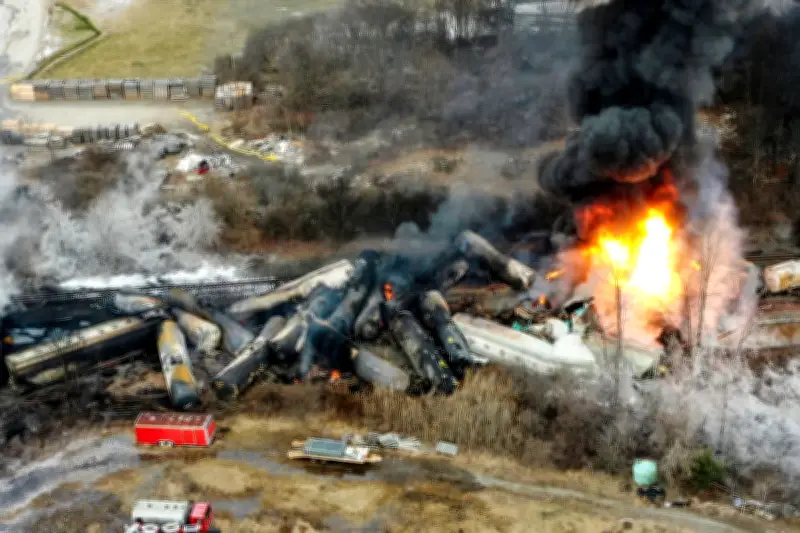
A new peer-reviewed pilot study suggests that residents of East Palestine, Ohio, exposed to the toxic aftermath of the 2023 Norfolk Southern train derailment may have suffered immune system damage. The research, led by the University of Kentucky, found that blood samples taken six months after the accident showed signs of chronic inflammation, altered cell counts, and elevated proteins that repair tissue damage, indicating that the body was still responding to toxic chemical exposures.
Study Details and Findings
The study compared blood samples from East Palestine residents, including city council member Jessica Boersma who lives less than a quarter mile from the derailment site, with a control group. Results showed higher numbers of red blood cells, higher hemoglobin levels, increased inflammation, and a rise in cells that attack and remove chemicals from the body. Additionally, residents had higher levels of tissue-repair proteins and lower numbers of infection-fighting cells.
“This pilot shows evidence that the bodies of those who lived in close proximity to the site were still fighting and repairing from a toxic exposure,” said Erin Haynes, a study co-author from the University of Kentucky. The research did not look for specific diseases but focused on immune system markers.
Background of the Derailment
In February 2023, dozens of cars on a Norfolk Southern train derailed and burned in East Palestine, a town of 4,700 at the edge of the Appalachian hills. The fire involved tankers carrying vinyl chloride, and officials conducted a controlled burn two days later to prevent a major explosion. The incident released dioxins at levels up to 14 times higher than the EPA’s safety threshold, along with volatile organic compounds (VOCs) and other toxic substances.
Residents reported headaches, rashes, respiratory problems, and hormonal disruptions. Boersma, a chiropractor, experienced gall bladder pain, irregular menstrual cycles, elevated cortisol levels, and an itchy throat and nose. “I feel pretty normal now, but I’m interested in getting involved because I want proof – clinical, and black-and-white data – that show health markers that I could follow,” she said.
Immune Response and Stress Factors
Haynes noted that VOCs can attack every organ, but research on how the body fights chemical exposures is limited. The immune response observed is “suggestive” of that fight. Stress, which is linked to immune dysregulation, may also play a role; residents reported severe anxiety after the wreck.
However, the study’s authors stressed that the findings do not prove the derailment caused the observed changes or that individuals will develop future health problems. Not all participants showed health issues. Ron and Peggy Caratelli, who live about eight-tenths of a mile from the site and evacuated for a month, had no markers of immune system impacts. Peggy noted that Ron has COPD from smoking, and they do not want to blame their problems solely on the wreck.
Next Steps
The researchers plan to check a larger group of residents and first responders for similar issues. The studies are part of a broader University of Kentucky-led effort to track long-term health problems in East Palestine residents.




