
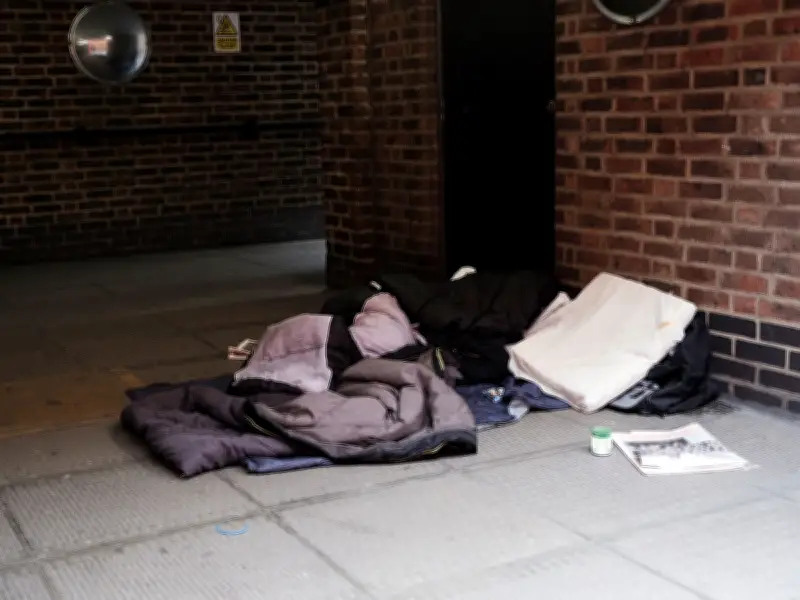
Lee, 54, returned to the UK from the United States after 11 years, seeking NHS mental health treatment for borderline personality disorder (BPD) and autism support. Within a month, he found himself homeless, couch-surfing with friends and eventually sleeping rough before receiving life-saving support from homelessness charity St Mungo's. He now lives in private rented accommodation in Lewisham, south-east London.
From America to homelessness
Lee moved to the US in 2014 and lived there for 11 years. Due to the prohibitive cost of treatment in America, he decided to return to his home country for mental healthcare. A friend paid for his flight, and he arrived in London in March 2026, hoping to access in-patient treatment. Instead, he had nowhere to go. He initially couch-surfed with friends but said 'you can only do that for so long.' After resorting to sleeping rough, he was referred to Streetlink, a service that connects people experiencing homelessness to support. A St Mungo's outreach worker contacted him.
Surviving on the streets
Lee waited at an A&E department to stay safe and warm. He said he was 'incredibly lucky' that after four hours a St Mungo's outreach worker arrived and arranged for him to stay in a shelter in London Bridge. 'It was basically a mattress on a floor, sharing a room with 12 other guys, and I was there for about four weeks,' Lee explained. He described the emotional difficulty of not knowing or trusting others in the shelter. 'You don't know that you can trust them. Can you trust them to not steal your stuff, not attack you when you're asleep?' He added that the feeling didn't go away until he moved on from the hostel.
Finding a path forward
While his basic needs were met, Lee found the long days difficult. He sought low-cost or free activities, volunteering at a church garden, attending theatres with discounted tickets, and visiting kitchens for meals and social connection. 'You really do feel invisible, and that's horrible, and it's incredibly hard to break out of,' he said. After four weeks in the hostel, he moved to single-person accommodation for three weeks, then was offered private rented accommodation in Lewisham. He now lives in a house of multiple occupancy, which he describes as 'lovely.'
Mental health support and volunteering
Lee accessed the mental health support he needed and was prescribed medication. While awaiting more comprehensive care, he began volunteering with St Mungo's to give back. 'I've been so lucky, and I've had so much help, and I desperately want other people to have that experience,' Lee said. He plays the ukulele to focus himself during depression, enjoys cooking, had four cats in America, and likes science fiction—elements featured in a mural at 220 Bethnal Green Road in east London as part of St Mungo's 'I Was Here' street art campaign.
Rough sleeping crisis in England
Last autumn, an estimated 4,793 people were sleeping rough in England on a single night, a 171% rise since records began in 2010, according to St Mungo's. However, 77% of people the charity helped off the streets in 2025 were not seen to have returned to rough sleeping. Lee said: 'I think what was important was that St Mungo's offered these opportunities. It was up to me to take them.' He hopes to eventually go into care and support work, and wants to raise awareness of the realities of homelessness.




