
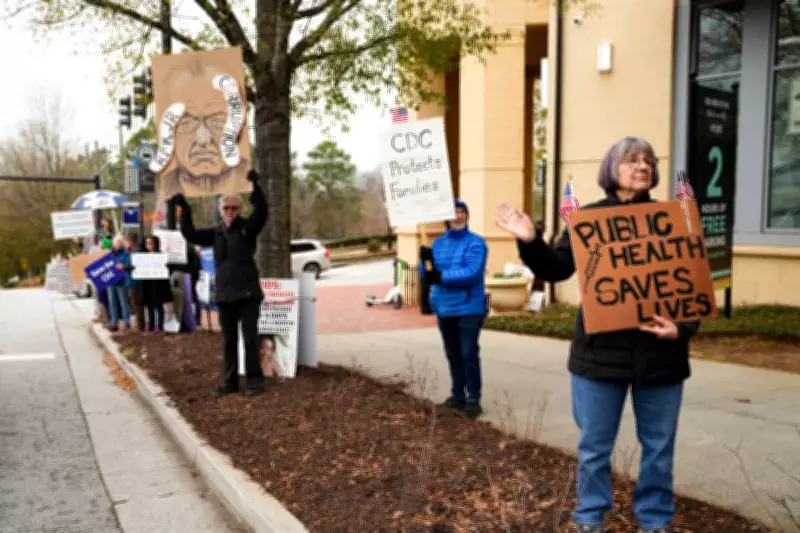
Public Health Takes Center Stage in US Midterm Campaigns Amid Political Polarization
In a significant shift, public health has emerged as a central issue in the 2026 US midterm campaigns, with candidates across the political spectrum addressing systemic challenges and grassroots movements pushing for reform. This focus comes after years of politicization, particularly under the Trump administration, which critics argue has undermined healthcare systems and scientific integrity.
Grassroots Initiatives and Campaign Strategies
The grassroots organization Defend Public Health has launched the People's Health Platform, a set of guiding principles aimed at prioritizing public health in political campaigns. Key tenets include ensuring universal healthcare access, protecting sexual and reproductive rights, preparing for climate crises and pandemics, and implementing wealth taxes on billionaires. According to Richard Pan, a pediatrician running for California's sixth congressional district, public health has long been neglected and politicized, necessitating urgent action.
Nina Schwalbe, a public health leader campaigning in New York's 12th district, criticized the Trump administration for slashing funding and spreading misinformation, labeling these actions as "malice, neglect, and ignorance." She emphasized that the new platform is non-negotiable for candidates, serving as a foundation for equitable and bolder health policies.
Challenges and Proposed Solutions
Under Robert F. Kennedy Jr., the Department of Health and Human Services has faced scrutiny for cuts to childhood immunizations and public health funding, as well as proposals to limit gender-affirming care. Elizabeth Jacobs, a professor emerita at the University of Arizona and founding member of Defend Public Health, highlighted the need to reimagine public health beyond pre-existing structures, ensuring it serves all communities effectively.
Schwalbe advocates for lowering drug prices, expanding Medicare and Medicaid, and eventually moving toward a single-payer healthcare system. She stressed that healthcare access should not be determined by socioeconomic status or geography. Jacobs added that universal healthcare is paramount, noting it as the most critical aspect of public health in her career.
Broader Implications and Future Directions
The platform also calls for restoring scientific research funding, combating health inequalities, and rejoining international health bodies like the World Health Organization. Pan emphasized the need for stable public health funding, comparing it to essential services like fire departments, and suggested insulating public health from political interference to maintain integrity.
With rural hospital closures, rising insurance costs, and disease outbreaks, Jacobs noted growing public awareness of health policy impacts. She criticized the administration's individualistic health approach, arguing it neglects systemic barriers. Schwalbe concluded that healthy democracies require healthy populations, making public health a bipartisan concern that transcends political divides.
Defend Public Health plans to engage candidates from all parties, publicly endorsing those who support their platform, and will release detailed implementation strategies post-election to drive lasting change.




