
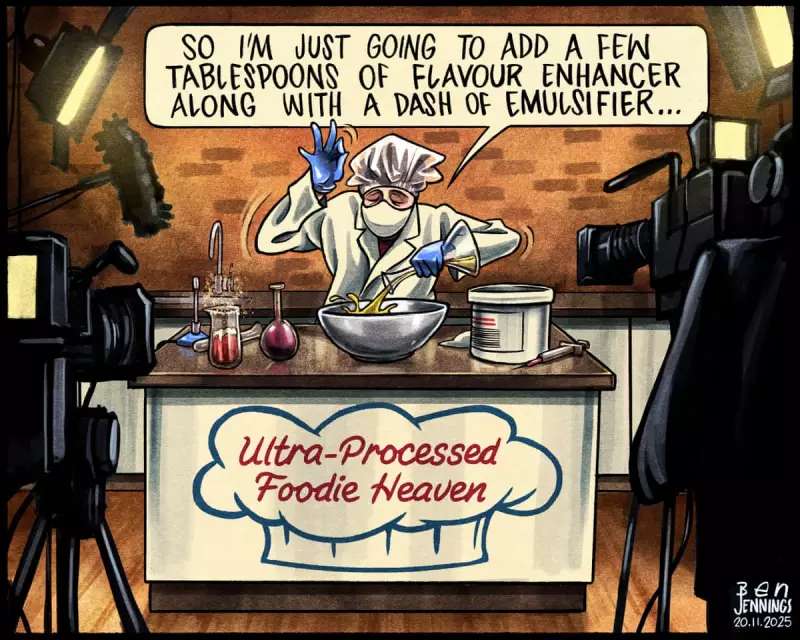
Renowned political cartoonist Ben Jennings has delivered a striking visual commentary on the growing health crisis surrounding ultra-processed foods in British diets. His latest work, published on November 19, 2025, powerfully illustrates the hidden dangers lurking within everyday supermarket purchases that millions consume without understanding the potential consequences.
The Hidden Dangers in Our Shopping Baskets
Jennings' cartoon masterfully depicts how ultra-processed foods have become embedded in modern British life, often disguised as convenient meal solutions. These products, typically containing numerous artificial additives, preservatives, and industrial ingredients not found in home kitchens, now dominate supermarket shelves across the United Kingdom. The artwork highlights the stark contrast between what consumers believe they're buying and the chemical-laden reality of these food products.
Research increasingly shows that regular consumption of ultra-processed foods contributes significantly to rising obesity rates, heart disease, and type 2 diabetes across the population. Jennings' visual narrative emphasises how these products are engineered for maximum palatability and shelf life rather than nutritional value, creating what many health experts describe as a public health time bomb.
Understanding the UPF Phenomenon
Ultra-processed foods represent the fourth category in the NOVA food classification system, distinguishing them from minimally processed ingredients and traditionally prepared foods. What makes Jennings' cartoon particularly effective is its ability to communicate complex nutritional science through accessible imagery, showing how these products undergo multiple industrial processes and contain ingredients rarely used in home cooking.
The cartoon specifically addresses how UPFs now constitute more than half of the average British family's food purchases, according to recent dietary studies. This alarming statistic reflects a dramatic shift in eating habits over recent decades, with traditional home-cooked meals increasingly replaced by convenience foods that prioritise speed over health.
A Call for Consumer Awareness and Action
Jennings' work serves as both warning and wake-up call, urging British consumers to examine their shopping habits more critically. The cartoon encourages viewers to question food labels and recognise the marketing tactics used to make ultra-processed products appear healthier than they actually are. It powerfully illustrates how these foods have become normalised in our culture despite their potential harm.
Health campaigners have praised the cartoon for bringing much-needed attention to an issue that affects families nationwide. As evidence mounts about the long-term health impacts of regular UPF consumption, Jennings' artwork contributes to growing public discourse about food quality, corporate responsibility, and personal health choices.
The timing of the cartoon coincides with increasing calls for government action, including clearer food labelling, restrictions on marketing to children, and better public education about nutritional choices. Jennings uses his distinctive artistic style to make these complex policy issues accessible and memorable for the general public.
As Britain continues to grapple with rising healthcare costs and public health challenges, Jennings' cartoon reminds us that sometimes the most powerful messages about our wellbeing come not from scientific journals or government reports, but from the sharp wit and clear vision of a political cartoonist holding up a mirror to our eating habits.




