
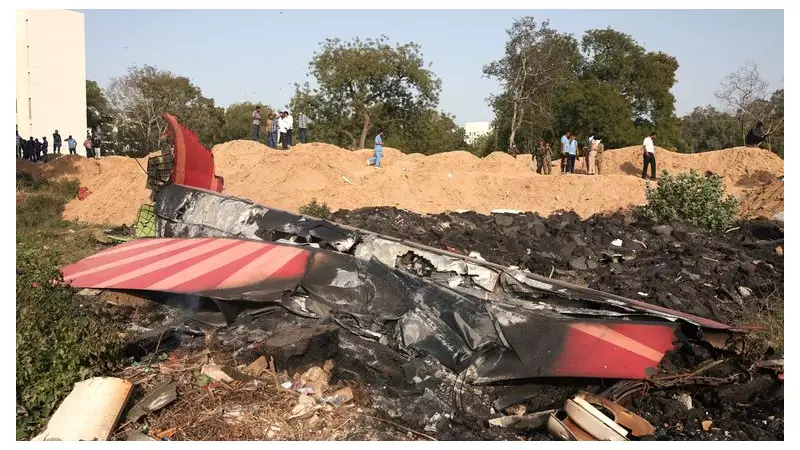
A damning coroner's report has revealed that mortuary staff in London were exposed to "dangerously high" levels of toxic chemicals while handling bodies repatriated after the fatal Air India plane crash in June.
Significant Chemical Hazard Uncovered
Senior coroner Fiona J Wilcox, for inner west London, stated it became clear there was a "significant chemical hazard" when workers at the Westminster Public Mortuary began opening coffins sent from India. The bodies of victims from Air India Flight 171, which crashed shortly after take-off from Ahmedabad, had been preserved for repatriation.
The crash in June killed 241 people on board and 19 on the ground. Among the deceased were 53 British nationals. Only one passenger survived the disaster.
Formalin Concentrations Posed Severe Risk
The report, released ahead of upcoming inquests, found the repatriated bodies had been wrapped and saturated in high concentrations of formalin—a solution containing formaldehyde—before being placed in lined coffins. While formalin is commonly used to preserve remains for international repatriation, the coroner indicated the levels detected were extreme.
"Levels of formalin were found to be dangerously high, at apparently 40%," Coroner Wilcox wrote. She explained that with heat and light exposure, formalin can break down to release highly toxic carbon monoxide. If it mixes with ammonia, which can occur during decomposition, it can release lethal cyanide.
Both carbon monoxide and cyanide were subsequently detected in the mortuary "at dangerous levels" after the coffins were opened and the bodies unwrapped.
Systemic Failures in Mortuary Safety
The coroner's report, known as a prevention of future deaths report, highlighted a critical lack of awareness and preparation. "Many of the mortuary users appeared unaware and were surprised by the nature of the danger," the coroner said.
She identified a systemic under-appreciation of the dangers posed by formalin across mortuaries. Despite frequently receiving bodies preserved with the chemical, environmental monitoring is "not routinely available" in either public or hospital mortuaries. Consequently, appropriate protective equipment is often not available or used, exposing staff to serious health risks, including potential cancer from long-term exposure and risk of death from acute exposure.
The report has been sent to the Department of Health and Social Care and the Ministry of Housing, Communities and Local Government. The recipients have 56 days to respond with plans for action to prevent similar incidents. Sky News has contacted both departments for comment.
The report does not state that any workers have fallen ill, nor does it clarify who was responsible for the high concentration of formalin used. However, it serves as a stark warning about the need for improved safety protocols and monitoring in mortuary facilities across the UK.




