
Lethal Summer Heat Threatens Migrants at US-Mexico Border
As questions continue to surround the deaths of six individuals discovered inside a sweltering railway car in Texas, immigration advocates are warning that the United States is about to enter the most hazardous period of the year for migrants undertaking the dangerous journey across the southern border.
Preliminary findings from the Webb County medical examiner indicate that at least one of the six victims, found in the city of Laredo, succumbed to hyperthermia—a condition where the body is overwhelmed by extreme heat. The same cause is likely for the other five. The victims, ranging in age from 14 to 56, were from Mexico and Honduras. Laredo, a bustling land port with heavy trade between Mexico and the US, led investigators to suspect smuggling early on. Investigators believe the migrants boarded a Union Pacific train near Del Rio, Texas, and became trapped inside a sealed railcar during the journey to Laredo.
Paul Nixon, a retired teacher and volunteer with the Arizona-based humanitarian group Green Valley-Sahuarita Samaritans, understands why migrants might hire a smuggler to board a train, despite the high risks. “We’ve talked to people who have just had brutal on-foot overland travel with so much cartel abuse, so if there was an alternative, it just seems to me that that might be one of the things that people would do,” Nixon said. He noted that another potential benefit of train travel is avoiding the blistering heat that is worsening in states like Arizona. “But people will get into a boxcar and somebody will close the door and just forget that they’re there,” he added. “I mean, that’s a death sentence right there.”
According to non-profits like Humane Borders and No More Deaths, along with data from Pima County, Arizona, hundreds of people die each year in the borderlands of northern Mexico and the southern US, though the true number is unknown. A large portion of these deaths are linked to scorching temperatures, which can regularly reach 118°F in places like the Sonoran Desert—a frequent route for migrants heading to Arizona. Laurie Cantillo, board chair of Tucson-based Humane Borders, says most heat-related deaths occur from May to September, with July being the peak month. Her organization educates the public about border-crossing deaths and maintains water stations for migrants traversing the Sonoran Desert.
Just a day after the Laredo deaths were reported, Cantillo was conducting heat-awareness training for about 25 volunteers. “What happened in Laredo is the most painful reminder that many of the victims of heat are children, young children,” she said, referring to the 14-year-old boy among the six victims. “Heat exposure and dehydration is a horrible way to die. People become confused. Their skin becomes parched and dark in color. They may start tearing clothes off. They’re delusional; they drink their urine.” Cantillo has witnessed these symptoms firsthand. A couple of years ago, she and her volunteers encountered a group of about two dozen Indigenous Ecuadoreans seeking asylum, walking through the desert in 100°F heat. “They were huddled against the border wall, trying to take advantage of what meager shade it provided,” Cantillo recalled. The group, without food or water, included a pregnant woman and a nursing mother. Some were vomiting from heat, a key sign of hyperthermia. Cantillo’s group provided water and wet bandanas before border patrol agents arrived and took the people away. “I was shaken by the experience and what might have happened had we and the border patrol not come along,” she said. “It’s a day I will never forget.”
Cantillo is friends with Dora Rodriguez, a prominent immigrant rights activist in Arizona. In July 1980, then 19-year-old Rodriguez survived one of the deadliest migrant desert tragedies in modern border history. After fleeing civil war in El Salvador, she and 25 others became lost in the Arizona desert for five days in temperatures above 110°F; their smuggler lost his way. Thirteen died before border patrol agents rescued the survivors near Arizona’s Organ Pipe region. A widely circulated Associated Press photo showed a barely conscious Rodriguez being carried to safety. “This is how hell feels,” Rodriguez remembered. “Your body is just screaming for water.”
But critics say border patrol often becomes another obstacle for migrants during the deadly trek, not just due to fear of capture. Jenn Budd, a former border patrol agent turned activist, says agents are taught to vandalize water jugs left in the desert by groups like Cantillo’s. Cantillo adds that far-right militias also vandalize water stations. “The literal education that you get in the field from this is it allows them to further their invasion into our country,” Budd said. “And if they really need water at any given time, they could just hit one of those 911 beacons or use their cell phone to call us, and we’ll go save them.” In response, a border patrol spokesperson said agents act with “integrity” and frequently risk their lives to save migrants, carrying extra water, electrolytes, sunscreen, and cooling packs. The spokesperson added, “The US border patrol reiterates that the border is closed and that the dangers of heat exposure can be easily avoided by not crossing the border illegally.”
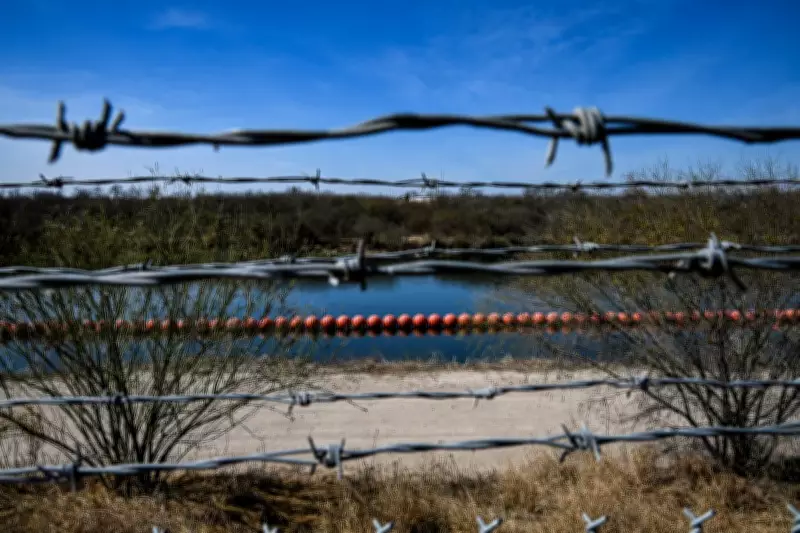
Claims of a closed border are contradicted by border patrol’s own data, showing thousands of apprehensions each month in 2026. Veterans say migrants are being pushed into more dangerous desert areas, increasing risks of dehydration and heat exposure—a policy known as “prevention through deterrence.” Nixon calls it “deterrence through death.” He and his wife, Laurel Grindy, have conducted humanitarian missions for eight years, driving remote desert roads in southern Arizona to leave water, food, shoes, and emergency supplies. “Right along the end of the border wall where we used to meet quite a few people each day, there’s just miles of concertina wire,” Nixon said. “The net effect of that is that they are forcing people farther and farther away from ports of entry and into wilder and wilder country. That’s what it’s been since Bill Clinton’s presidency: make people go the long way, make them suffer, let them die.”
Even as sightings decrease, people continue seeking a better life. A new report from UC Berkeley Law’s Human Rights Clinic shows climate change acts as a “threat multiplier” in Central America, intensifying poverty, food insecurity, and violence that drive migration. Based on surveys of migrants in Mexico, most had experienced multiple climate disasters before leaving. “The impacts of climate change—the health impacts and the disasters—leave people in greater and greater precarity,” said study author Helen Kerwin. “They leave them less able to be resilient in place, and migration is the viable option.”
Activists like Rodriguez worry that inadequate climate responses will worsen the threat multiplier, driving more people to the US despite extreme heat dangers. This, she fears, could turn the desert around her Arizona home into “more of a graveyard.” “When people understand what the heat does to you, it’s not something you’d wish on your worst enemy,” she said. “But people keep coming, so what does that tell you?”




