An AI system used to predict how much Kenyans can afford to pay for healthcare has systematically driven up costs for the poor, an investigation has found. The system, a key electoral promise of President William Ruto, was launched in October 2024 to replace Kenya's decades-old national insurance system. Billed as 'accelerating digital transformation,' it aimed to expand access to care for Kenya's large informal economy, which includes day labourers, hawkers, farmers, and non-salaried workers who make up 83% of the workforce.
Flawed Algorithm Overcharges Poor, Undercharges Rich
'No Kenyan will be left behind,' Ruto said during his 2023 presidential campaign, promising affordable healthcare for all. However, his solution has sparked protests and anger, as healthcare contributions for millions are calculated via a formula described as 'flawed' and lacking transparency. The system, which Ruto described as AI-powered, uses a predictive machine learning algorithm rather than recent advances in artificial intelligence like large language models. It determines contributions through a means-testing process.
Through months of investigation, reporters at Africa Uncensored, in collaboration with Lighthouse Reports and the Guardian, obtained key details of the system and audited how it works. The findings reveal that from the start, it systematically overcharged the poorest Kenyans by overestimating their incomes while undercharging the wealthiest by underestimating their incomes.

Volunteer Witnesses Hardship
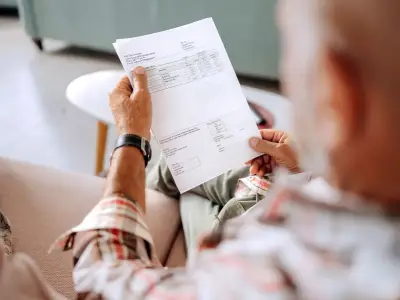
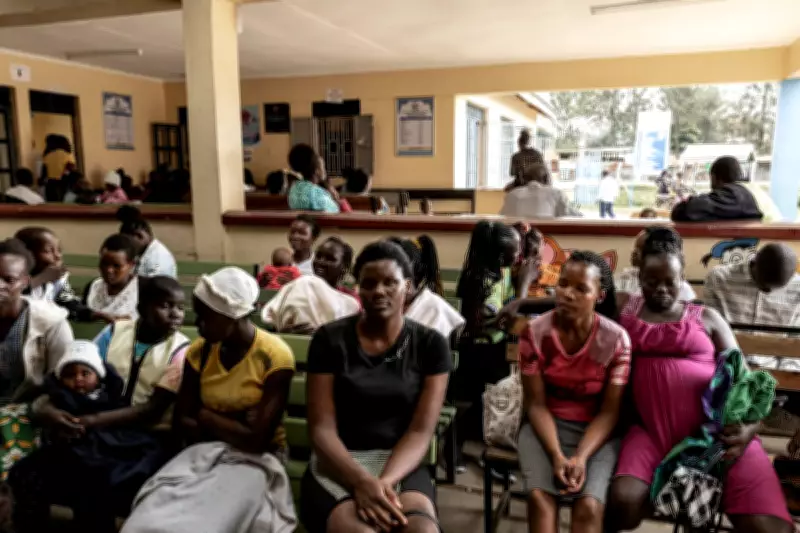
Grace Amani, a mother of 10, works as a volunteer registering households for the system. She asks intrusive questions about toilet types, roofing materials, and radio ownership. People are often confused, and some fear they are under investigation. When the form is complete, the algorithm calculates the household's annual public health insurance premium. The people Amani registers are among the poorest in Nairobi, yet most are charged fees they cannot afford, often between 10% and 20% of their meagre incomes. She has seen critically ill people denied treatment because they cannot pay the AI-determined amount. 'People are dying, people are suffering,' she said.
Systemic Failures and Criticism
Since its launch, the Social Health Authority (SHA) has faced criticism for misclassifying people and setting unaffordable premiums. Kenyans without private insurance who do not pay SHA premiums risk being turned away from health facilities or facing steep hospital bills. On social media, Kenyans share stories of unaffordable charges. One single mother wrote, 'God have mercy on me,' after her monthly contribution was set at 3,500 Kenyan shillings.
David Khaoya, a health economist who advised Kenya's health ministry, said the system's constraints meant it could either correctly assess poor households or rich ones. The government chose to prioritize accurately evaluating the wealthy, even if it meant overcharging the poor.
Proxy Means Testing: A Flawed Tool
Kenya's algorithmic healthcare system is based on proxy means testing (PMT), a method used by the World Bank to estimate incomes based on possessions and life circumstances. PMT has been used in World Bank-funded programmes across Africa, Asia, and the Pacific, often as a condition for loans. In Kenya, volunteers like Amani register households' details and feed them into an opaque algorithm. The audit tested the system against thousands of real households and found it overestimated incomes for many. For two farmers, income was predicted as twice what it actually was because they have electricity and own their homes.
Similar PMT systems have spread worldwide, but researchers have found they often fail. One scheme in Indonesia excluded 82% of its target population, and another in Rwanda had a 90% error rate. In Kenya, the SHA system appears to overcharge more than half of poor households while underestimating incomes of higher-income households.

Lack of Trust and Financial Strain
Means-testing algorithms are opaque and reduce faith in government services, said development economist Stephen Kidd. 'It feels like a lottery,' he said. In Kenya, the system has led to widespread frustration. A report by IDinsight, shared with the government before implementation, found the system flawed and 'inequitable, particularly for low-income households.' Despite this, Kenya deployed the system. Of more than 20 million people registered for SHA, only 5 million regularly pay their premiums. Some hospitals report large deficits due to unpaid reimbursements. In March, former deputy president Rigathi Gachagua predicted the SHA would collapse within six months.
Dr Brian Lishenga, chair of Kenya's Rural and Urban Private Hospitals Association, called the system 'an experiment that has failed.' He added, 'It's a really poor tool for identifying poor households. It's a great tool for helping the government run away from responsibility.'