
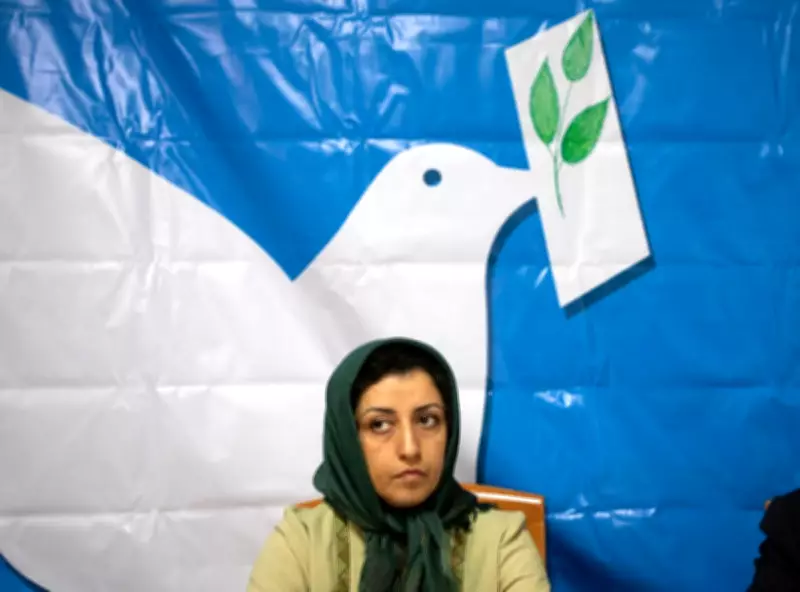
Narges Mohammadi’s Harrowing Account of Solitary Confinement
Narges Mohammadi, the Iranian Nobel peace prize laureate currently held in critical condition in Iran, has provided a chilling description of her incarceration in an exclusive excerpt from her autobiography, smuggled out of prison at immense personal risk to fellow prisoners and visitors. The writings detail the psychological torture of solitary confinement, the brutality of interrogations, and the deliberate medical neglect she believes is a strategy to eliminate opposition.
The Cell: A World Without Time
Mohammadi describes her cell as having no ventilation, with a high window covered by a perforated metal sheet that allowed only thin strands of sunlight to mark day and night. Solitary confinement, she writes, distorts time itself: "The hands of the clock are gone; day and night pass without measure. Time becomes nothing but a narrow beam of light slipping through the small holes in a metal sheet." She avoided afternoon naps for fear of losing her grip on time entirely, as even a short sleep inside the cell felt like years had passed. The cell is heavy, she says, with a density that compresses time, making it feel wrinkled and still. "When you stare at the tiny holes in the metal sheet, hoping to catch the slightest change to remind you that time is passing, nothing shifts."
The Interrogation Process: Blindfolded and Terrified
When interrogators came, a bell shattered the silence, and a female warden would retrieve her. Mohammadi was ordered to put on a blindfold and a chador before stepping out, then led through a tarpaulin curtain that smelled foul. The interrogators, all men, would take custody and walk her through the main corridor. In the interrogation room, she sat frozen on a plastic chair, blindfolded, until ordered to lift it. The interrogator, seated behind a small wooden desk, spoke harshly and aggressively, accusing her of involvement in an "American espionage project" through the Defenders of Human Rights Center. After each session, she was led back by holding the end of the interrogator's prayer beads, which she found repulsive—a stark contrast to the sweet childhood memories of her grandparents' prayer beads.
The Psychological Impact of Solitary Confinement
Mohammadi reflects on solitary confinement as one of the great unknowns, filling prisoners with terror and dread. She recalls protesting the use of solitary confinement before her arrest, informed by a psychiatrist wife of a detainee who described it as "white torture" that systematically breaks a person down through isolation, fear, and sensory deprivation. For Mohammadi, it felt like being a child trapped in the arms of a monster. In the first days, she was denied fresh air and struggled to move under an intensified gravity. The blindfold and orders, she writes, breed fear, which multiplies in an environment of terror and repression. The heavy metal door, which opens only from the other side, becomes more merciless than concrete walls.
Medical Neglect: A Deliberate Strategy
Even simple medical checkups required clearance from multiple security and judicial agencies. Mohammadi believes the neglect is not accidental but a deliberate strategy to silently eliminate opposition: "Authoritarian regimes do not always need an executioner’s rope. Sometimes, they simply wait for the human body to fail—and then make sure no help arrives."
Background and Current Condition
Mohammadi has been arrested 14 times for her activism, focusing on women’s rights and ending the death penalty. She has been sentenced to over 40 years in prison and 154 lashes, with an additional 18 years pending. Awarded the Nobel peace prize in 2023 during the Women, Life, Freedom protests, she was released temporarily in December 2024 due to health crises but violently re-arrested a year later. Her health deteriorated severely in 2026, with weight loss exceeding 20 kilograms, and she was found unconscious after an apparent heart attack in March. Her family says her ongoing detention and refusal of proper medical care constitute a "slow execution."




