
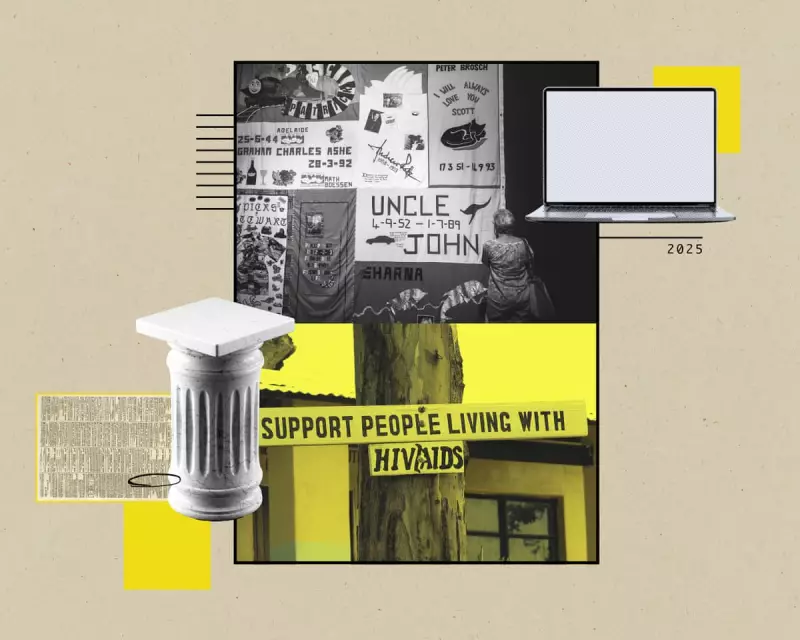
In the 1980s, Australia faced a terrifying public health crisis as HIV/AIDS emerged, shrouded in fear and misinformation. The disease first appeared among marginalised communities, leading to widespread discrimination and even calls for forced imprisonment of those testing positive.
The Power of Community Response
Researchers now describe the Australian response to HIV/AIDS as both a historical phenomenon and a public health model worth following. Its remarkable success stemmed from community-led initiatives that transformed the nation's approach to the pandemic.
Unlike comparable countries such as the US and Britain, which saw rising HIV/AIDS diagnoses well into the 1990s, Australia peaked in 1988 followed by a sharp decline. This achievement came through safe-sex campaigns designed by activists and supported by state and commonwealth governments that recognised moralising about sex wouldn't prevent transmission.
World AIDS Day and Memorial Practices
Public health experts worldwide understood the challenge of overcoming shame and stigma surrounding AIDS. The World Health Organization created World AIDS Day on 1 December 1988 as a weapon against misinformation.
In queer communities, the day served memorial and political purposes. By 1988, just six years after Australia's first diagnosis of what was initially called Gay Related Immune Disorder (GRID), memorial practices were evolving to process overwhelming loss.
That year in Sydney, World AIDS Day became a moment for affected communities to gather. Activists, government leaders, health workers and carers displayed the Australian AIDS quilt for the first time, with Reverend Jim Dykes reading the names commemorated on its panels.
The evening saw a rally in Martin Place that combined activist demands for government funding, thanks to volunteer carers, and memorials for lost lives. This event would grow to attract nearly ten thousand people in the Domain in subsequent years.
Turning Point and Lasting Impact
The worst of Australia's AIDS crisis was brought under control through successful safe-sex campaigns, needle exchanges, and the 1996 emergence of combination therapies that transformed HIV/AIDS from terminal to chronic diagnosis.
There's a heartbreaking historical irony in this success story. Because most gay men started wearing condoms by the mid-1980s, HIV/AIDS remained remarkably concentrated, with 80-90% of diagnoses among men who had sex with men in the late 1990s.
Today, we understand HIV/AIDS as a pandemic experienced as interconnected epidemics shaped by local conditions. The Australian model demonstrates how public health catastrophes can be managed when government policy is informed by community knowledge and expertise.




