
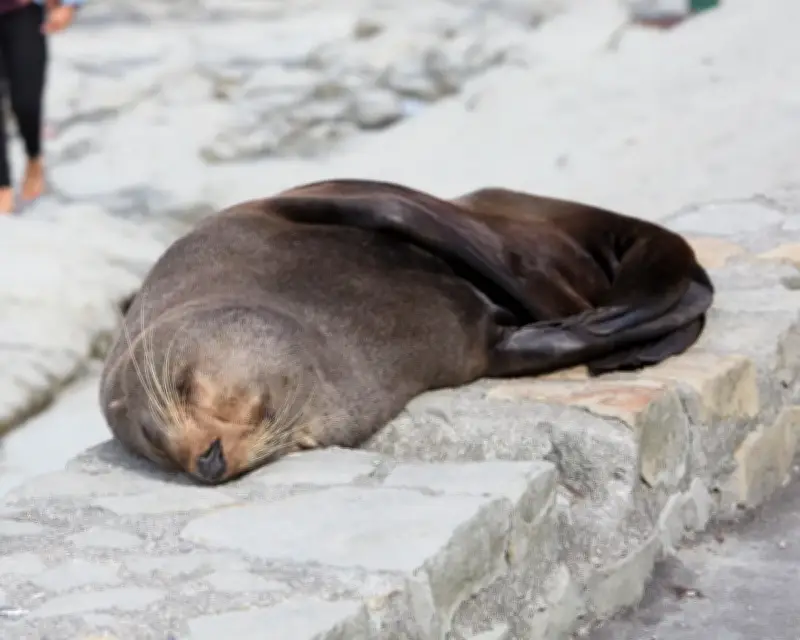
A long-nosed fur seal has died from H5 bird flu in South Australia, marking the first confirmed case in a mammal on the Australian mainland. The seal was found dead at Beachport on Wednesday on the state's Limestone Coast. This development signals a fresh escalation in the virus's spread, days after the South Australian premier, Peter Malinauskas, announced three mass mortality events on offshore islands involving more than 1,000 greater crested terns.
Minister warns of significant losses
The federal agriculture minister, Julie Collins, said the seal death was "not unexpected" as the virus begins to spread through the country. Speaking in Hobart on Sunday, Collins described the news as "distressing" but anticipated, adding that it was "not possible to avoid significant losses."
"An infection of this individual animal is likely to have occurred due to exposure to infected wild birds or the environment that they share," she said. "We can't stop it spreading in terms of, particularly, in wild birds, and where we see more dead wild birds, we do expect to see increased reports of marine mammals."
Virus spread across states
Collins provided data on the virus's reach, noting there had been 298 events across the country, with 183 in South Australia, 86 in Victoria, 11 in New South Wales, 10 in Western Australia, seven in Tasmania, and one in Queensland. The risk of human transmission remains low, but people are urged to avoid sick or dead birds and report them to birdflu.gov.au.
The long-nosed fur seal was found dead with no signs of injury and reported to an official hotline by a member of the public on Wednesday. Testing of samples from the seal later confirmed the H5 bird flu detection.
Threat to marine mammals
The highly pathogenic strain of bird flu has killed millions of birds globally and crossed over into mammal species, including elephant seals. Long-nosed fur seals and the endangered Australian sea lion are among the mammal species the federal government has assessed as facing very high risk from the virus.
Jack Gough, the chief executive of the Invasive Species Council, warned that the virus spreading to Australia's sea lion population could be an "extinction level event." "We are still just at the early stages of this devastating virus, and the bad news is going to keep coming for our wildlife as it spreads around the continent and between species," he said.
Additional cases and response
The SA government has also confirmed a little penguin found at Kangaroo Island this week tested positive for H5 bird flu. SA's environment minister, Emily Bourke, said the state would work with the federal government to assess whether an experimental vaccine from the United States could be used for mammals in Australia. "It is not an off-the-shelf vaccine that's been approved, and we have to be taking into consideration the risk [of undertaking] the vaccination program in our mammals," she said.
Australian Marine Conservation Society campaign director, Alexia Wellbelove, urged the federal government to create a $200m wildlife resilience fund for threatened species at risk of mass mortalities or local extinctions. "Government preparedness funding got us this far, but it was never designed to manage active spread across multiple species and states," Wellbelove said.
Elsewhere, the Tasmanian government said 51 little penguins found on the state's King Island were "assumed to" have died from H5 bird flu, but the deaths would not be declared a mass mortality event. The state's natural resources and environment department said a sample taken from one penguin found at the Port of Grassy tested positive for H5 bird flu, while a sample from a second penguin was inconclusive.
Wes Ford, the state's incident controller for its bird flu response, said both samples had been sent to the Australian Centre for Disease Preparedness for further testing. "The little penguin mortality event is not considered a mass mortality event, and the condition of the remaining deceased birds meant they were unsuitable for testing," he said. "As a result, the cause of death could not be confirmed, although it may be assumed to have been from bird flu. Our teams continue to monitor reports of sick and dead birds closely, with results from surveillance informing our response."




