
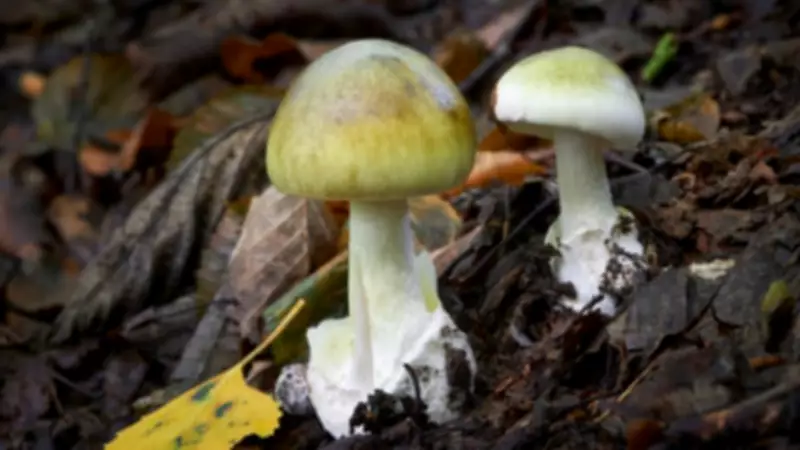
Deadly Mushroom Outbreak in California Claims Four Lives
Four individuals have tragically lost their lives and dozens more have been hospitalised with severe illness following the consumption of poisonous death cap mushrooms in the United States. Californian authorities have issued repeated public warnings since November, urging residents to cease all foraging activities for the remainder of the year due to a dramatic and concerning spike in poisoning cases.
Surge in Cases Linked to 'Super Bloom' Conditions
Health experts report that a 'super bloom' of the lethal death cap mushroom has occurred across California this year, attributed to early seasonal rains and unseasonably warm temperatures. This has led to scores of foragers mistakenly harvesting the toxic fungus, which bears a close resemblance to edible varieties such as puffballs.
The death cap mushroom, scientifically known for its pale green or yellowish appearance, contains a potent toxin called alpha-amanitin. This substance inhibits a critical enzyme within the body's cells, leading to irreversible liver and kidney failure that can manifest up to seven days after ingestion. Crucially, cooking the mushroom does not neutralise its deadly effects, making it one of the world's most dangerous fungi.
Unprecedented Scale of Poisoning Incidents
Since November 18th, health officials in California have documented more than 35 cases of death cap poisoning, affecting individuals ranging from 19 months to 67 years old. In a typical year, only two to five such incidents are reported, highlighting the extraordinary nature of this outbreak. Alongside the four fatalities, three patients have required emergency liver transplants, with several others admitted to intensive care units.
Dr Craig Smollin, medical director for the San Francisco Division of the California Poison Control System, emphasised the severity of the situation, stating: 'The main thing this year is just the magnitude, the number of people ingesting this mushroom. Having almost 40 is very unusual.'
Personal Accounts Highlight the Dangers
One affected family from Salinas in Northern California shared their harrowing experience with local media. Laura Marcelino, 36, recounted how she and her husband collected mushrooms they 'thought were safe', only to fall violently ill the following day. After consuming the fungi again, both suffered severe vomiting, leading to a five-day hospital stay for Laura and a life-saving liver transplant for her husband.
Initial symptoms of poisoning, such as diarrhoea and vomiting, typically appear within a day of consumption. However, the condition deteriorates rapidly thereafter, making medical intervention increasingly difficult as time progresses.
Geographical Spread and Multilingual Warnings
Officials have confirmed that death cap mushrooms have been identified in numerous locations across Northern California and along the Central Coast, including local and national parks. Significant concentrations have been recorded in the Monterey area and the San Francisco Bay region.
Notably, a substantial proportion of poisoning cases involve individuals from Spanish, Mixteco, and Mandarin-speaking communities. In response, the state has expanded its public safety communications to include these languages, aiming to reach all potentially at-risk groups with clear foraging advisories.
This tragic outbreak serves as a stark reminder of the perils associated with wild mushroom foraging, particularly during periods of favourable growing conditions that can lead to hazardous proliferation.




