
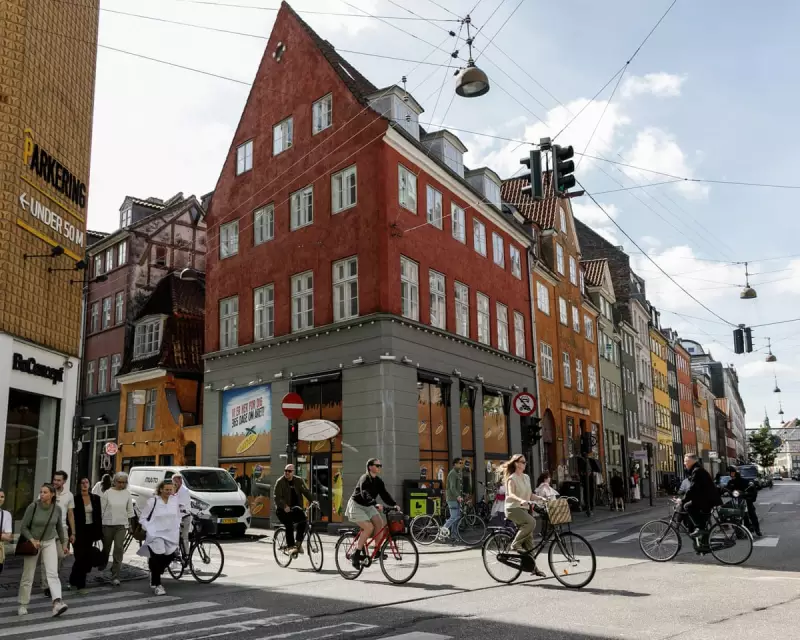
For many, the daily grind of city life is soundtracked by the roar of engines and the haze of exhaust fumes. Yet for scientists who understand the profound health impacts of our urban environments, these are not mere annoyances but serious threats. Across Europe, environmental factors are linked to 18% of deaths from cardiovascular disease and 10% of cancer deaths, with traffic accidents claiming five times more lives than murders in the EU.
The Danish Model: Freedom on Two Wheels
"Copenhagen is for sure one of the best cities to live in," states Zorana Jovanovic Andersen, an environmental epidemiologist at the University of Copenhagen. She highlights a staggering daily statistic: between 30% and 40% of the city's residents commute to work or school by bicycle. This remarkable feat is the result of decades of conscious investment in dedicated bike lanes and infrastructure, actively prioritising space for cyclists over cars.
Andersen, who moved from the US Midwest, feels a profound sense of liberation from car dependence. "Freedom is having a choice of different things, not just having one really bad choice," she explains. "Freedom is living in a city like here, where you can breathe clean air and choose your lifestyle." Despite this progress, she notes that Copenhagen's air pollution, while relatively low, is still dirty enough to impact health, with studies linking it to poorer school grades in children. She advocates for stronger measures like congestion pricing.
Vienna's Green and Social Blueprint
"The quality of life is out-of-this-world positive," says Mathew White, an environmental psychologist at the University of Vienna. The Austrian capital's recipe for success includes widespread social housing, abundant and equitably distributed green space, and an integrated public transport network costing just €1 per day. This accessibility helps reduce health inequalities, with White's research showing that time in nature boosts the wellbeing of poorer residents.
However, Vienna lacks the extensive cycling network of its Danish counterpart. A more significant concern for White is the political landscape; the strong performance of the far-right Freedom Party in recent elections poses a potential threat to the city's long-standing progressive and environmental policies.
Barcelona's Unfulfilled Superblock Vision
Mark Nieuwenhuijsen, director of urban planning at ISGlobal, has witnessed Barcelona's climate intensify, with unbearable summer heat now lasting months instead of weeks. The city's innovative response has been the creation of "superblocks" – car-free zones that prioritise pedestrians and cyclists. Research indicates that fully implementing the original plan for 503 superblocks would save lives and money by drastically cutting air and noise pollution.
"We would see a quite different, much greener Barcelona," Nieuwenhuijsen asserts. Yet political momentum has stalled, leaving what he sees as a missed opportunity to follow the lead of Dutch cities and reclaim more urban space from vehicles to combat both heat and pollution.
London: A Green Capital with Dangerous Gaps
"By far the best thing about London is the green space," says Audrey de Nazelle, a scientist at Imperial College London, calling it "the green capital of Europe." The critical failure, however, lies in access. Reaching the city's magnificent parks is often "extremely dangerous" due to speeding traffic and a lack of safe pedestrian crossings.
De Nazelle condemns the "absolutely mind-boggling" trend of ever-wider SUVs and a transport policy she finds insufficiently visionary. While the Ultra Low Emission Zone is a step forward, it is a "missed opportunity to get people out of cars." Having lived in Paris and Barcelona, she notes those cities have made more decisive strides in reducing car dependence since she left, leaving London lagging behind in creating a truly safe and healthy urban environment.




