
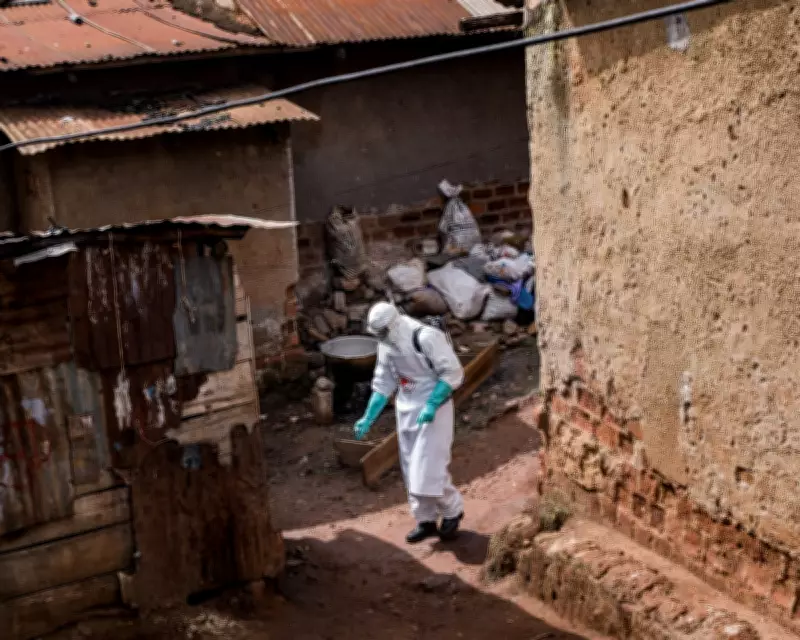
The Red Cross and other traditional agencies are doing their best to fight Ebola despite massive cuts in aid. Ebola is spreading rapidly in parts of east Africa. The deadly disease, which kills around half of those it infects, is suspected to have claimed the lives of at least 240 people since the outbreak began in Ituri province in the Democratic Republic of the Congo earlier this month.
Challenges in Ituri Province
Public health officials are scrambling to contain the virus in one of the toughest environments: Ituri province, the centre of the crisis, is a mining hub where thousands of people work in close proximity every day, and a conflict zone, with ongoing fighting between rebel groups. Medical facilities are modest, while waves of displaced people are being forced into overcrowded camps to escape fighting, making it even harder to control transmission. The virus has already spread to other regions in eastern DRC and the Ugandan capital Kampala.
It is also the first major Ebola outbreak since the US, UK and other western countries made brutal cuts to humanitarian aid, which began with Donald Trump and Elon Musk’s gutting of USAID. The rapid response infrastructure from previous Ebola outbreaks has been stripped back so much of it is barely fit for purpose, hampering efforts to save lives, warn experts.
Health Workers on the Frontline
There is no current vaccine for Ebola. The virus, which is caught from wild animals and passed between humans through body fluids, was discovered in 1976 and is largely found in rainforest regions of western, central and eastern Africa. Between 2014 and 2016, the deadliest known outbreak killed 11,325 people in Guinea, Sierra Leone and Liberia. Frontline workers are desperately trying to prevent a repeat in eastern DRC and Uganda.
Dr Papys Lame, the Ebola outbreak response coordinator in Ituri for the NGO Alima, says that Ebola was likely passing through the community for some time in and around Bunia, the capital of Ituri province, before the outbreak was formally declared on 15 May. Symptoms are similar to common illnesses like malaria and typhoid: fever, muscle pain, vomiting and diarrhoea. While Ebola is not spread as easily as a respiratory illness like Covid-19 or influenza, the lack of lab facilities for testing has made it hard to monitor. Many more cases are suspected than the official WHO figures, he says.
“We don’t have a specific treatment for Ebola right now but we can save people if they come very early. Then, their chance of being cured is higher. But if people come late, the case fatality rate is high,” says Lame, who is from Senegal. “Patients are afraid because they know that Ebola does not have a cure. Many have lost a member of their family or a colleague. And it also impacts frontline workers, too, who have lost colleagues.”
At least five doctors and nurses have died after treating patients at Bunia Evangelical medical centre, including 30-year-old Dr Vladimir Maduali who died on Sunday, and Dr Tibenderana Katho Blaise who died two days later. Other colleagues are believed to have contracted the virus.
“We have preventive measures that we are putting into place to protect our colleagues. They are working with some confidence because some have experienced previous Ebola outbreaks. You must be brave if you work in this environment,” says Lame.
Conspiracy and Community Mistrust
Despite the immense bravery of medical staff, there is a fragile relationship with the local community, which is hampering the response. Some in Ituri province think that the virus does not exist or it has been brought in by humanitarian workers, fearing that they will die if they go to hospital, says Dr Lame.
There have also been attacks on healthcare facilities. The Ebola virus can spread from contact with cadavers, and authorities have implemented strict rules around burials which has sometimes angered families. In one case, a group of young men carried out an arson attack on an Ebola centre in the Rwampara region to try to retrieve a friend’s body.
Speaking about the attack on Alima facilities, Lame explains how the conditions around containment can exacerbate the sense of loss and anger: “The death of a young footballer from suspected Ebola shocked the community and his family. Young people came to ask for his body without treatment. Because it was a suspected Ebola death, we had to organise a safe burial so people got angry,” says Lame. “For us, this is not an attack against the organisation. It is anger and frustration against the loss of an important person in the community.”
Impact of USAID Cuts
Maintaining cooperation with the community is vital to ending the outbreak as quickly as possible, say public health officials. On Wednesday, World Health Organization chief, Tedros Adhanom Ghebreyesus, appealed for a ceasefire in Ituri between rebel groups to help contain the outbreak.
But the effort to end the Ebola outbreak will probably take several months. The 2014 Ebola outbreak in west Africa took more than two years to end, and there was a major international effort to protect people from the disease. Enormous western cuts to humanitarian aid appear to have made the response much slower this time. US foreign assistance to the DRC has fallen from $1.4bn in 2024 to $21m so far this year, with health officials warning that the US appears to be doing little to stop the outbreak this time.
“Ebola is one of those truly terrifying, upsetting, horrific things that does happen intermittently. Since the 2014 outbreak, we had gotten much better at identifying it and responding to the virus. There was a major effort to train local epidemiologists and health workers. The USAID cuts were obviously devastating. The system took a long time to build but didn’t take very long to dismantle,” says Selena Victor, senior director of policy and advocacy for Mercy Corps.
Some countries, including the US, are providing more funding to help. But the amount is dwarfed by the resources used to contain previous Ebola outbreaks – and officials are warning that basic PPE supplies were already a concern. The world must do all it can to make sure medical staff have the resources to respond this time, she said.
“I’m blown away by people’s willingness and commitment to help in these situations. Please, let’s not have a situation where they don’t have gloves, masks and gowns. The very least we can do is make sure that they have everything they need to stay safe,” she says.
A Global Problem
Last week, University of Oxford scientists said they are working on an Ebola vaccine that could be ready for clinical trials within two months, as part of the effort to contain the virus. The WHO is treating the outbreak as a public health emergency of international concern. But in the era of extreme political polarisation, governments are not responding as they have done to previous outbreaks.
The US has banned people from entering the country who have been in the DRC, South Sudan and Uganda in the previous 21 days. The Trump administration is also building a quarantine and treatment centre in Kenya for Americans affected by the Ebola outbreak, instead of bringing them home, attracting widespread criticism.
Lame said it was vital that his team get the resources they needed to help save lives – adding that more resources are still needed from abroad. “The community response against Ebola is critical, and we need many resources for this. International staff who can come and help with community engagement, human resources, logistics, water sanitation. Hopefully we will have enough to do our work.”




