
Cuba's Post-Hurricane Health Crisis Deepens
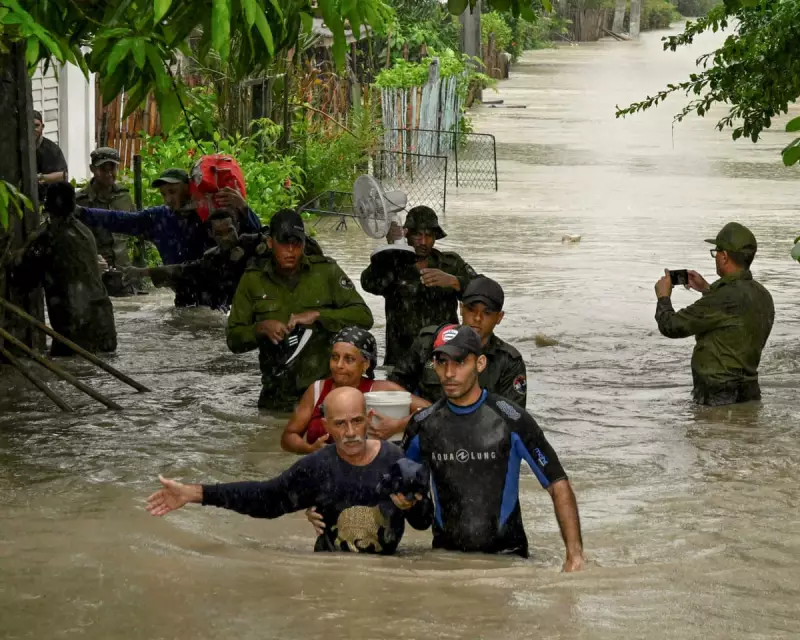
Eastern Cuba faces a devastating dual crisis as communities struggle with both widespread flooding and a sharp increase in mosquito-borne illnesses in the aftermath of Hurricane Melissa. The category 3 hurricane, which struck the island on 31 October, caused the Cauto River to overflow its banks in Granma Province, forcing mass evacuations and creating perfect breeding conditions for disease-carrying mosquitoes.
Life in the Evacuation Centres
Among the 300 people sheltering in a converted school in Grito de Yara is Maidel Jorge, a 36-year-old farmer who now chops green wood for cooking fires since losing his electricity two weeks ago. He shares the cramped space with his pregnant wife and six-year-old son, among the 3 million Cubans exposed to Hurricane Melissa's destructive path.
"It was terrible," Jorge recalls of the hurricane's impact. "Nothing was left." Although his clapboard house survived the storm, he lost his entire livelihood - crops of corn, beans and sweet potato, along with two oxen and a 100kg pig. Only a single hen remained from his former life.
The evacuation centre has become a hotspot for illness, with 18 people currently suffering from fever. In the absence of proper medical diagnosis, residents simply refer to the mystery illness as "the virus".
Mosquito-Borne Diseases Surge in Flood's Wake
The standing water left by the floods has created an ideal environment for mosquitoes to breed, exacerbating a public health crisis that was already unfolding before the hurricane struck. For four years, Cuba has been sinking into economic crisis due to failed internal policies, aggressive US sanctions and pandemic aftermath, weakening the country's once-impressive disease eradication programmes.
Health officials reported 13,000 new fever cases across Cuba in just one week during late October. Recent estimates suggest a staggering one-third of the Cuban population has been infected with chikungunya, which causes week-long fevers and severe joint pain. The government has officially declared the outbreak an epidemic.
In the eastern regions hardest hit by Melissa, these illnesses are compounding the misery of those attempting to rebuild their lives. Leanet Pérez, a 21-year-old teacher from Cauto del Paso, returned to her flood-damaged home only to contract chikungunya. She now struggles to get out of bed, relying on alcohol compresses and paracetamol provided by her sister.
Infrastructure Collapse and Environmental Damage
The Cauto del Paso dam, the largest in Granma Province, began spilling over the day after Melissa's arrival, releasing 4,000 cubic metres of water per second at the peak of the flooding. Water levels have remained dangerously high since, coating homes in thick sludge and creating numerous stagnant pools where mosquitoes thrive.
Miguel Ángel Rodríguez, a 31-year-old social worker at the Grito de Yara evacuation centre, visits affected settlements to gather information for authorities. "All the damage I've seen breaks my heart," he says. "I have no words."
The landscape tells a story of complete disruption. Tractors struggle through thick mud that covers pathways, while vultures scavenge dead animals. In the local cemetery, raised graves appear to float in swamp-like conditions.
As night falls, wood smoke rises across Grito de Yara - partly for cooking, partly to ward off mosquitoes. Yudelkis Alarcón, a 42-year-old teacher, explains that "cooking with butane gas is only for the wealthy" in their community. Her four-year-old son has contracted "the virus" and requires saline solution at the local polyclinic.
Amid the devastation, there are small gestures of resilience. Dayana Álvarez, Jorge's 20-year-old wife who is expecting a baby girl in February, plans to name her daughter Melissa, following the Cuban tradition of naming children after hurricanes that occur around their birth.
Sleeping on a thin mattress in the evacuation centre, she maintains hope that "at least a bit" will improve by the time they welcome baby Melissa into this challenging new world.




