
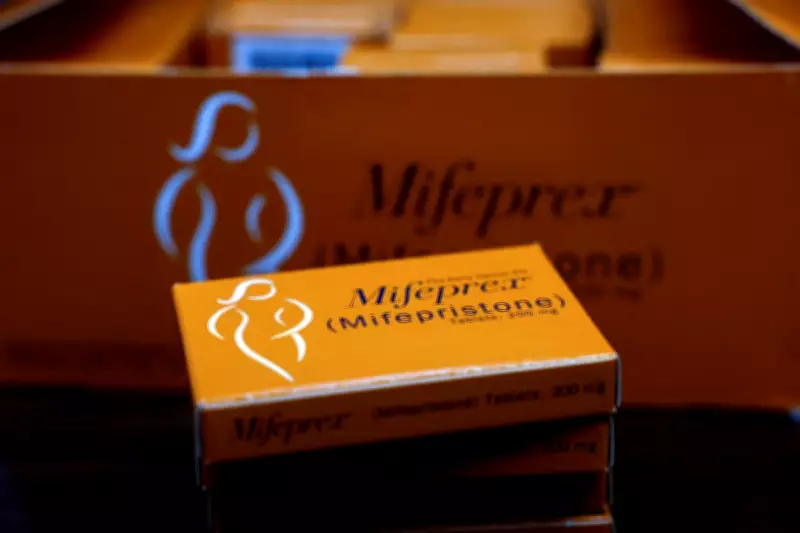
A US appeals court ruling on Friday has temporarily blocked the dispensing of mifepristone through the mail, potentially severely limiting access to the FDA-approved medication used to end pregnancy. The decision, which came in response to a Louisiana lawsuit against the FDA, is considered the most sweeping threat to abortion access since the Supreme Court overturned Roe v. Wade in 2022, according to Kelly Baden, vice president of the Guttmacher Institute, an abortion rights advocacy group.
Impact on Abortion Access
“If allowed to stand, it would severely restrict access to mifepristone in every state, including those where abortion is broadly legal and where voters have acted to protect abortion rights,” Baden said. The medication, part of a two-drug regimen backed by decades of evidence, is used in the majority of abortions in the US. Usage has risen since the 2022 Supreme Court ruling, especially after the FDA modified regulations to allow online prescriptions.
Legal Challenge and FDA Review
The ruling came from a conservative three-judge panel of the Fifth US Circuit Court of Appeals in New Orleans, which agreed with Louisiana that the FDA failed to justify eliminating the in-person dispensing requirement. Louisiana Attorney General Liz Murrill hailed the decision, stating she would “look forward to continuing to defend women and babies.” Meanwhile, the FDA under the Trump administration has opened a review of mifepristone, which could further limit its use. Reproductive rights advocates have expressed concerns despite the drug’s safety record, which includes authorization in 96 countries and four decades of research.
“Anti-abortion politicians have just made it much harder for people everywhere in the country to get a medication that abortion and miscarriage patients have been safely using for more than 25 years,” said Julia Kaye, senior staff attorney for the ACLU’s Reproductive Freedom Project. She criticized the ruling as based on “lies and propaganda.”
Wider Implications
According to Guttmacher, mifepristone use has enabled abortions in states with bans, including 9,350 provided via telehealth in Louisiana in 2025. However, the ruling will have a far wider impact. “Reimposing medically unnecessary in-person dispensing requirements for mifepristone will send shockwaves of chaos and confusion across the country and dramatically upend patients’ ability to obtain abortion care,” Baden said.




