Major Online Retailers Selling Dangerous Children's Toys
An alarming investigation by consumer advocacy group Choice has revealed that seventeen out of twenty-four children's toys purchased from major online marketplaces have failed to meet Australia's mandatory button battery safety standards. The comprehensive product testing uncovered serious safety breaches in items sold through Shein, AliExpress, eBay and Amazon.
Which Products Failed the Safety Tests?
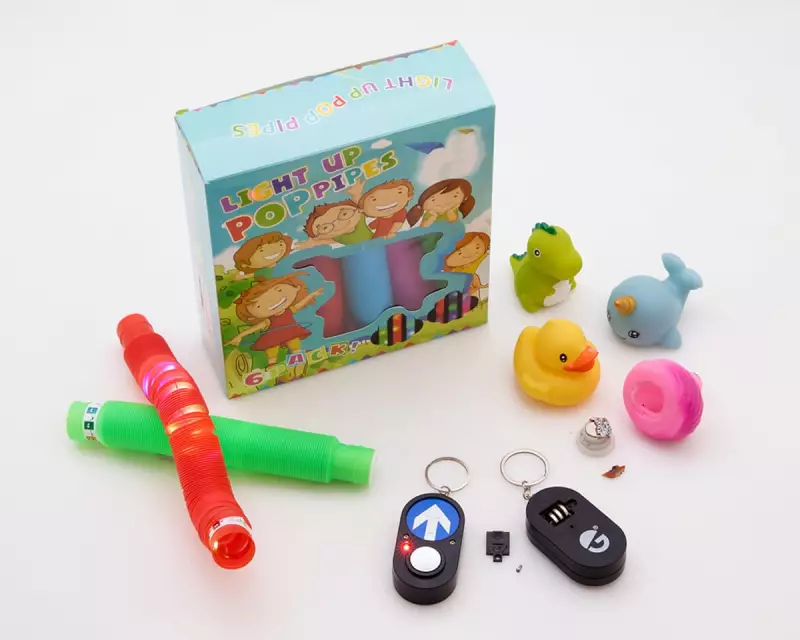
The failed products included a concerning range of children's items, from bath toys to everyday accessories. According to Choice's findings, multiple products presented immediate risks to child safety through easily accessible battery compartments that didn't require tools to open.
Among the dangerous items identified were:

- An electronic writing pad, toy watch, video game and plastic piece from AliExpress
- Slatted glasses, lighted jelly rings, satin scrunchie and keyboard button chain from Shein
- Bath toys, bendy tubes and keychain from Amazon
- Fidget spinner, gloves, toy torch, glowing mouthguard and shoes from eBay
Following Choice's investigation, all four online retailers removed the identified products from their platforms. An AliExpress spokesperson confirmed they had expanded their review to identify and remove any similar policy-violating products.
The Deadly Reality of Button Batteries
The safety failures take on grave significance when considering the documented dangers of button batteries. Since 2013, three Australian children have died after ingesting these small power cells: four-year-old Summer Steer, 14-month-old Isabella Reese and three-year-old Brittney Conway.
Rosie Thomas, Choice's director of campaigns, emphasised the severity of the risk: "Button batteries can cause catastrophic injuries within hours if swallowed, so it is highly concerning to see products like this continue to be sold."
The Australian Competition and Consumer Commission (ACCC) estimates that approximately one child per month suffers serious injury from swallowing or inserting button batteries. The chemical reaction that occurs when a battery is ingested can burn through tissue and damage vital organs rapidly.
Understanding Australia's Safety Standards
In response to growing concerns, the Australian government introduced mandatory safety and information standards for button batteries in December 2020, which became fully enforced from June 2022. These regulations require manufacturers to:
- Secure battery compartments with tools like screwdrivers
- Include clear warning statements and emergency advice
- Conduct their own safety testing before sale
Choice discovered that numerous products failed these basic requirements, with some having battery compartments that could open simply from being dropped on the ground.
Protecting Your Family from Unsafe Products
Thomas advises parents to exercise particular caution when shopping from cheap online marketplaces, especially for children's toys and baby products. She recommends several practical steps to ensure safety:
First, carefully examine how battery compartments are secured. Products requiring screwdrivers to access batteries generally provide better protection. However, she notes that if these screws can be easily removed and lost during battery replacement, the safety benefit diminishes.
Second, consider conducting a simple drop test at home to verify whether battery compartments remain securely closed when the product is dropped.
Most importantly, Thomas suggests avoiding button battery products altogether where possible, noting that many manufacturers now prefer traditional AA and AAA batteries in toys as a safer alternative.
For older toys purchased before the 2022 standards took effect, extra vigilance is necessary as they likely don't comply with current safety requirements.
Broader Product Safety Concerns
The button battery safety failures occur alongside other recent product recalls, including several play sand products sold at major retailers like Officeworks, Kmart and Target over potential asbestos contamination.

Thomas highlights the broader implications: "The disruption and alarm caused by recent recalls really highlights the challenges when unsafe products reach consumers. It's not straightforward to recall things or get them out of people's houses or schools."
She urges consumers to regularly check the ACCC's product safety website for recall information, noting that in the past year alone, 49 toys have been recalled, with 20 related specifically to unsafe button battery components.
However, Thomas emphasises that primary responsibility should rest with businesses to ensure product safety rather than relying on parents to identify dangerous items. Choice continues to advocate for stronger product safety laws to prevent unsafe products from reaching consumers in the first place.