
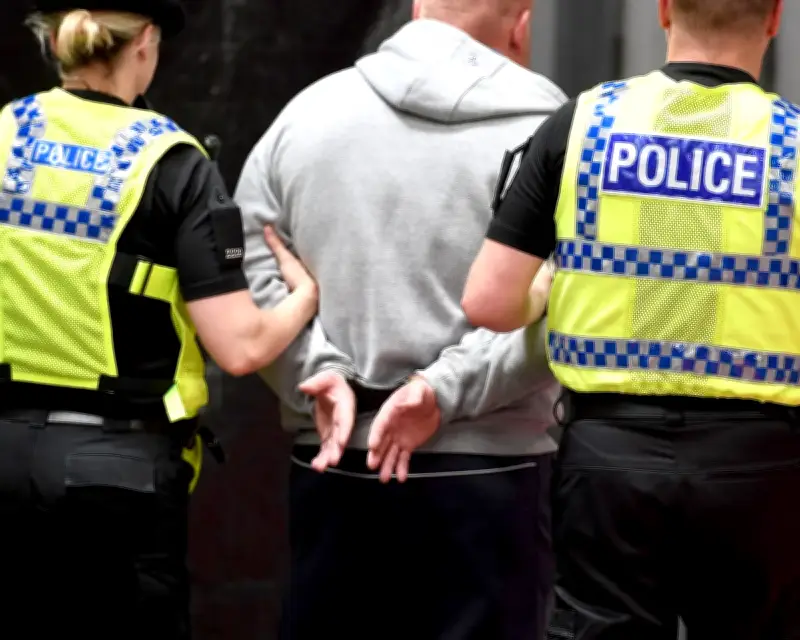
Bridget Phillipson, the women and equalities minister, has warned that police could end up with nowhere to send individuals arrested for serious offences, including violence against women, if the early prison release scheme is not implemented. Speaking on BBC Radio 4’s Today programme on Saturday, she defended the government’s plan to release thousands of prisoners early to address the prison capacity crisis in England and Wales.
Minister defends unpalatable choices amid prison crisis
Phillipson acknowledged that the government has faced “really difficult and unpalatable choices” due to the “huge crisis” left behind in the prisons estate. She insisted that the “most serious offenders” would not be released early under the scheme, with further details expected to be announced during the week.
“But the reality of what we are confronting is that, if allowed to go unchecked, we could end up in a position where someone who was arrested for very serious offences, for example, offences related to violence against a woman, and we wouldn’t have anywhere to send that individual,” she said. “That was the full scale of the real crisis we face.”
Scheme shortens custody portion, not sentence length
Under the scheme, a sentence would not be ended early, but the portion served in custody would be shortened, with the remainder served in the community. This principle already exists in most sentences. Andy Burnham, the mayor of Greater Manchester, has faced pressure to balance the competing aims of creating space in prisons and avoiding further upset to victims of serious crime.
On Friday, families affected by homicide called for those convicted of any form of manslaughter to be excluded from the scheme. In a letter to the justice secretary, Alex Norris, they said victims were “being asked to bear the consequences of the prison capacity crisis”.
Victims’ families demand manslaughter exclusion
Signatories included Emma Webber, whose son Barnaby was stabbed to death in Nottingham in 2023, and whose killer, Valdo Calocane, was convicted of manslaughter on the basis of diminished responsibility. Another signatory was Diana Parkes, whose daughter Joanna Simpson was killed by her estranged husband, Robert Brown, in 2010. Brown was also convicted of manslaughter on the basis of diminished responsibility.
Phillipson expressed the “utmost respect and sympathy for the victims and their families” and blamed the previous Conservative government for allowing the prison capacity problem to fester. “We didn’t create enough prison capacity in the years that they were in government so that we don’t have to be even considering these kinds of options, which – in an ideal world – we would not be having to consider,” she said.
Government announces measures to stave off summer crisis
In January, the government announced a set of measures, which came into force in March, designed to stave off a looming crisis this summer. Sources indicated, however, that these measures were never thought to be enough to avert further crises. They pointed to the Sentencing Act, which introduces wholesale changes to sentencing, as the government’s plan to fix the issue once and for all.




