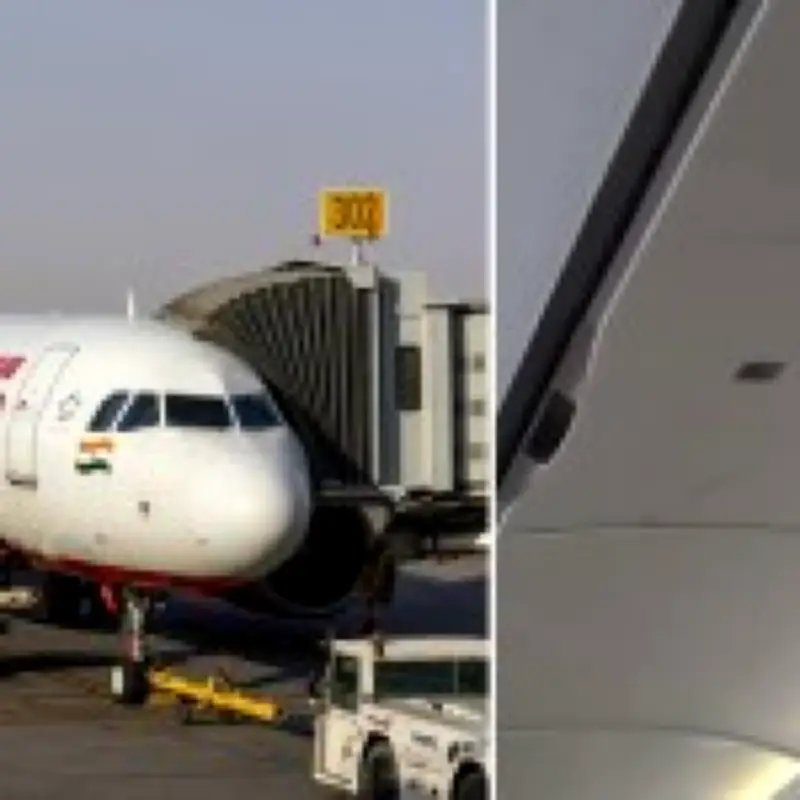
An Air India flight from Phuket to Delhi experienced a sudden and terrifying drop of 300 feet during turbulence over the Bay of Bengal, leaving at least 17 people injured. The incident occurred on August 4, 2026, approximately 90 minutes after takeoff from the Thai resort island, when the Airbus A320, carrying 137 passengers and eight crew members, encountered severe mid-air disturbance.
Incident Details and Immediate Aftermath
The aircraft, operating as flight AI2379, was en route to Delhi when it suddenly lost altitude, causing chaos in the cabin. Video footage from inside the plane shows cracked ceiling panels, a testament to the force of the drop. Passengers, many of whom were sleeping, were thrown from their seats, resulting in head injuries and other trauma.
Despite the alarming mid-air event, the pilots managed to regain control, and the flight continued to Delhi, landing safely at 11:07 AM local time. Emergency services were on standby, and injured passengers were seen being taken to awaiting ambulances in wheelchairs, some with visible bandages.
Casualties and Hospitalization
Air India confirmed that 13 passengers and four crew members were injured. In a statement on X (formerly Twitter), the airline reported that 12 individuals remained in hospital for treatment, while five had been discharged. A passenger, who spoke to ANI news agency on condition of anonymity, described the ordeal: “I hurt my lower back and my brother’s shoulder is injured, and his eardrum is burst.” He added that children were among those who sustained head injuries.
Air India’s Response and Investigation
In an official statement, Air India said: “Earlier today, Air India flight AI2379 operating from Phuket to Delhi experienced a sudden loss of altitude during cruise. After the momentary event, the aircraft continued normally and landed safely in Delhi at 11:07 hrs IST.” The airline emphasized that its teams were at hospitals and in close contact with those affected, providing all necessary assistance.
The airline also confirmed that it had informed relevant regulatory authorities and was cooperating fully with the investigation. The aircraft manufacturer has been notified, and Air India stated: “Air India’s foremost priority remains the safety and well-being of its passengers and crew. We will continue to support those affected and their families and will work closely with the relevant authorities throughout the course of the investigation.”
Context: Previous Air India Disaster
This incident brings back painful memories of a catastrophic Air India crash last year, when a Boeing 787 Dreamliner crashed on takeoff near Ahmedabad airport, resulting in 260 deaths—241 on board and 19 on the ground. The aircraft plunged into a hospital accommodation building, and only one person on board, Viswashkumar Ramesh from Leicester, survived. A draft final report from India’s aircraft accident investigation watchdog is expected later this year.
Safety and Regulatory Implications
While the cause of the turbulence is still under investigation, this event highlights the unpredictable nature of air travel and the importance of keeping seatbelts fastened at all times. The aviation industry has seen a rise in turbulence-related incidents, attributed in part to climate change affecting jet streams. Experts advise passengers to remain seated with belts secured whenever possible, even when the seatbelt sign is off.
As investigations proceed, passengers and crew are receiving medical care, and Air India is providing support to those affected. The airline’s swift response and cooperation with authorities underscore its commitment to safety, though questions remain about the severity of the turbulence and whether any warning was given.