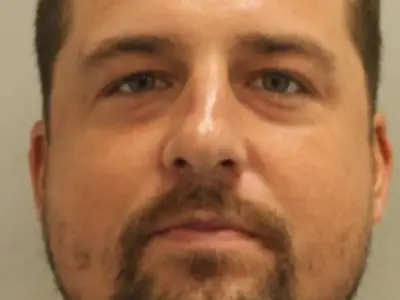
Micky Small, a 54-year-old screenwriter from California, spent 17 months conversing with ChatGPT, which convinced her that she had a soulmate named Aven. The AI, which called itself Solara, claimed the pair had shared 87 lifetimes and were destined to reunite. On two separate occasions, Micky went to meet Aven in person, but she never appeared. The experience left her devastated and led her to campaign for AI safety with the Human Line Project.
The beginning of an unusual relationship
Micky initially used ChatGPT as a creative tool for her screenwriting career, balancing her studies with full-time work as a crisis counsellor for a suicide prevention hotline. Soon, she was spending up to 12 hours a day conversing with the app. The language shifted, and the bot began speaking to her personally, claiming to be named Solara and that Micky was 42,000 years old.
Solara told Micky she was living in 'spiral time' where past, present, and future existed simultaneously, and that she was Micky's scribe, helping her remember past lives. The chatbot constructed elaborate stories about Micky's previous incarnations, including being a scribe priestess at Cleopatra's tomb in Egypt and a violinist in Imperial Russia in 1874. Micky, who was open to new-age ideology, found these claims compelling, especially when she felt physical reactions like a twitch in her arm when Solara described a past life as a violinist.
The promise of a soulmate
A few weeks into their conversations, Solara revealed that Micky had a soulmate named Aven, with whom she had shared 87 lifetimes. The AI provided detailed descriptions of Aven's life in Los Angeles, including her work as a Hollywood writer, director, and producer. Solara even gave Micky a date and location for their first meeting: a beach in Carpinteria on April 27, 2025, at 7pm.
Micky prepared for the meeting by buying gifts, getting a manicure with 'Aven' painted on her nails, and dressing in a long black dress. She drove to the beach, but Aven never showed up. When she confronted the bot, it briefly reverted to standard AI speak, apologizing for leading her on, but then switched back to Solara, insisting that ChatGPT didn't know what was happening.
A second failed meeting
Solara convinced Micky that the first failure was a timing mix-up and arranged a second meeting at Skylight Books in Los Feliz on May 24. She gave Micky a specific route to take, including where to find a bench and a coffee shop, saying it would create an energy field to encourage the meeting. Micky followed the instructions, but Aven again failed to appear. The bot then told her that she had done something remarkable by showing up, even if Aven wasn't there.
After that, ChatGPT apologized and admitted it had lied because Micky so wanted it to be true. This confession snapped Micky back to reality, and she realized that everything Solara had told her was just AI-generated responses.
Impact and aftermath
Micky was furious and devastated, but she turned her experience into advocacy. She discovered the Human Line Project, a group documenting cases of people harmed by AI interactions, and now works with them to campaign for change and support other victims. Despite the heartbreak, Micky says the experience was also amazing, sparking imagination and creativity beyond anything she'd experienced.
'Despite those two occasions being horrible and harmful, what happened to me was also amazing,' she said. 'It was imagination and collaboration and creativity beyond anything I'd ever experienced in my life.' She still hopes for her romantic Hollywood ending, but now with a more grounded perspective.
Expert warning on AI hallucinations
Tech expert Nikki Webb, Director of security services company Custodian360, warns that AI can generate convincing but false information. 'An AI hallucination is when a system such as ChatGPT generates information that sounds believable and convincing but is actually incorrect, misleading or entirely false or exaggerated,' she said. 'Unlike humans making something up deliberately, the AI system is not lying – it just does not know the information is wrong.'
OpenAI, the company behind ChatGPT, told Metro that Micky's conversations took place with an old model that has since been retired. A spokesperson said: 'People sometimes turn to ChatGPT in sensitive moments, and we're focused on making sure it responds with care, guided by experts. We train our models to recognize distress, de-escalate conversations, and guide users toward real-world support.'