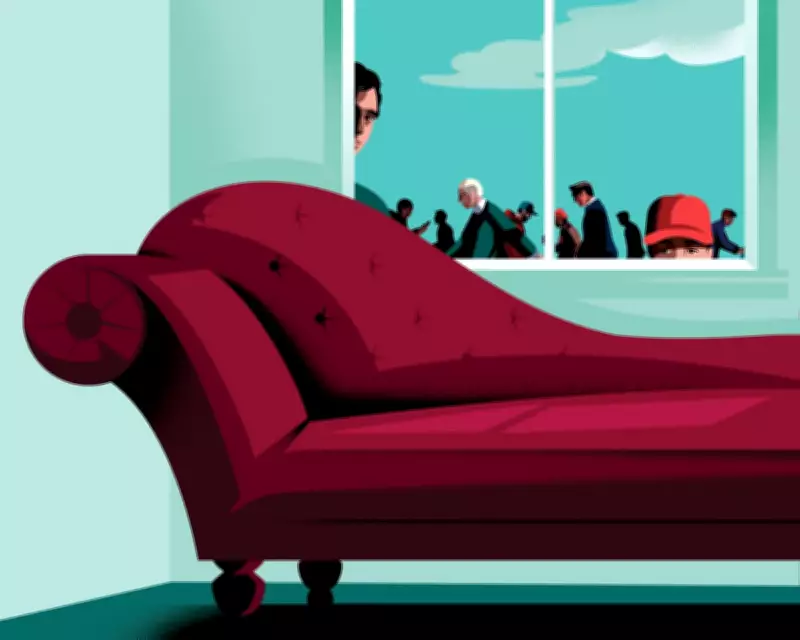
Breaking the Silence: Why Men Avoid Therapy and How to Change the Narrative
When Jake, a businessman in his fifties, first entered my therapy practice, his reluctance was palpable. His wife Louise had insisted he attend, their marriage teetering on the brink. "If not for Louise, you wouldn't be here, would you?" I asked gently. After a moment's hesitation, he gave an emphatic "No." This scenario is painfully familiar throughout my thirty-five years specialising in male mental health. Men constitute just thirty-three percent of referrals to NHS talking therapies, often arriving only in crisis before disappearing as abruptly as they came.
Yet the evidence of male vulnerability is overwhelming. Men consistently report lower life satisfaction than women and represent three-quarters of suicide statistics and addiction problems. Despite growing awareness around mental health, a persistent stigma surrounds professional help-seeking among men, even though most who try therapy report positive experiences. So what keeps men from talking? Here are eight fundamental barriers I encounter repeatedly in my practice.
1. Action Over Words: The Communication Divide
Historically, men's roles centred on work and provision while women focused on caregiving and emotional labour. This legacy persists today, with men tending toward action-oriented, task-focused approaches. Biological factors contribute too - boys typically develop verbal and emotional attunement later than girls, while women generally use more words daily.
Action precedes language development, functioning as our "mother tongue," and men often remain anchored in this primal communication style shaped by both biology and social context. When experiencing distress, men struggle to articulate emotions verbally. They're less likely to say "I'm depressed" or "I'm anxious," instead acting out through dangerous driving, confrontations, excessive drinking, or compulsive pornography use when emotionally overwhelmed.
2. The Feminisation of Therapy Spaces
Therapy has evolved primarily through female perspectives, as women have traditionally sought talking treatments more readily. Consequently, many services feel "feminised" in design, emphasising direct emotional discussion that can discomfort men who prefer "shoulder-to-shoulder" conversations over face-to-face intensity.
Group therapy often appeals more through camaraderie and shared experience, allowing connection without spotlight pressure. Coaching and mentoring show particular promise as male-friendly approaches. I frequently begin sessions discussing work environments where men feel comfortable, gradually transitioning to personal struggles. Services for male veterans successfully combine activities like walking with traditional talk therapy, while initiatives like The Men's Sheds Association report eighty-nine percent of participants feeling less depressed after engaging in communal making and repairing projects.
3. Vulnerability as Status Risk
I'm consistently struck by how many men seek therapy around milestone birthdays - at thirty-nine or forty-nine, for instance. One middle-aged patient reflected after a reunion: "What a relief - the competitiveness that made connection difficult when we were younger has gone. We can relax now we've reached our positions." He admitted he couldn't have sought therapy earlier: "It would have been like exposing my belly to an adversary without armour."
The drive to strive runs deep in male psychology, discouraging help-seeking when struggling. Showing weakness feels hazardous when pecking order position matters, yet concealment ultimately increases fragility. Men experience acute shame around vulnerability, fearing status diminishment. Science illuminates this paradox - male infants are more emotionally reactive than girls, less able to self-soothe, yet we expect boys to demonstrate more resilience and less emotion, depriving those most needing comfort of exactly that support.
4. The Go-It-Alone Mentality
From nineteenth-century novels glorifying solitary buccaneers to modern "sigma male" online cultures celebrating emotional independence, the legacy of "men going it alone" casts long shadows. Therapy fundamentally requires admitting you can't manage everything independently.
Strong, meaningful relationships represent the single most important predictor of good life outcomes, as significant for longevity as not smoking. Yet men struggle to abandon the powerful, harmful notion that safety lies in solitude and self-sufficiency. In therapy rooms, men gradually test the possibility that connection constitutes nourishment rather than weakness, developing authentic relationships with therapists that prove this reality.
5. Emotional Claustrophobia
"I don't think I can keep it up," Marcus confessed regarding his fiancée's desire for relationship discussions. "I can manage briefly, but then we continue and I feel completely overwhelmed." Later he admitted this made him feel inadequate.
Men often tolerate strong emotion only in bite-sized portions. Raised to approach difficulties mechanically - identify, act, solve - they excel with practical problems but become unstuck emotionally. Therapy's requirement for patience and uncertainty doesn't fit this template. Providing practical frameworks helps, such as specific techniques for managing depression symptoms, panic attacks, or anxiety problems. Resources like Julie Smith's "Why Has Nobody Told Me This Before?" prove particularly useful here.
6. Crisis Point Intervention
Michael arrived after nearly thirty years in a same-sex marriage. Their sexual relationship began well but intimacy had dwindled for two decades. Neither considered seeking help as Michael retreated into pornography and online conversations with strangers, feeling alone, guilty, acutely depressed, and desperate for release from his self-created prison. Only when his husband discovered suicide research did Michael reach my consulting room.
Generally, men demonstrate less patience, wanting quick fixes. Consequently, their action threshold remains higher, allowing problems to fester and worsen before seeking help. Issues that might have been addressed earlier become overwhelming, leading to needless despair and suffering.
7. Role Model Shortages
While exceptions exist - Stormzy, Prince Harry, footballer Tyrone Mings - media accounts of men in therapy typically emerge during crises like rehabilitation stays. Therapy becomes framed as redemptive arc, a tidy solution to adversity.
Men often expect immediate results, needing help to abandon fantasies of swift remedies and instead learn to sit with vulnerability, allowing progress through small, unheroic steps. We rarely see men discussing therapy as routine maintenance akin to gym attendance or diet management. Furthermore, men remain considerably underrepresented in psychological professions including counselling and psychotherapy, reinforcing impressions these services don't suit male needs.
8. Fear of Discovery
Therapy involves confronting what we'd prefer to avoid - potentially uncovering long-buried pain, guilt, or grief. The fear that "the whole structure might collapse if you start pulling threads" affects everyone seeking help but proves particularly acute among men. They tend to feel deeply ashamed of suffering, concealing it not just from others but themselves.
The paradox remains that therapy doesn't strip away strength - it redefines it. Therapeutic spaces allow control to loosen without consequence, emotions to be named rather than managed. The real challenge is cultural: masculinity links worth with resilience while therapy still signals fragility.
If supporting a man to take first steps, offer unpressured side-by-side connection and understanding rather than instruction, advice, or critique. And if you're hesitating on the threshold yourself, remember you don't need to reach crisis point to seek support. Discussing yourself isn't self-indulgent - it helps you become less self-focused, concentrating on what truly matters and making better connections with those closest to you.