A firefighting helicopter with two people onboard crashed on Friday morning in a remote area of central Utah, according to federal aviation authorities. The Sikorsky S64 helicopter went down near Richfield, about 160 miles south of Salt Lake City, while it was supporting efforts to contain the Widemouth 2 wildfire.
The US Forest Service initially declined to comment on the condition of the helicopter's passengers, asking the public for “patience while we focus on response efforts” in a statement. Emergency personnel were dispatched to the area, but the exact circumstances surrounding the crash remain unknown.
Rescuers Face Difficult Terrain and New Fire
At a media briefing on Friday evening, Tyler Hecht, deputy incident commander with the Great Basin incident management team, described the terrain as “very difficult” and said rescuers “have not reached the scene of the accident” in part because the helicopter crash had started a new fire. The new fire has further complicated rescue efforts, as crews must first ensure their own safety before approaching the wreckage.
Asked about the morale of the firefighters battling the blaze, Hecht said it was “very somber with what’s going on. You know, they did take a tactical pause, regrouped, and they’re back fighting fire.”
Widemouth 2 Fire: A Growing Threat
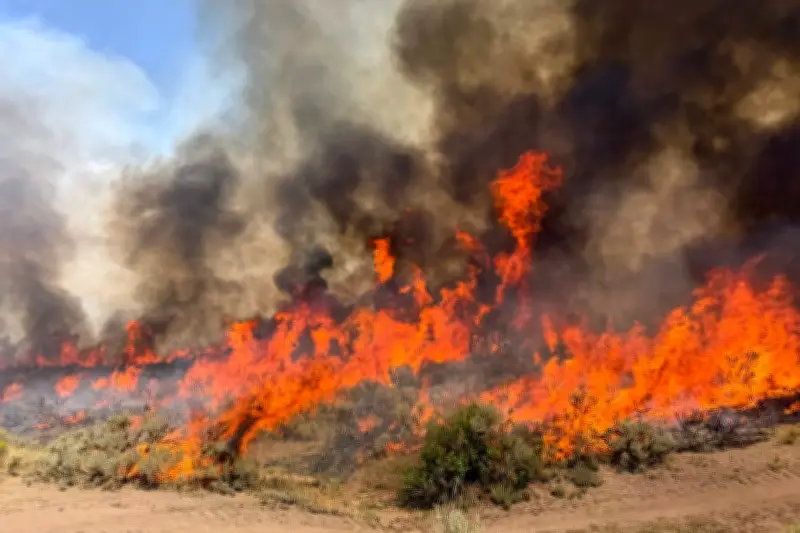
The helicopter was in the vicinity of the Widemouth 2 fire, a blaze sparked by lightning that has raced through 105,000 acres since it began on 27 July. As of Friday morning, the fire was 19% contained, with 632 personnel assigned to suppressing it. Seven helicopters were dropping retardant and water on the flames, according to the US Forest Service.
The Widemouth 2 fire is one of eight large fires burning across Utah, which cumulatively have swept through more than 331,000 acres, according to state data. The scale of the fires has stretched resources thin, with firefighters working around the clock to protect communities and natural resources.
Officials Express Concern and Support
“Wildland firefighting is among the most dangerous jobs in the world,” Utah governor Spencer Cox wrote in a social media post. “Today is a painful reminder of the extraordinary risks these brave men and women accept to protect us.”
The Federal Aviation Administration (FAA) and the National Transportation Safety Board (NTSB) are investigating the crash. NTSB investigators are set to reach Richfield by Saturday evening, the agency said in a statement. Investigators expect to wait for fire conditions to subside to a safe level that will permit them to travel to the crash site and retrieve the aircraft.
A Deadly Wildfire Season in the West
The crash comes amid a deadly wildfire season for the western US. Three firefighters were killed in June as they battled a blaze along the Colorado-Utah border. The incident highlights the extreme risks faced by wildland firefighters, who often operate in hazardous conditions.
In late June, Jamie Barnes, the director of Utah’s division of forestry, described the fires as unlike anything in recent memory. “We’re seeing fires spread farther and faster under conditions that defy historical expectations. Some of the fires we’ve responded to this year are behaving in ways veteran firefighters simply haven’t seen before,” Barnes said.
“Our firefighters have been working around the clock, our resources are stretched, and we cannot afford preventable ignitions during the days ahead,” he added, referring to statewide firework restrictions.
Ongoing Rescue and Investigation
As of Friday evening, rescue teams had not yet reached the crash site, and the condition of the two individuals onboard remains unknown. The new fire sparked by the crash is being monitored, but it adds to the already challenging situation. The NTSB investigation will focus on determining the cause of the crash, which could include mechanical failure, pilot error, or external factors such as wind or visibility.
The incident underscores the dangers of aerial firefighting, which is a critical component of wildfire suppression in the western US. Helicopters and air tankers provide vital support, but they operate in close proximity to flames, smoke, and rugged terrain, increasing the risk of accidents.
In the coming days, investigators will work to reach the site and recover evidence. The firefighting community is mourning the potential loss, and the incident serves as a stark reminder of the sacrifices made by those who protect lives and property from wildfires.