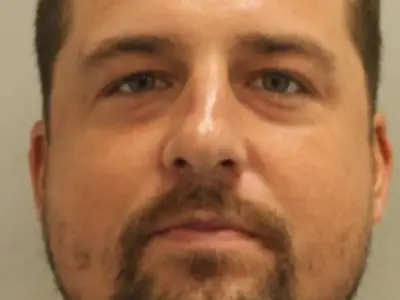
The shadow of the infamous Slender Man case fell across the American justice system once more last week, as Morgan Geyser, now 23, was apprehended after fleeing a Wisconsin care home. Geyser spent just 24 hours at large before being found 100 miles away at an Illinois truck stop, but her brief escape has ignited a fierce debate about the institutions that have raised her since she was a child.
A Childhood Lost to the System
In 2014, a 12-year-old Morgan Geyser pleaded guilty to the attempted murder of a classmate, a crime she committed alongside another girl, Anissa Weier. The motive was a belief that they needed to appease the fictional online horror character, Slender Man. Both girls were prosecuted as adults under Wisconsin law but were found not guilty by reason of mental disease or defect.
Geyser was sentenced to 40 years in a psychiatric institution, while Weier received a 25-year sentence. Crucially, Geyser was suffering from undiagnosed childhood schizophrenia at the time of the attack, a condition later compounded by diagnoses of autism and post-traumatic stress disorder.
Author and case expert Kathleen Hale argues that the state's response created a damaged adult. "She entered the system as a child and never had the chance to grow up inside it," Hale states. "This is a 23-year-old woman whose emotional and educational development effectively froze at age 12."
The Flight and a Failed Safety Net
After a decade in the Winnebago Mental Health Institute, Geyser was conditionally released to a community group home in the summer of 2024. Her freedom was short-lived. On 9 January 2025, she appeared in a Waukesha county courtroom after cutting off her monitoring bracelet and fleeing the state.
She was discovered with 43-year-old Chad 'Charley' Mecca, a transgender woman she had met at church two months prior. In a call to local news outlet WKOW, Mecca claimed responsibility, saying, "she ran because of me." The pair feared their visits would be terminated and were allegedly attempting to reach Nashville, Tennessee.
Mecca told reporters Geyser felt mistreated at the group home and had expressed suicidal thoughts before their escape. This account frames Geyser's actions not as a calculated threat, but as a desperate act by someone ill-equipped for a world she never learned to navigate.
A Wake-Up Call on Prosecuting Children
The case's re-emergence forces a grim reckoning with the practice of trying children as adults. Hale is unequivocal: "The state didn’t just punish Morgan – it failed to raise her. Wisconsin took a child and created an adult with no tools for adulthood."
Geyser's life from 12 to 23 was spent in forensic wards, not classrooms. She received no tailored therapy for her autism or education to develop critical life skills. Her story stands as a stark indictment of a system that prioritises punishment over rehabilitation for the young and mentally ill.
As prosecutors now seek to return her to a secure institution, citing 'red flags' like her reading material, her defence attorney decried the move as a "hit job." The debate echoes far beyond Waukesha, touching on universal questions of justice, mental healthcare, and whether a system designed to protect the public can also destroy the vulnerable individuals placed in its care.
The victim, Payton Leutner, survived being stabbed 19 times and has shown remarkable resilience. Yet the fate of her attacker underscores a painful truth: a horrific crime committed by a sick child has resulted in a tragic, and perhaps preventable, lifetime of institutionalisation.