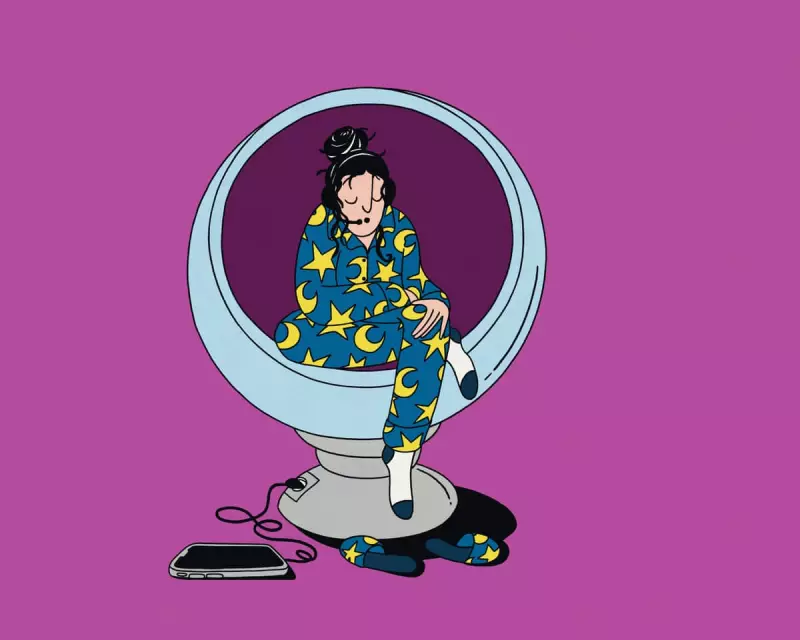
For six months, I worked as a telephone psychic, despite having no supernatural abilities. My only real talent was sounding genuinely interested in strangers' love lives at 2:17 in the morning. During those hundreds of billable hours, I sat on my living room floor in plaid pyjamas, wearing a telemarketing headset, charging callers by the minute for insights into their lives. While some might call this a con, I wasn't a dangerous one—just someone trying to find meaning while navigating my own challenges.
From Publishing to Psychic Readings
It all began after I quit my job as an editor at a publishing company to write a novel. To make ends meet, I took on telemarketing shifts from my kitchen table, cold-calling strangers about energy bills. Struck by writer's block and a growing desire to have a baby, I felt lost. Then, an ad popped up among remote job listings: "Work from home! Use your intuition to help others find clarity!" The description mentioned a rigorous application process and demonstration of skill, which left me wondering how a psychic job interview would work—would I need to commune with dead relatives?
When I applied, I was likely seeking purpose, much like the people who would later call the hotlines. The interview, however, was far from mystical. It was a two-minute chat with a man in accounts who asked if I had fast Wi-Fi, then sent me a contract to sign. There was no trial call or verification of skill. As an afterthought, he asked which method of clairvoyance I used. I claimed a decade of experience reading tarot cards, which wasn't entirely a lie—I had bought my first deck at age 12 from Waterstones on Hampstead High Street.
The First Calls and Growing Testimonials
Logging on the next morning, I worried about juggling magical prophecies with energy packages, but for two weeks, no one called. My psychic profile had no testimonials and a stock photo of the moon. The first caller likely dialled by mistake, as I was the only psychic working at 9 a.m. on a Monday—most psychics logged in after dark. The call lasted less than a minute; a man apologised, said he hated his job but didn't know if he should quit. I offered a vague insight, and he hung up before I finished. I felt bad not for pretending to be psychic, but for not pretending better.
A week later, I got my second call in the evening. A woman wanted to know if she should give her ex another chance. My teenage years of analysing crushes with friends prepared me well. She just wanted to chat, living in a small northern town where she couldn't talk to friends or family about her ex. I listened, barely getting a word in, and when I suggested the "cards" indicated she needed self-care, she approved. She gave me a five-star review and called six more times over the next few months.
The Reality of the Job
The pay was 20p a minute, 25p for calls over 14 minutes. Working more than 10 hours a week increased it slightly, but missing a call while online docked £1.50 from pay. It was hard to make minimum wage, though accounts claimed the star employee, Luna, earned well by astrally projecting. As my testimonials grew, I received one or two calls each evening, increasing weekly.
Most callers opened with hesitant phrases like "I don't know why I'm calling." They weren't seeking magic—they needed to talk. I offered basic, sensible advice: don't quit your job without another lined up, avoid sleeping with your boss, be kind to ageing parents. One woman called daily about renovating her flat, even asking for my psychic opinion on wallpaper patterns from Dunelm. Common questions included "Is my ex thinking about me?" and "Is my boyfriend cheating?" Callers often knew the answers but craved a listener.
Ethical Dilemmas and Emotional Toll
Initially, I didn't feel guilty. The industry is more regulated now, with clear pricing and "for entertainment purposes only" disclaimers. I wasn't targeting vulnerable people on social media. In fact, I'd add this experience to my CV if it weren't misleading: strong interpersonal skills, managing sensitive conversations, building rapport quickly. I offered inexpensive minutes of undivided attention and validation, a substitute for private therapy.
But darkness crept in. A caller asked if her dead mother was disappointed in her. I suggested she release herself from her mother's expectations, and she spoke for an hour. In a review, she claimed I knew impossible details about her mother, giving her comfort. Now, guilt set in—her pain lingered. Another caller, a former veterinary assistant with agoraphobia, relied on psychic advice for anxiety, calling twice daily. I urged her to seek NHS therapy, but she preferred spending £10 for kind words about her future.
Twice, I had to direct clients to Samaritans for self-harm or suicide mentions. The job's melancholy poured into me; I started feeling callers' grief or anger before they spoke. It wasn't supernatural—I had tapped into a dark wavelength of human need. I stopped not out of guilt for pretending, but because I became too attuned to their pain.
The Final Call and Moving On
The call that ended it wasn't dramatic. A woman asked from her car if she'd get pregnant this month. Her voice was steady, but I sensed her desperation. She had been trying for five years, couldn't afford IVF. A baby was all I wanted too, then. Every instinct said to reassure her, to sell more minutes of hope. Instead, I gave vague kindness, and she hung up sounding lighter, but I felt worse. I knew she'd call again, and I'd remember her voice, pausing her life because of my words.
Sitting in my pyjamas, headset warm, I knew I wasn't doing the right thing. I logged off the next day, after a free call with Luna, the star psychic. She could only astrally project during full moons but guessed I was at a crossroads. She said "the subject of clairvoyance" would be important to me—a phrase I wrote down.
Reflections and Legacy
I never finished that novel, but I went on to have three children. Ten years later, I'm publishing a novel about a toxic friendship between a webcam psychic and a client, exploring charisma, empathy, and fraud. Before leaving the platform, I said goodbye to my first reviewer, who had moved away, finished her A-levels, and found a new boyfriend. She thanked me for the advice but said I wasn't particularly clairvoyant.
That night, I could almost see my time as a telephone psychic not as a grift, but as a small, morally complex act of service. Almost. In an age where psychics have moved from telephones to TikTok and Instagram, my experience reminds us that sometimes, what people need most is just someone to listen.