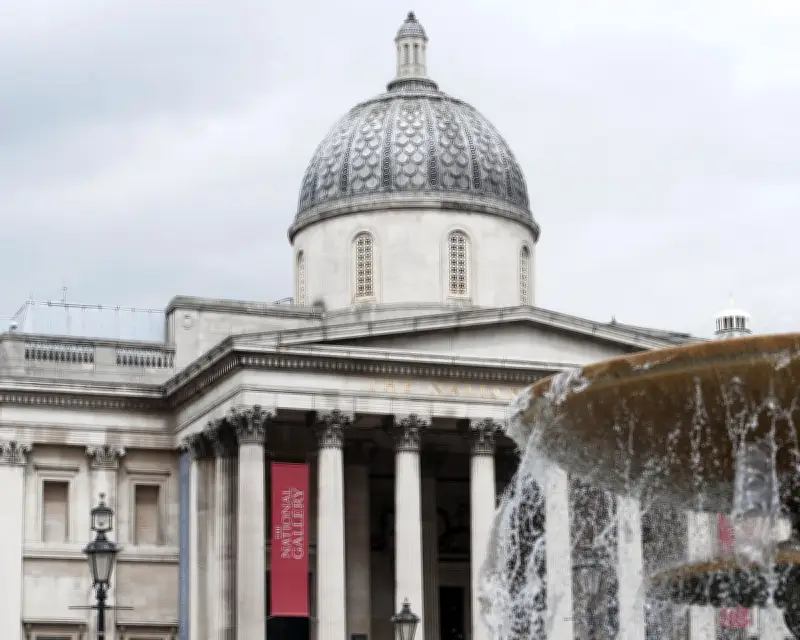
The National Gallery's outsourced security staff, predominantly from minority ethnic backgrounds, are being treated like 'second-class citizens', according to a senior curator who has exposed a stark divide in workplace facilities. While the gallery's mainly white employees enjoy a bright, airy 'hub' with subsidised catering, the security guards are confined to a 'stifling' basement space that lacks natural light, air-conditioning, and proper amenities.
Two-Tier Facilities Spark Outrage
The curator, who spoke to the Guardian on condition of anonymity, described the situation as 'potentially divisive' and a 'running joke' within the institution. The hub, created in previously underused spaces between and beneath exhibition halls, is off-limits to the security team, who are instead directed to a basement described as 'dingy, dirty and dark', with broken furniture and ongoing rodent problems. Staff have compared the arrangement to the television drama 'Upstairs, Downstairs', which explored class relations in Edwardian England.
'There's this beautiful hub area. You've got all the in-house, largely white staff in there,' the curator said. 'The poor facilities in a basement area are used by black and Asian security staff.' The hub boasts a heavily subsidised canteen with its own chef, while the basement offers only a kiosk selling items like KitKats and no cooked food. 'It wasn't meant for people,' the curator added. 'It was meant for storage.'
Union Condemns 'Absolute Contempt'
The Public and Commercial Services (PCS) union, which represents the security staff, has written to the gallery's director, arguing that the practice is 'potentially discriminatory under the Equality Act 2010'. The union highlighted that the basement is 'unventilated and accessible only by ducking under pipes', calling the treatment 'absolute contempt'. Nick Marro, PCS culture group secretary, told the Guardian: 'There is no excuse for the two-tier workforce … Our members deserve equal treatment.'
The National Gallery has defended the policy, stating that security staff have never had access to the hub offices since they were established 'due to wider space constraints', and that dedicated facilities are provided elsewhere. The gallery noted that CIS Security, which employs the guards, had recently conducted a staff survey and was implementing improvements, including a subsidised vending machine. It also said it works with specialist contractors to manage pest-control issues as part of routine facilities management.
Security Concerns and Art Attacks
Beyond the facilities dispute, the curator warned that the gallery may be putting its collection at risk by expecting individual guards to cover up to four rooms simultaneously. One observer noted that guards can only be in one room at a time, making them easy to distract. This concern is underscored by recent incidents, including Just Stop Oil activists throwing tomato soup at Van Gogh's 'Sunflowers' and attacking Velázquez's 'Rokeby Venus' with hammers. The gallery declined to comment on security operations, citing the need to keep such details under review for security reasons.
Calls for Equality and Action
The PCS union is still awaiting a response to its letter sent on 1 July, which demanded an end to the segregation. The curator emphasised that on any given day, around 60 guards are on site, but only a handful take breaks simultaneously, undermining the gallery's overcrowding argument. 'So the argument that the hub's overcrowded is probably pushing it a bit,' the curator said.
As the controversy unfolds, the National Gallery faces mounting pressure to address the inequality. The gallery maintains it has consulted security staff on catering preferences and is monitoring the situation, but the union and staff remain unconvinced. The outcome could set a precedent for how cultural institutions treat outsourced workers, particularly those from minority backgrounds, in an era of heightened awareness of workplace discrimination.