
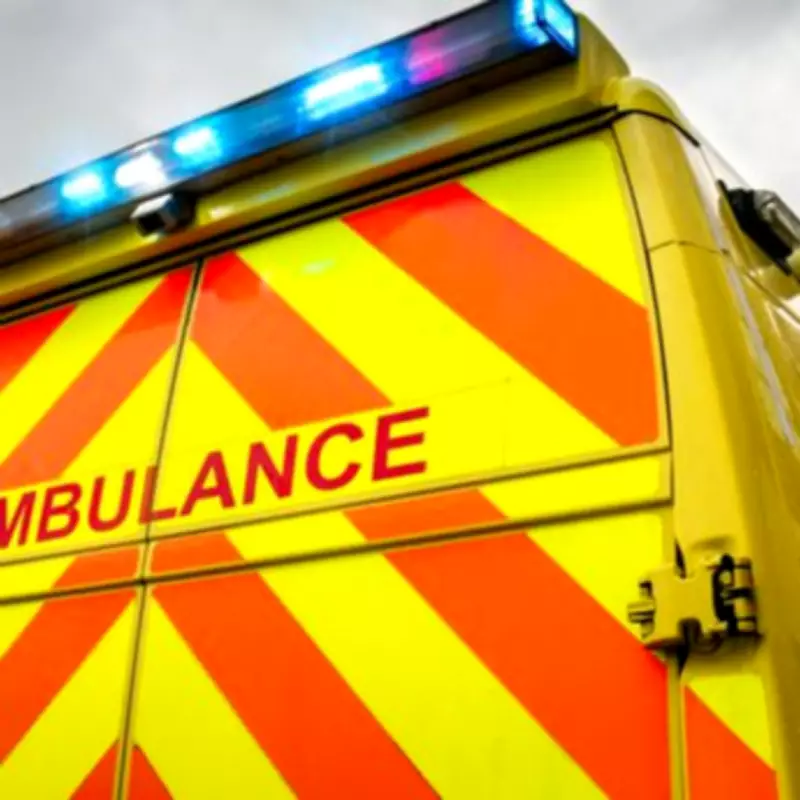
Coroner Issues Urgent Warning After London Woman Dies Following 5.5-Hour Ambulance Wait
A coroner has issued a stark warning to the Government following the death of a North London woman who waited over five hours for an ambulance that should have reached her within two hours. The case has highlighted severe pressures on emergency services across the capital.
Tragic Timeline of Events
On June 19 last year, 70-year-old Dorothy Margaret Hoyberg from North London called 999 at 8:08am reporting severe leg pain that had worsened over the previous day, alongside symptoms of a gastric bug she had experienced for a week. Initially classified as a Category 5 case - meaning not requiring immediate emergency response - she was advised to contact NHS 111.
Dorothy called 111 at 8:27am, reporting that her lower back pain was now radiating into her groin and affecting her breathing. Following this call, NHS 111 triaged her as requiring a Category 3 face-to-face response within two hours, a classification that was reviewed and confirmed by a paramedic at 9:28am.
Despite multiple attempts to dispatch an ambulance, it wasn't until 3:03pm - more than five hours after her initial emergency call - that a crew arrived at her home, where they found Dorothy already deceased.
System Under Extreme Pressure
The London Ambulance Service was operating at REAP Level 4 that day - the highest and most severe alert level indicating extreme pressure where services cannot fully meet demand. The coroner's report reveals that by 9am, ambulance targets were already being breached, with the service struggling to meet even Category 2 response targets requiring an average 18-minute response time.
Welfare calls were made to Dorothy at 10:06am and 10:25am, during which she reported worsening abdominal pain extending into her leg. A neighbour made an additional 999 call at 10:22am at Dorothy's request, reporting hearing her "moaning and groaning." The neighbour reported hearing similar sounds, along with a commotion, at around 1pm.
The last welfare check occurred at 12:25pm, after which demand on the ambulance service was described as "so high" that there was no capacity for further calls. A double-crewed ambulance was eventually dispatched at 2:40pm, arriving 23 minutes later to find Dorothy had passed away.
Coroner's Grave Concerns
Following an inquest at St Pancras Coroner's Court that concluded on January 12, the coroner determined that "there is a risk that future deaths will occur unless action is taken." The report notes that while there were no errors in the Category 3 disposition, the system was overwhelmed.
"Demand outstripped capacity," the coroner stated. "An ambulance should have reached Dorothy within two hours but it took five and a half. I heard evidence that this is a pan-London problem, and it does not appear to be restricted to London. The demand on ambulance services is increasing and the number of patients requiring their services is increasing."
The coroner added that ambulance services are facing "extreme pressure" causing "a systems challenge and long delays for patients," noting that while welfare calls should ideally occur every 30 minutes, the service had to prioritise demand and deploy clinicians where most needed.
Medical Findings and Family Context
A post-mortem examination could not determine the cause of Dorothy's leg and abdominal pain, but a toxicology report revealed elevated levels of morphine and methadone. The coroner's investigation concluded her death was "drug-related."
The report notes that Dorothy had a long-standing history of substance misuse but, according to her family, had been stable on methadone treatment for some time prior to her death.
Official Responses and Required Action
The prevention of future deaths report has been sent to Dorothy's family and the London Ambulance Service, with the coroner calling on Secretary of State for Health and Social Care Wes Streeting to respond within 56 days with details of any action taken.
London Ambulance Service Chief Executive Jason Killens said: "We offer our sincere condolences to the family of Ms Hoyberg and are very sorry for the delay in sending an ambulance. At the time of her calls, we were experiencing extreme pressure and operating under REAP 4 - the highest level of escalation - with demand far exceeding the resources that we had available to respond."
He added that since the incident, the service has worked to improve response times through technological innovation and increased telephone clinical support. The Department of Health and Social Care was approached for comment but did not respond ahead of publication.
This tragic case underscores the systemic challenges facing emergency medical services in London and across the country, with the coroner's urgent intervention highlighting the need for immediate governmental action to prevent similar fatalities.




