
The story of Craig began in 1998 Nottingham, where a tall, blond 13-year-old had become just another invisible face among the city's runaway children. Absconded from a local children's home, he joined dozens of other young people congregating in the market square - some avoiding school, others like his friend Mikey simply not bothering to go home, and the youngest, 12-year-old Mark, claiming he'd spent his birthday on the streets.
A Childhood Lost to the Streets
Craig's first experience of homelessness involved gathering cardboard stored behind bins, having learned from experienced rough sleepers that it "keeps the cold off your bones." For about a week, he and his newfound friends slept together in an alleyway, creating a fragile community of children the system had failed.
This was the era when runaway numbers reached crisis levels, with a Children's Society report estimating 100,000 children fled home annually. Channel 4's documentary series Staying Lost captured Craig's story as he navigated precarious survival - from half-derelict squats near the station to attempted camping on the Forest recreation ground, where the nearby red-light district created an uneasy atmosphere.
Even brief returns to his mother's home offered no sanctuary. "There was no sign left that he'd ever lived there," recalled filmmaker Pamela Gordon, who documented his life. His mother described him as "a nightmare" whose "antics" had exhausted her patience, leaving no room for the 13-year-old in the carefully wiped home.
The Cycle of Institutional Failure
Jodie Young, herself a care system survivor, became an unlikely protector. "You risk something worse happening when you run off but you still feel anywhere's better than care," she explained, offering temporary refuge in her flat with boyfriend Dave and their jack russell, Penny.
Neither Craig nor Jodie spoke about life at Beechwood House, the residential home he kept escaping. Their unspoken understanding hinted at buried trauma that would only surface decades later when an independent inquiry revealed "appalling sexual and physical abuse" at Nottingham council care facilities, with Beechwood House specifically mentioned for allowing violent and sexually abusive staff free rein.
The documentary faced council opposition, with Nottingham authorities seeking an injunction to prevent broadcasting. After gruelling court battles, Staying Lost aired in April 2000 when Craig was nearly 16, but his decline had already begun.
From Young Offender to Prison Regular
Minor crimes escalated into a pattern that solicitor advocate Steven Ramsell witnessed from their first meeting in 2004. "If you looked at the outer husk you'd see a shop thief, a pest," Ramsell observed. "Yes, he'd committed loads of crime, but it was low level stuff, and it was the only thing he knew."
By 25, Craig was "almost incapable of functioning in modern society," according to Ramsell. Prison became his second home, with Craig writing in 2017: "While I was out there I just did not know how to live normally. I felt awkward and out of place all the time."
Heroin addiction took hold, though as Jodie once noted, "No one wakes up in the morning and decides to become a heroin addict." For Craig, drugs offered coping mechanisms in an otherwise overwhelming world.
Glimmers of Hope Extinguished
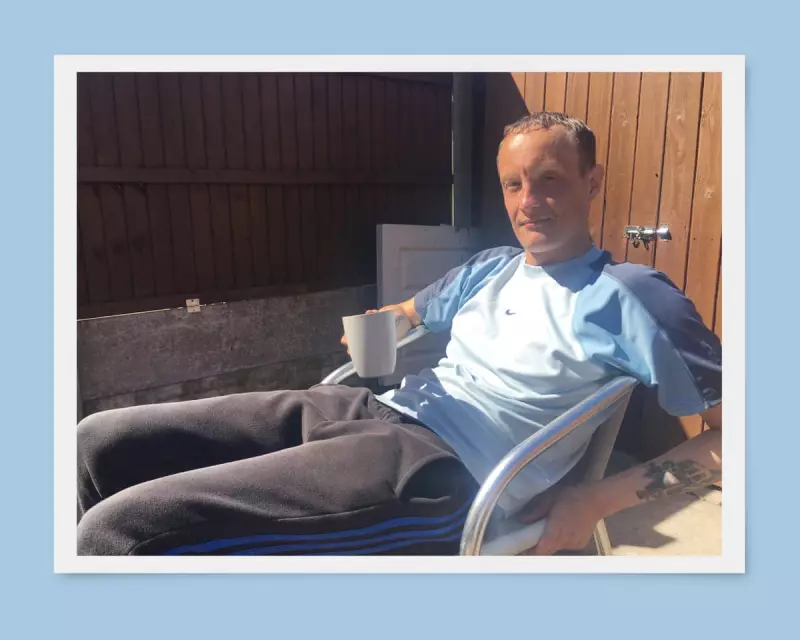
Brief moments of stability emerged, like early 2019 when chaplain John Seeney secured Craig a room in Ilkeston. He went swimming, visited the library to learn computer skills, and volunteered at a church cafe. He had milk in his fridge and made visitors tea - small domestic victories that proved fleeting.
Rules for ex-prisoners proved unforgiving, and an incident involving thrown kettles and unauthorized visitors saw him ejected and recalled to prison. Art psychotherapist Tara Tan worked with him during later sentences, noting he "found it difficult to open up for fear of being hurt more."
His final release in May 2025 came with emergency accommodation through The Community Accommodation Service, a last-resort option for prisoners with no fixed address. Probation services noted he "struggled to engage," having burned most bridges with support systems.
A Statistical Tragedy
On June 29, 2025, Craig was found dead on steps just a mile from where he first slept rough at 13. He will be counted among the 1,600 homeless deaths recorded last year, and potentially among UK drug deaths that reached 5,565 in 2024 - the highest since records began.
His cremation was a public health service arranged by the council - what Ramsell called "a paupers' funeral, the final tragedy in a tragic life." In an unusual move, pathologists retained Craig's entire brain for detailed examination, seeking answers that might have saved him when he was alive.
At his prison memorial, Jodie Young, now two years clean from heroin and working as a drugs peer mentor, asked: "What's the point of me volunteering at drug services and helping save people's lives when I can't even save the people I care about?"
Craig's story stands as a devastating indictment of systems that failed to protect a vulnerable child and never managed to catch him as he fell.




