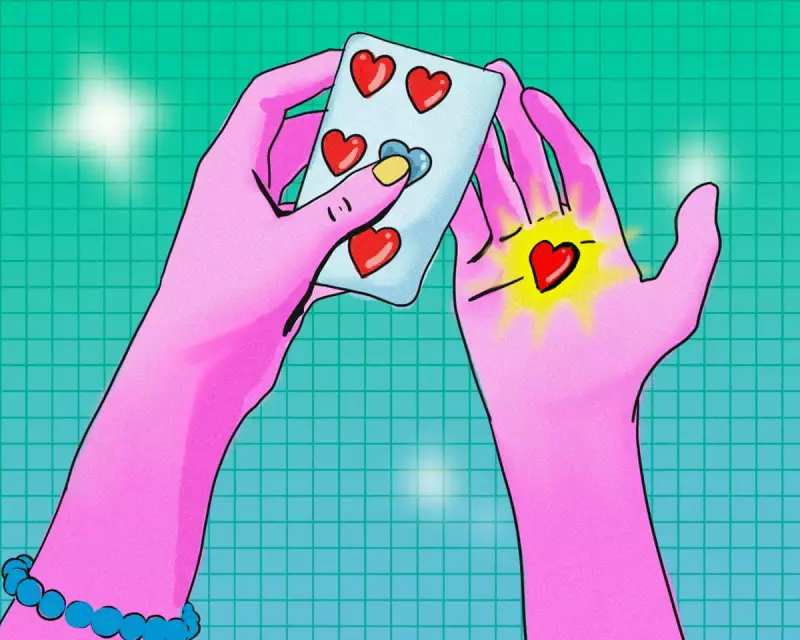
The concept of 'love addiction' is frequently used by researchers and individuals to describe a pattern of destructive, all-consuming romantic fixation. But is it a legitimate condition, or simply a shorthand for unhealthy relationship behaviours? The debate continues among experts, even as figures like author Elizabeth Gilbert publicly identify with the label.
Defining a Contested Condition
For decades, love addiction has been a topic of academic study, yet experts remain divided. The core question is whether the term 'addiction' accurately captures destructive romantic obsession, or if it's better understood as a mix of attachment disorders, behavioural patterns, and relational dysfunction.
Some professionals caution against over-pathologising normal human experiences. Sex therapist Erin Davidson suggests alternative descriptions like 'a person struggling with boundaries' to avoid the potentially reductive or shaming connotations of 'love addict'.
Despite the debate, many use the concept as a useful framework. A 2023 research survey classifies it as a type of behavioural dependence, similar to addictions to gaming or shopping. While demographic data is limited, a 2011 study estimated that around 3% of the US population could be considered love addicts.
It is crucial to note that neither sex nor love addiction is a formal diagnosis in the DSM-5, the standard manual for mental health disorders, due to a lack of expert consensus.
The Symptoms and Science of Addictive Love
What does love addiction look like in practice? According to behavioural models, it may involve high 'salience', where most thoughts fixate on the loved one, and 'mood modification', using the relationship to cope with negative feelings. It also features 'conflict', where the obsession interferes with daily life.
Psychologist Dr Steve Sussman notes that love addicts may exhibit traits of 'immature' love, feel desperate when single, or immediately replace ended relationships. For self-identified love addict Cyn Posner, 50, it meant pursuing unavailable partners and staying in damaging relationships due to an inability to be alone.
Neurologically, the pull makes sense. The pursuit of love, approval, and validation triggers feel-good neurotransmitters like oxytocin and dopamine. Dr Brian Earp, an associate professor, describes being in love as 'phenomenologically identical to being high'—an altered, thrilling state that can compel people to chase intensity above all else.
The line is crossed when this pursuit becomes uncontrollable, disrupting a balanced life and causing suffering. The euphoria becomes maladaptive, 'getting in the way of what a person wants for their life or relationships,' says Davidson.
Root Causes and Paths to Recovery
There is no single cause for love addiction. It likely stems from a complex interplay of genetic, psychological, social, and developmental factors. Counsellor Sheila Lashley, specialising in the area, often traces clients' patterns back to childhood trauma, such as abuse, abandonment, or emotional neglect.
Concepts like attachment theory and codependency are often illuminating. Lashley states a telling characteristic: 'Not all codependents are love addicts, but all love addicts are codependent.' The condition can also co-occur with other disorders like ADHD, OCD, anxiety, and depression. An estimated 40% of love addicts also struggle with substance use disorders.
While no evidence-based treatment protocol exists, therapy can help individuals understand their patterns and build self-esteem. Recovery groups like Sex and Love Addicts Anonymous (SLAA) or Love Addicts Anonymous (LAA) provide accessible support and community, though their 12-step, spiritually-oriented model isn't for everyone.
Unlike substance recovery, the goal isn't abstinence but cultivating healthy relationships. Individuals like Posner work with sponsors to create 'top line' goals (e.g., seeking stable partnership) and 'bottom line' behaviours to avoid (e.g., 'ex-stalking on social media').
As Elizabeth Gilbert describes in her memoir, recovery involves reorienting from high-adrenaline affairs toward steadier satisfactions and self-love. The struggle, it seems, is ancient. The Roman poet Ovid's 'cure for love' from the first century BC advised space, distraction, and seeking fulfilment from within—advice that remains profoundly relevant today.