The Mysterious Death of Drag Queen Heklina: A London Tragedy
The performer was discovered deceased in what authorities described as "unexpected" circumstances within her London residence in 2023. Her loved ones remain in a state of uncertainty, still awaiting comprehensive explanations regarding the tragic event.
A Legendary Figure in Drag Culture
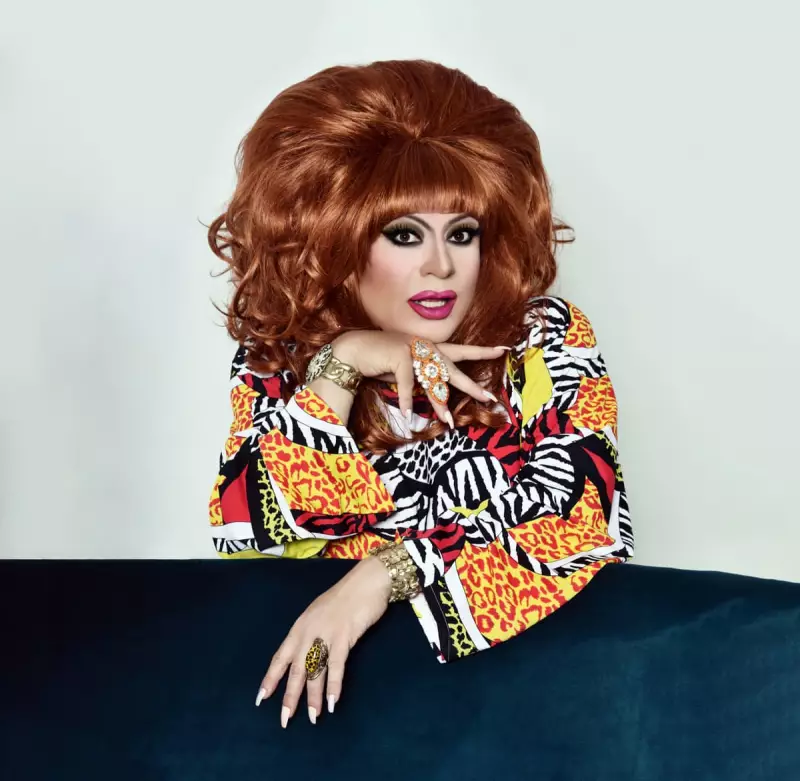
In the vibrant world of San Francisco's drag scene, Heklina established herself as a legendary performer. Her stage presence combined raunchy humour with an abrasive edge, delivering sharp insults known as "reads" within drag tradition. Sister Roma, her longtime collaborator, reflects: "Yeah, she was a bitch, but she was a bitch in the best possible way."
Seven weeks following her passing, San Francisco's Castro Street closed for a memorial that drew massive crowds. The city's queer community honoured Heklina not merely as a drag queen but as a shrewd promoter. Her long-running event series Trannyshack provided a crucial platform for emerging drag artists, including future stars from RuPaul's Drag Race such as Alaska, BenDeLaCreme, and Jinkx Monsoon.
Monsoon credits Heklina with giving her the drag gig that launched her career, describing her as part of the "old guard of drag" who achieved recognition before television shows dominated the scene. Alaska recalls attending a Heklina show on her 22nd birthday, which inspired her to pursue drag: "I witnessed drag on stage that was raw and real and told a story. It was lawless and wild. I was hooked."
The London Incident and Investigation Delays
Heklina was just 55 years old when she died in London. Her close friend and collaborator of 27 years, Peaches Christ, discovered her body. On 3 April 2023, Peaches wrote: "I am shocked and horrified to bring this news to you. I am living in a real-life nightmare so forgive me if I don't have all the answers right now."
Nearly three years later, Peaches remains with few answers. The police investigation progressed so slowly that it prompted demonstrations where queer protesters, drag queens, and allies marched outside Scotland Yard. They held photos of Heklina and placards with slogans like "We deserve justice, not discrimination." Peaches began to suspect that drag queens working in queer nightlife, whose sex lives might be unconventional, are not deemed worthy of the same level of police attention as others.
Heklina had been in London to perform Mommie Queerest, a drag parody she had been staging with Peaches for over two decades. They were staying in a flat on Soho Square while rehearsing at the nearby Soho Theatre. On a day off, Heklina arranged a hook-up, a habit she often discussed on stage. Peaches stayed in a nearby hotel to give her privacy.
Returning to the apartment on the morning of 3 April, Peaches found the front door unlocked. Inside, Heklina's makeup was on the table, and her bedroom door was open. After tidying and preparing lunches, Peaches entered the darkened living room to draw the curtains and discovered Heklina's body. "I found her on the floor, in drag, in a very unusual position," she recalls. "It looked like yoga – she was on her knees with her face on the ground and both hands on either side of her head."
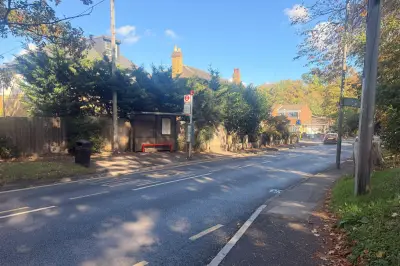
Police were called at 9.47am, and Heklina was pronounced dead. The drugs GHB and methamphetamine were found in her body at potentially fatal levels. While the circumstances likely indicate an accidental overdose during chemsex, a cause of death remains unconfirmed, and an inquest has yet to take place. Nearly two years after her death, police released previously unseen CCTV footage showing three men walking away from Heklina's flat, raising further questions as they remain unidentified.
Early Life and Career Beginnings
Heklina was born Steven Grygelko in 1967 near Minneapolis, Minnesota. His father, of Native American and Polish heritage, met his mother in Iceland while stationed with the US Navy. He described his childhood as unhappy, with parents who divorced and struggled with alcoholism. "There was a lot of chaos in my childhood and teen years," he said in a 2022 podcast. "I was able to kind of rise above all that. And I really credit the gay thing for that, because I just knew there was a more fabulous life waiting in the big city."
Moving to San Francisco in 1991, he found his tribe. His first drag performance was at the Miss Uranus pageant in 1992, where he spontaneously devised the name Heklina, derived from the Icelandic volcano Hekla. By 1996, he was working at The Stud gay bar and launched Trannyshack, a weekly party that began at midnight. The stage was initially made from wooden planks stacked on beer crates, liable to collapse during energetic performances.
Trannyshack and Drag Innovation
Heklina championed an inclusive approach to drag, welcoming performers regardless of gender identity. Ana Matronic of Scissor Sisters, who performed regularly at Trannyshack, recalls: "Heklina's policy was very open. As long as you were a good performer, you had a place on the stage." The band's 2004 song Filthy/Gorgeous is inspired by this period, featuring Heklina briefly in its music video.
Trannyshack was transgressive, inspired more by John Waters than old Hollywood. "Numbers would involve blood and vomit and faeces," says Sister Roma. "You never knew what you were going to get. It was wild, and if you went there, you had to be prepared for that." Alaska notes: "San Francisco drag at that time had no rules. Trannyshack was anti-rules. It was representative of the truth of our community in a way that something on television could never be, still to this day."
The shows provided an outlet during the Aids epidemic. In the early 1990s, Heklina would check obituary pages weekly to see who had died. "It was a very surreal time of intense grief," she later recalled. Trannyshack emerged as a celebration after mourning, with Heklina noting: "People had just stopped dying of Aids because new medications came out. It felt like a celebration after all that mourning."
Personal Struggles and Generosity
Heklina lived with HIV for many years and battled substance addiction throughout her adult life. Despite her frosty persona, friends highlighted her generosity after her death. She helped pay rent, hired struggling performers, and supported those with substance abuse issues. "She did not want to be known for being kind," says Peaches. "Behind the scenes she helped many people out, but would never publicise it."
In 2014, Heklina opened Oasis theatre and nightclub with business partners, creating a space run by drag queens for drag queens. By 2020, she moved to a house near Palm Springs, planning to grow old there with her friend Nancy.
Police Handling and Institutional Bias
After Heklina's death, Peaches and Nancy faced silence from the Metropolitan police. Emails went unanswered for months, allowing conspiracy theories to flourish. When Peaches raised concerns about a cover-up, police finally responded in February 2024. An officer apologised for the investigation's handling, suggesting the main investigator had been replaced due to "conscious or unconscious bias."
This aligns with the Baroness Casey Review, published in March 2023, which found the Met institutionally racist, sexist, and homophobic. The report noted a 20% fall in LGBTQ+ Londoners' trust in the Met between 2015-2016 and 2021-2022. Homophobia within institutions manifests not only in active hatred but also in assumptions during investigations.
Kai O'Doherty of Galop, an LGBT+ anti-abuse charity, criticised the lack of meaningful action: "We have seen no meaningful action from the Met to address its institutional anti-LGBT+ prejudice. A comprehensive strategy to combat homophobia and transphobia in the Met is urgently needed."
Drag queen Crystal speculates on police bias: "I think that police see that tableau and go: OK, case closed, it's not really worth looking into. That's just what you get if you're that kind of gay." Cheddar Gorgeous adds: "If that had been a young white girl found dead in an Airbnb with men coming and going, regardless of what drugs were in her system and regardless of whether she liked to have hook-ups, I guarantee you that investigation would have gone forward at full pelt. That's homophobia manifest."
Protests and Ongoing Questions
Despite promises of better communication, the Met went silent again. Bungling moves included failing to access Heklina's phone, accidentally sending it to California, and needing to retrieve it. In January 2025, police released CCTV footage of three men from the night of Heklina's death, but Peaches noted that recognition chances had diminished over nearly two years.
Peaches organised protests in London and San Francisco on 31 March 2025 to raise awareness and pressure police. DCI Christina Jessah stated: "We know that many feel deep distress following Steven's death and some feel frustration with the pace of the police investigation. We are also aware of the concerns of Steven's next of kin and have apologised to them directly."
A review of the investigation is underway, with a new investigator assigned – the fifth on the case. "The detectives and the people they've assigned to us now are lovely," says Peaches. "They're doing damage control and they're very effective at it. They're gentle, they're communicating. But, for me, the damage has already been done."
Based on off-the-record conversations, it seems likely police will conclude Heklina's death was an accidental overdose with no foul play. Peaches wonders why it took so long: "Why not just say earlier she overdosed on drugs, no foul play, and be done with it? We would have thought it was sad and awful, but it never would have escalated into all this."
Legacy and Remembrance
For Peaches, justice for Heklina means "shining a light on the Met police's longstanding institutional homophobia." She asks: "Can we move the dial so that the police feel pressure to do better with future cases involving people from our community?"
In California, Heklina's loved ones are sorting through her estate. A benefit at Oasis raised $10,000 to digitise her video collection, containing over 300 hours of footage from the 1990s and 2000s. Nancy and Peaches are discussing a documentary about Heklina's life.
After cremation in London, Heklina's ashes were divided among family and loved ones. Nancy keeps her portion in a black clutch Heklina took to London, a fitting resting place for someone who refused to be bound by convention.
The community's response to this tragedy testifies to Heklina's influence. Beyond her bitchy demeanour, they honour the genuine love and care she poured into her queer family and her dedication to advancing drag as an art form. Jinkx Monsoon summarises: "Heklina will be remembered for helping create more drag in the world – drag of all styles and representations and backgrounds and messages. She lifted others up in a world where we are used to being pushed down."