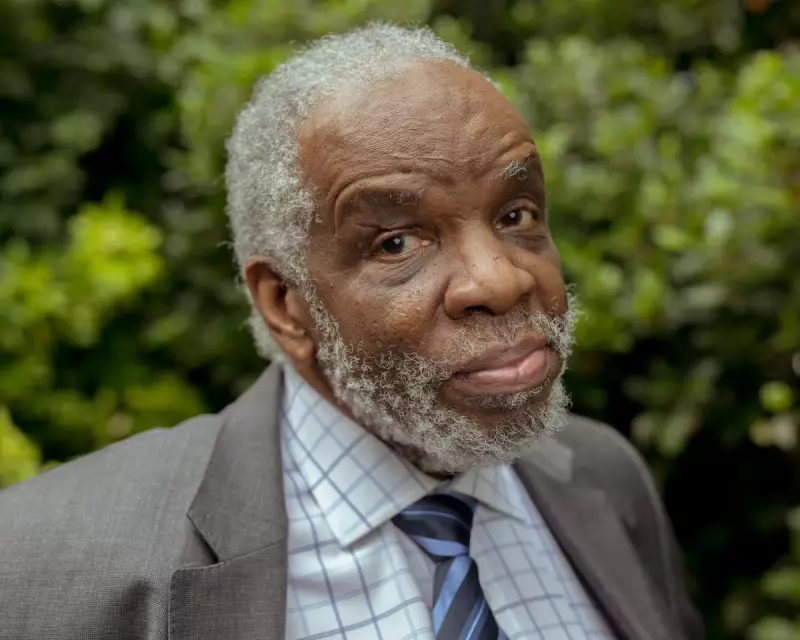
The pioneering psychiatrist Dr Aggrey Burke, who dedicated his life to challenging racial discrimination within Britain's medical and mental health systems, has died at the age of 82 from prostate cancer.
A Whistleblower Against Systemic Racism
In a landmark act of courage in 1986, Dr Aggrey Burke and his colleague Dr Joe Collier, both senior lecturers at St George's Hospital Medical School, exposed deeply entrenched discrimination in admissions. Their research provided clear evidence that St George's and other London medical schools were systematically rejecting applicants who were women or had 'foreign-sounding names'.
Choosing to blow the whistle, they published a paper that triggered a formal Commission for Racial Equality inquiry. This led to wholesale reforms of admission policies across the capital's medical institutions. Burke was acutely aware of the personal risk, later reflecting that they were treated 'as though one had offended against the whole system' and were made to feel like outcasts.
A Lifelong Champion for Justice and Community
As the first Black consultant psychiatrist in the UK, Burke's work extended far beyond the lecture hall. He was a formidable advocate for fair treatment of Black people within mental health services and for those ensnared in the criminal justice system.
One of his most notable interventions was the case of Rastafarian Stephen Thompson. In 1980, Thompson was sectioned into Rampton secure hospital after violently resisting prison officers who tried to cut off his dreadlocks, ignoring their religious significance. Burke was part of a team of independent psychiatrists who successfully negotiated for Thompson's release.
His commitment to community was visceral. He was on the ground following the New Cross house fire in January 1981, a tragedy that killed 14 Black teenagers and was a pivotal moment in Black British history. In the face of official silence, which sparked the massive Black People's Day of Action protest, Burke helped establish support groups for survivors and grieving families. He provided steadfast support through two inquests, in 1981 and 2004, and continued working with young people in the area into the 2020s.
From Jamaica to Becoming the 'People's Professor'
Born in St Elizabeth, Jamaica, in 1943, Burke moved to London at 16, where his family was one of the few Black households in Kew. After winning a scholarship to the elite Jamaica College, he found his UK education at Shene Grammar isolating, feeling he could 'never feel part of the thing'.
He studied medicine at the University of Birmingham, finding community by volunteering with the Harambee Organisation in Handsworth, helping run a supplementary school for Black children. After qualifying in 1968 and completing psychiatric training in the West Indies, he returned to the UK, eventually being appointed senior lecturer and then consultant psychiatrist at St George's in 1976.
Burke believed his whistleblowing cost him further promotion, yet he was widely and affectionately known as the 'people's professor'. His legacy was formally recognised with an honorary doctorate from Birmingham University in 2024, a place on the 100 Great Black Britons list in 2019, and the Royal College of Psychiatrists' President's Medal in 2020. In 2023, the College established the Aggrey Burke fellowship for Black medical students.
A co-founder and vice-chair of the George Padmore Institute archive in London, Burke remained an active trustee until his death. He is survived by his sister Marilia, three nephews and two nieces.