
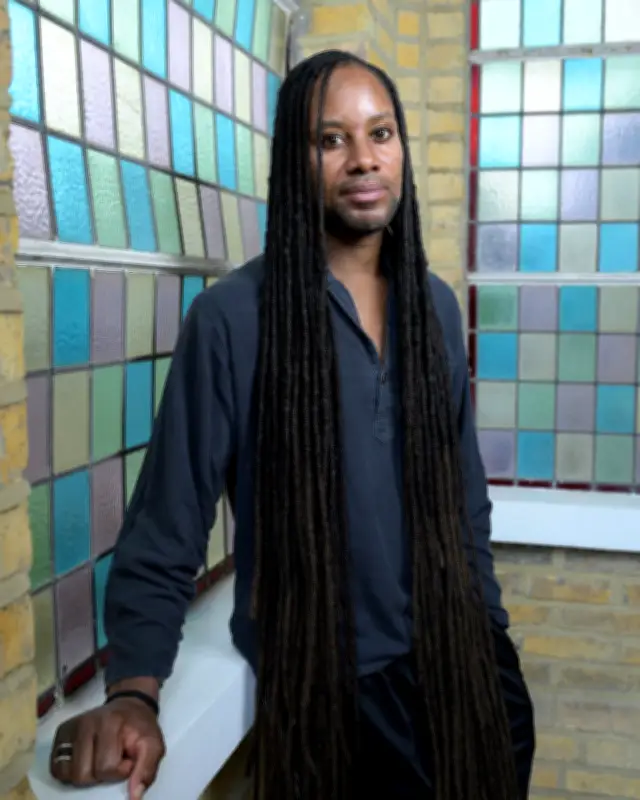
Jason Arday, the youngest black professor in Cambridge University's history, is at the center of a controversy involving plagiarism allegations and disputed claims of racist abuse. The university has called the accusations a "vile smear campaign," while some academics say there is a case to answer.
Plagiarism Allegations and the "Playbook"
Arday, who delivered a keynote at the British Sociological Association's 75th anniversary conference in April, spoke about a "playbook" used by conservative activists to target black academics. He described how inconsistencies, citation errors, and similar passages in their work are used to pressure universities into cutting ties, citing the case of Claudine Gay, Harvard's first black woman president, who resigned amid plagiarism allegations.
Last week, The Telegraph reported that analysis found more than 100 passages in Arday's PhD thesis were similar to a thesis by Paula Zwozdiak-Myers, published six years earlier. Nathan Cofnas, a self-defined "race realist" who was sacked by Cambridge's Emmanuel College in 2024, claimed to have used plagiarism detection software and found "many passages are lifted with minimal editing."
Dr. David Harris, professor emeritus at Plymouth Marjon University, had previously raised concerns about Arday's work, leading to corrections in papers from 2018 and 2020. Harris had been stripped of his title over a controversial post on critical race theory, but it was reinstated in 2026.
University Response and Support
Cambridge defended Arday, stating that complaints were passed to Liverpool John Moores University, where Arday completed his PhD, which reviewed the work and found no plagiarism. A spokesperson said, "We take allegations of academic misconduct incredibly seriously. It is university procedure that investigations are carried out by the institution at which the research was undertaken."
An open letter in support of Arday, signed by Green party leader Zack Polanski and academic Kehinde Andrews, argued there was "an orchestrated and grim effort to delegitimise a brilliant, young, working-class academic for the sin of being successful while Black."
Arday told the Guardian he fully supports "fair investigation processes for genuine concerns" and that multiple investigations concluded there was no plagiarism. However, some academics of color said the claims were legitimate and risked undermining others who study race. One anonymous academic said, "I think it's plagiarism and it's obvious." John Preston, emeritus professor at the University of Essex, added, "Having seen the evidence, it triangulates and there is, in my judgment, a case to answer here."
Fundraising and Athletic Claims Questioned
Arday's backstory includes claims of raising £5m for charity through endurance challenges, including running 30 marathons in 35 days and 600 miles in six days. However, when asked by the Guardian, Arday clarified the 600 miles was completed over 12 days due to "cumulative wear and tear." Southampton Solent University and Anglia Ruskin University amended their websites to reflect this change.
Arday also claimed to have run with a hairline fracture during the 30 marathons, a story that inspired tennis player Andy Murray to win Olympic gold in 2012. Doctors told the Guardian this would be incredibly painful but not impossible.
Claims of Abuse and Intimidation
Arday has claimed to be the victim of a campaign of abuse, including racist emails, a knife threat, and a severed pig's head delivered to his parents' home. In an open letter to minister Jacqui Smith, he detailed threats, physical assault, and items like bananas and bullets sent to him. He said a masked man confronted him twice at his faculty building, but the intruder was not caught on CCTV.
The Guardian found inconsistencies in Arday's claims. The butchers he named said no police had inquired about a pig, and the Metropolitan police said the details of the pig's head investigation were "categorically" incorrect. Arday took no photographs of the items and could produce no contemporaneous messages. He said, "To be honest with you, I thought you'd just believe me. Why would I lie?"
Impact on Academia
The controversy has raised concerns about the fragility of race studies in academia. Prof Preston said, "The whole area of the sociology of education, and particularly race studies within that, is very fragile... It's important for the whole discipline that he addresses these claims."
Arday, who was diagnosed with autism and global developmental delay at age three and could not speak until 11, has become a symbol of diversity in higher education. In an interview, he reflected, "I always wanted to be a person who flew close to the sun. But sometimes I wonder: did I fly too close?"




