For many people, leaving the house is a simple daily routine. For journalist Matilda Boseley, it became a mission requiring strategic planning and self-acceptance.
The Daily Struggle with Forgetfulness
Boseley describes spending 25 minutes searching for essentials like wallets, sunglasses, and work passes, frequently missing trains and arriving with nearly-dead phone batteries. The realisation that her morning medication remained on the kitchen counter became a frustratingly common occurrence.
While she acknowledges her attention deficit hyperactivity disorder (ADHD) contributes to these challenges, she emphasises that remembering numerous items under pressure would test anyone's cognitive abilities, regardless of neurotype.
"Rather than continuing to scold my brain and telling it to 'just do better', I decided to give it what it actually needed: fewer things to remember and better ways to remember them," Boseley explains.
Creating a Supportive Home Environment
Her solution began with environmental adjustments throughout her home. She installed checklists on doors, created dedicated charging stations for power banks and sunglasses, used brochure holders for important documents, and designated a specific corner for her bag to prevent it from disappearing into what she calls "the abyss."
Yet these systems didn't address the smaller, unpredictable needs that arise throughout the day—the Band-Aids, breath mints, and other handy items that transform difficult situations when readily available.
"If you're anything like me then you might have stocked up one bag with all the essentials, but what happens when you decide to take a briefcase instead of a backpack?" she questions. "This is an executive-functioning burden I've managed to take off my brain's plate."
The Ultimate Survival Pouch Solution
Boseley's breakthrough came with creating what she calls her "daily survival pouch"—a compact, easily transferable kit containing everything she might need when facing unexpected challenges.
Her method for selecting items involved initially gathering every potentially useful object from around her house into a large temporary pouch. After carrying this comprehensive collection for two weeks, she conducted an audit, keeping only the frequently used items and returning the rest to her cupboards.
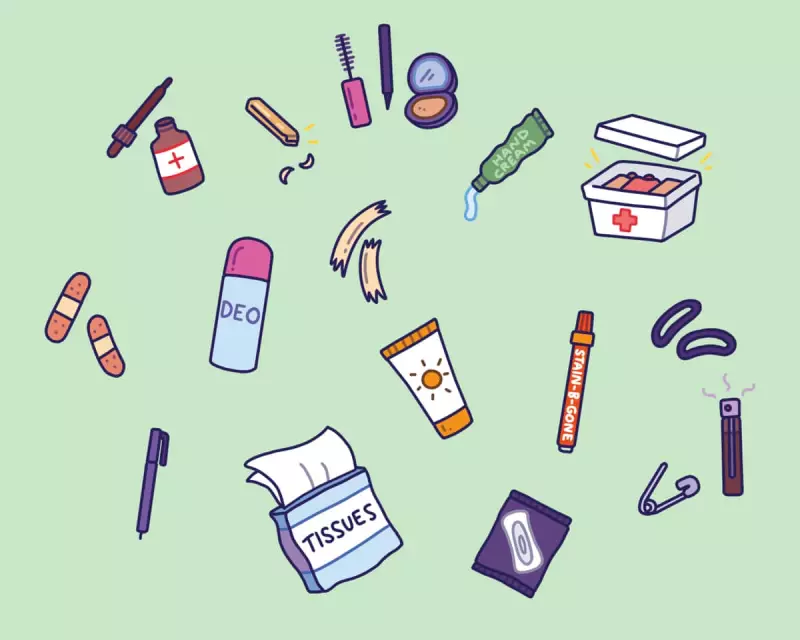
After two months of daily use, her refined survival kit includes:
- Miniature versions of deodorant, sunscreen, and hand cream
- A stain-remover pen and silent fidget toy
- Basic first aid supplies including iodine antiseptic, Band-Aids, and safety pins
- Personal care items like nail clippers, perfume, and fashion tape
- A mini pharmacy with three days' worth of daily medications, painkillers, allergy tablets, and throat lozenges
- Beauty essentials and practical items like hair ties and lens-cleaning wipes
The entire collection weighs just 240 grams and fits neatly into a 23×17 cm pouch that she barely notices in her bag.
Boseley maintains a separate "work pouch" that permanently resides in her backpack, containing additional items like dry shampoo, wet wipes, high-glucose jelly beans for when medication suppresses her appetite, spare underwear, and even a deck of cards.
The most rewarding aspect, she reveals, is becoming the person others turn to when they need something. "Now whenever someone says: 'Hey, does anyone have a—', you get to jump in and go: 'Yep, I do.' For the formerly forgetful, there is no better feeling in the world."
This approach represents a significant shift from self-criticism to practical support—creating systems that work with her brain's unique wiring rather than fighting against it.