
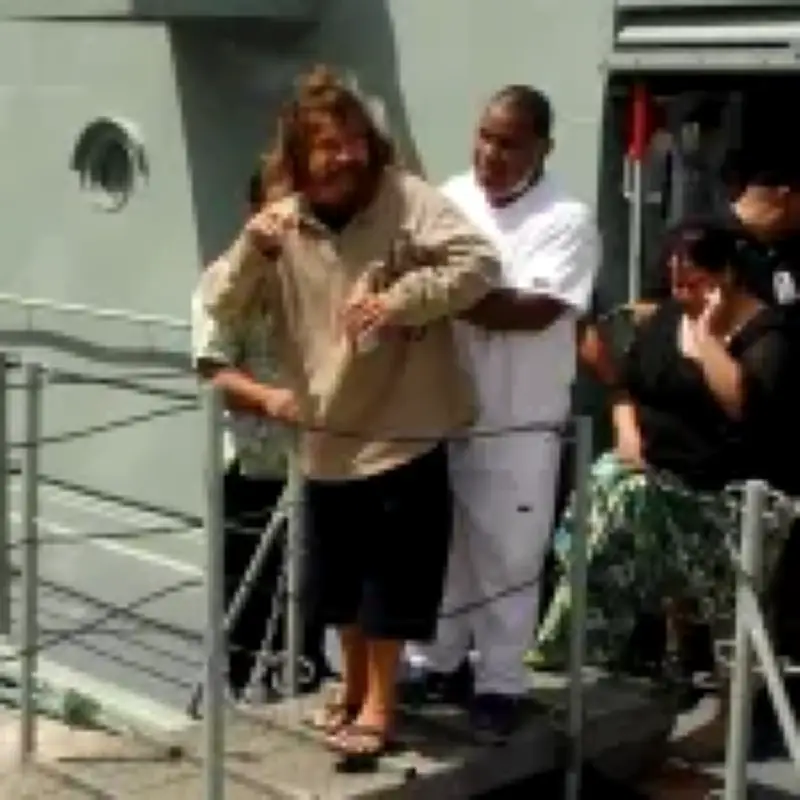
José Salvador Alvarenga, a fisherman from El Salvador, survived 438 days adrift in the Pacific Ocean after his small boat drifted 9,000 miles from Mexico to the Marshall Islands. His ordeal, which began in November 2012, made him the first person in recorded history to survive more than a year adrift in a small boat. When he stepped onto the dock in Majuro, the capital of the Marshall Islands, he was weak, swollen from fluid retention, and riddled with parasites from eating raw birds and drinking turtle blood.
From Routine Trip to Survival Nightmare
Alvarenga set sail from Costa Azul, Mexico, on what was supposed to be a two-day shark fishing trip with his apprentice, 22-year-old Ezequiel Córdoba. During a five-day storm, the boat's GPS broke and the motor failed, leaving the pair adrift and beyond the reach of the coastguard, more than 250 miles offshore. Tom Armbruster, then the US Ambassador in the Marshall Islands, was one of the first to speak to Alvarenga after his rescue. He described the boat as "almost like a glorified row boat. 25 feet long – a very simple craft that you would have offshore. It is not an ocean going vessel by any stretch of the imagination."
The boat had no cabin or roof, only a fibreglass crate the size of a fridge that served as Alvarenga's only shelter for over a year. Initially freezing and soaked, the pair later faced scorching heat and desperate thirst. "I was so hungry that I was eating my own fingernails, swallowing all the little pieces," Alvarenga told journalist Jonathan Franklin, who wrote the book 438 Days about the ordeal. He scooped jellyfish from the sea with his bare hands, drank his own urine, and licked the inside of the boat for drops of water. Once, they found a piece of already-chewed gum in a floating rubbish bag, which they shared.
Loss and Despair
Alvarenga and Córdoba survived by catching turtles and fish, and luring birds onto the boat to snare them. "He would drink the birds' blood and keep them until he needed them," Armbruster explained. Alvarenga tried to make every meal a ritual, sharing dried fish and sea turtle meat, but Córdoba could not bring himself to drink the blood. "Ezequiel simply couldn't drink the blood. He just couldn't get his body to do it, and he wasted away," Armbruster said. Four months into the ordeal, Córdoba told Alvarenga he was dying, and a few hours later, he was gone.
After Córdoba's death, Alvarenga propped him up and talked to him for days. When the young man's skin turned leathery, Alvarenga took his clothes, washed his feet, and sent him overboard. The following months were a cycle of hunting, desperation, and hallucinations. "At one point a container ship went by so close that he could see the faces of the men on board, and he was waving and trying to get their attention. They passed him by – and you could just see the heartbreak in his face," Armbruster recalled. Alvarenga considered suicide and even offering himself to the sharks, but as a fisherman, he continued day by day.
Rescue and Aftermath
After 14 months, Alvarenga spotted land but assumed it was another hallucination and went to sleep. He had actually seen the remote atolls of the Marshall Islands. When he awoke, he rowed for hours, swam the final stretch, and crawled onto the sand in shock. On Ebon, locals Emi Libokmeto and Russel Laikidrik took him in and fed him coconut water and pancakes. Armbruster and his deputy Norman Barth met him on the boat to the mainland, where Alvarenga's story began to emerge. "We were pretty quickly convinced that yes, this was a fisherman who'd been gone a long, long time. He was in shock, but he was coherent," Armbruster said.
After returning to dry land, Alvarenga struggled with water, nightmares, and the need for constant company. He later worked with Jonathan Franklin to share his story, hoping to help people experiencing depression and suicidal ideation. "I suffered so much and for so long. Maybe if people read this they will realise that if I can make it, they can make it," he told Franklin. Following the book's release, Córdoba's family filed a $1 million lawsuit citing cannibalism and defamation, but the claim was dropped after experts found no sign of foul play and Alvarenga passed a lie detector test. Since then, Alvarenga has kept a low profile, likely living in El Salvador or Mexico with his family. Armbruster summed up his impression: "He is one of the world's greatest survivors. An extraordinarily resourceful man with immense character. I came away thinking I'd just witnessed one of the greatest survival stories ever."




