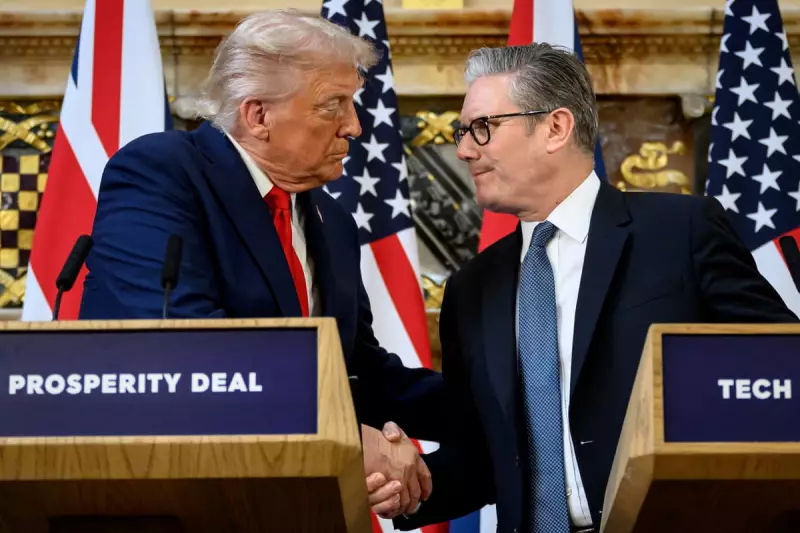
A landmark medicines agreement between the UK and the United States, struck during President Donald Trump's state visit in September, has ignited a fierce debate over the future of British trade policy and national sovereignty.
The Pharmaceutical Pact: Boosting NHS Access to New Treatments
The deal, championed by figures including Labour's Keir Starmer, is designed to improve patient access to cutting-edge medicines within the National Health Service. According to Richard Torbett, Chief Executive of the Association of the British Pharmaceutical Industry, the agreement directly addresses the UK's lagging position in life sciences investment.
The core mechanism changes how the National Institute for Health and Care Excellence (NICE) assesses cost-effectiveness. It raises the baseline threshold, theoretically enabling more new treatments to be approved for NHS use. The deal also introduces a cap on repayment rates for newer medicines at a maximum of 15% from 2026 to 2028, replacing what the industry calls an unpredictable system.
Proponents argue this creates a more stable, internationally competitive environment. They point to data showing that only around one-third of new treatments are available to UK patients across all their licensed uses, a situation they hope the pact will reverse.
A Wider Pattern of Concessions?
However, the medicines agreement is viewed by critics as part of a troubling pattern. Nick Dearden, Director of Global Justice Now, contends it is merely the latest example of submission to US demands.
He highlights a separate tech deal also agreed in September, which he says relinquishes important UK controls over the development of its technology sector. This, Dearden warns, has emboldened the US to push for further concessions, including the abandonment of the UK's digital services tax and constraints on regulating artificial intelligence.
The controversy deepened last week when Keir Starmer indicated he would no longer consider the UK joining an EU customs union, as it could conflict with elements of these US agreements. For opponents, this signals a dangerous prioritisation of transatlantic appeasement over domestic policy flexibility.
Sovereignty vs. Investment: The Central Trade-Off
The debate crystallises a fundamental tension in post-Brexit Britain. On one side is the urgent need to attract global investment and secure access to vital innovations, particularly in healthcare. The pharmaceutical industry insists a predictable commercial framework is essential for this.
On the other is the fear of diminished sovereignty. Critics frame the successive deals as a gradual erosion of the UK's right to set its own rules on taxation, technology, and public health procurement. The stark warning from campaigners is that this path could reduce the nation to a "vassal state" of the US.
The outcomes of these agreements, particularly their impact on NHS drug availability and pricing from 2026, will be closely watched. The dispute underscores the complex and high-stakes choices facing the UK as it forges its independent trade policy.