Medical Breakthrough in Manchester Offers New Hope
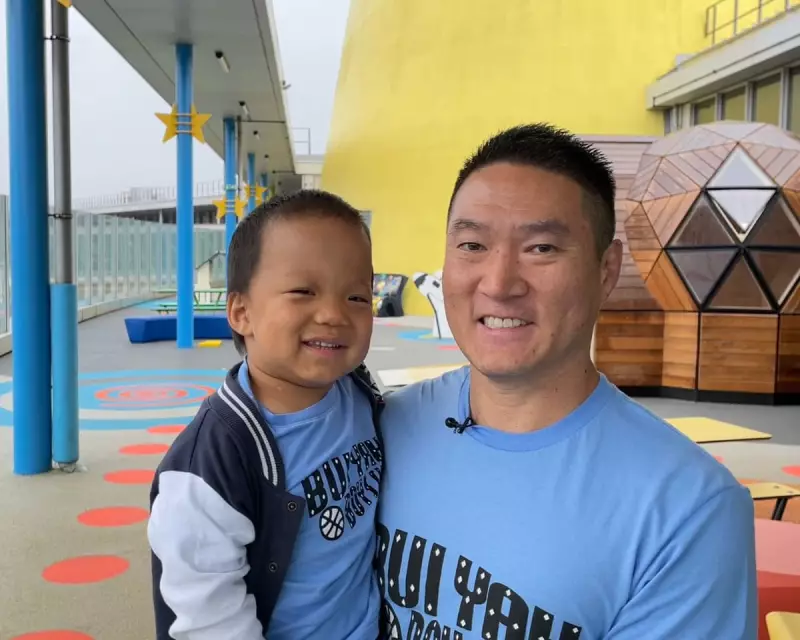
Doctors in Manchester are expressing cautious optimism after observing promising results in the first child to receive a revolutionary gene therapy for a devastating inherited condition. Three-year-old Oliver Chu from California has shown significant improvement nine months after becoming the inaugural patient in this pioneering clinical trial.
The Journey of Young Oliver Chu
Oliver was born with Hunter syndrome, a rare genetic disorder that primarily affects boys, occurring in approximately one in 100,000 male births globally. This condition stems from a faulty gene that prevents the body from producing a crucial enzyme needed to break down complex sugar molecules.
Without this essential enzyme, these molecules progressively accumulate in organs and tissues, leading to severe symptoms including joint stiffness, hearing loss, heart complications, and cognitive decline resembling dementia. The life expectancy for those affected typically ranges between just 10 to 20 years.
Revolutionary Treatment Approach
In February, medical professionals at Royal Manchester Children's Hospital, collaborating with the Manchester Centre for Genomic Medicine at Saint Mary's Hospital, performed the groundbreaking one-off therapy. The procedure involved collecting stem cells from Oliver's blood, replacing the defective gene with a functional copy, and then reinfusing the corrected cells back into his bloodstream.
Professor Simon Jones, consultant in paediatric inherited metabolic disease and joint leader of the trial, explained: "Things look really hopeful right now, but Ollie was the first human to receive this therapy and it's only been nine months out." He emphasised the need for long-term monitoring, noting that four more boys from the US, Europe, and Australia are scheduled to receive the treatment.
Life-Changing Results
The therapy has already yielded remarkable outcomes. Oliver no longer requires weekly infusions of Elaprase, the only licensed treatment previously available. While Elaprase costs approximately £375,000 per patient and must be administered for life, it cannot reach the brain and therefore fails to prevent cognitive decline.
Oliver's father, Ricky, shared his family's experience with the BBC: "I don't want to jinx it, but I feel like it's gone very, very well. His life is no longer dominated by needles and hospital visits. His speech, agility and cognitive development have all got dramatically better." He added that Oliver's improvement has been "exponential since the transplant" rather than following a slow, gradual curve.
Broader Implications and Future Prospects
The success of this treatment offers hope for Oliver's elder brother, Skyler, who also has Hunter syndrome. Although the therapy cannot reverse existing organ damage, tests indicate that five-year-old Skyler remains largely unaffected thus far.
Professor Jones highlighted the importance of early diagnosis, noting that no UK patients are participating in the trial because British children are typically not diagnosed with the condition soon enough. "To get the majority of patients treated with this dose we would need newborn screening on the heel prick test, which is now standard for Hunter syndrome in the US," he stated.
This innovative gene therapy approach is now being developed to address other genetic disorders that impair vital enzymes, including Hurler syndrome and Sanfilippo syndrome, potentially opening new treatment avenues for multiple rare conditions.