From Art School Aspirations to Surgical Excellence
If you had asked my younger self growing up in a rural Shropshire village about career ambitions, I would have enthusiastically discussed art and music long before mentioning surgical instruments or operating rooms. At eighteen years old, my plan was firmly set on attending art school until my mother intervened with a pragmatic conversation about financial stability. During that discussion, a surgical documentary played on our living room television, prompting a half-serious declaration that perhaps surgery would be my alternative path.
This casual remark set in motion a complete redirection of my academic journey. I repeated my A-level examinations and fought diligently for admission to medical school, ultimately qualifying as a physician in 1975. By 1986, I had advanced to become a consultant cardiothoracic surgeon at Papworth Hospital in Cambridge, specializing in the then-emerging field of heart repair procedures.
The Transformative Exhibition That Changed Everything
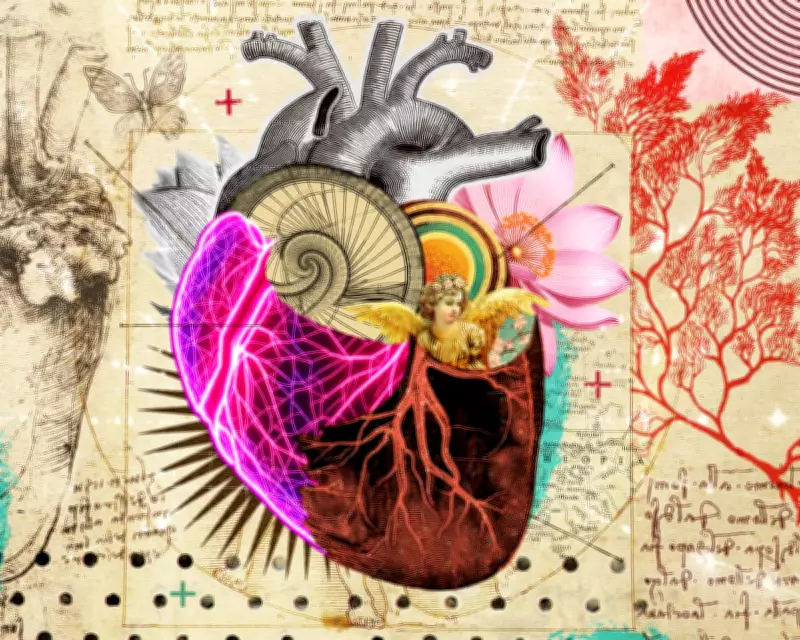
The pivotal moment in my professional development occurred in 1977 during clinical training at Charing Cross Hospital in London. While passing the Royal Academy one morning, I noticed they were hosting the first major UK exhibition of Leonardo da Vinci's anatomical drawings. Intrigued, I entered the gallery and experienced what can only be described as a profound awakening.
Although I had studied Leonardo's work during my A-level education, witnessing these drawings in person revealed dimensions I had never appreciated. The artworks radiated an unexpected warmth and humanity that transcended their scientific purpose. Leonardo's meticulous approach fascinated me - he had dissected approximately thirty human cadavers and numerous animals, documenting his observations through hundreds of detailed illustrations and notes.
What particularly captured my attention was not merely the aesthetic beauty of his line work, but the philosophical underpinning evident in his annotations. Leonardo consistently emphasized that every element in nature possessed deliberate purpose and form, a perspective that resonated deeply with my surgical practice.
Bridging Renaissance Insight with Modern Medicine
At that time, mitral valve surgery predominantly involved imposing mechanical solutions rather than restoring the body's natural physiology. Leonardo's work inspired me to reconsider fundamental questions about how the mitral valve actually functioned within the living body. I began developing surgical techniques that worked in harmony with the heart's inherent design rather than attempting to reshape it into something artificial.
Traditional mitral valve repair methods, while effective, often compromised natural movement - particularly problematic for younger, more active patients. The medical field had become increasingly dogmatic, with surgeons understandably favoring established techniques that were safe, defensible, and minimized professional risk when dealing with life-or-death procedures.
Leonardo didn't provide specific surgical instructions, but he fundamentally altered my conceptual framework. He encouraged me to collaborate with the heart's organic architecture rather than attempting to reconstruct it into something resembling a prosthetic device.
The Enduring Legacy of Artistic Inspiration
I have always maintained that art and science possess remarkable symbiotic potential. At Papworth Hospital, I have implemented artist-in-residence programs and consistently encourage medical students to cultivate broad, almost artistic thinking patterns. Both disciplines stand to make greater advancements through cross-pollination of ideas and perspectives.
In 2013, I published The Heart of Leonardo, a comprehensive volume that examines all of Leonardo's cardiac illustrations through the lens of contemporary medical understanding, comparing his Renaissance drawings with modern imaging technology. I continue to paint and draw during my leisure time, and recently had one of my own artworks displayed at the Saatchi Gallery in a fundraising exhibition for Chain of Hope, a charity supporting children's heart surgery.
For over a decade, I have collaborated with this organization, performing life-saving operations for Ethiopian children where cardiac disease remains devastatingly prevalent. It may sound unusual to credit a Renaissance artist with revolutionizing surgical practice, but that accurately describes my experience. While medical training provided the essential foundations of my profession, Leonardo da Vinci taught me that to truly heal a heart, one must first comprehend its dynamic existence and examine it with both artistic sensitivity and scientific rigor.