Visionary Scientists Awarded Prestigious Breakthrough Prize for Gene Therapy Breakthrough
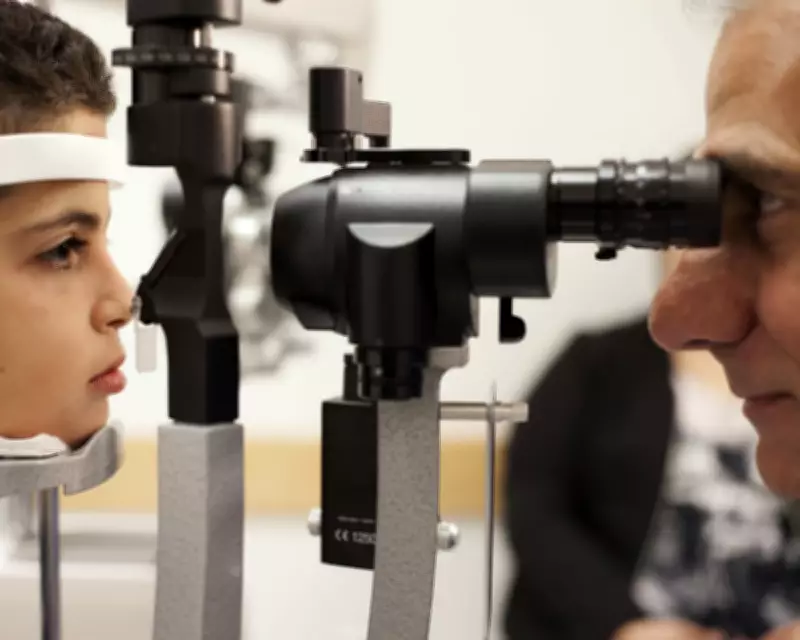
Dr. Albert Maguire, a renowned ophthalmologist, is among three distinguished scientists honored with the Breakthrough Prize in Life Sciences for their groundbreaking work on Luxturna, a gene therapy that has dramatically improved the lives of individuals born with Leber congenital amaurosis (LCA). This genetic disorder typically leads to complete blindness by early adulthood, but Luxturna offers a transformative solution.
A Collaborative Effort Spanning Decades
The $3 million prize, often dubbed "the Oscar of science," was awarded to molecular biologist Jean Bennett, Dr. Albert Maguire, and physician Katherine High. Their collaboration began over 25 years ago when Bennett and Maguire met at Harvard Medical School while dissecting a brain. Later, at the University of Pennsylvania, they embarked on a mission to tackle LCA, a disease caused by faults in the RPE65 gene.
Despite initial challenges, the team persevered, developing a therapy that delivers a functional version of the gene into retinal cells. Clinical trials yielded miraculous results, with one patient describing the profound moment of seeing their child's face for the first time, along with details like wooden furniture grain and waving tree branches.
Personal and Professional Milestones
During their research, Bennett and Maguire adopted two dogs, Venus and Mercury, whom they had treated for blindness as part of their studies. This personal connection underscored their dedication to the cause. Bennett, now retired, reflected on the journey, stating, "It was one of the most miraculous eureka moments you can imagine."
However, she expressed concern over the current political climate, warning that attacks on science by the U.S. administration could lead to a brain drain and long-term damage to research infrastructure. "Agendas have become politicized, government agencies that support basic and applied research have been undermined," she noted.
Additional Breakthrough Prize Winners
The ceremony in Los Angeles also recognized other significant achievements in science. Swee Lay Thein and Stuart Orkin received a life sciences prize for their work on gene therapies for sickle cell disease and beta thalassaemia, leading to the development of Casgevy, a therapy that edits patients' blood stem cells.
Orkin echoed Bennett's concerns, lamenting the dismantling of scientific institutions. "We were in a golden age of biomedical science. Now there are attacks on academic institutions," he said.
Other awards included prizes in mathematics for work on nonlinear evolution equations and in physics for research on atomic nuclei forces and muon measurements.
Impact and Future Prospects
Luxturna, approved in the U.S. in 2017, has set a new standard in genetic medicine, offering hope to those with inherited blindness. The therapy's success highlights the potential of gene editing to address complex health issues, though scientists emphasize the need for more accessible treatments in the future.
As the field advances, researchers continue to explore innovative approaches, such as in-body cell corrections and oral medications, to reduce the burden of genetic diseases worldwide.