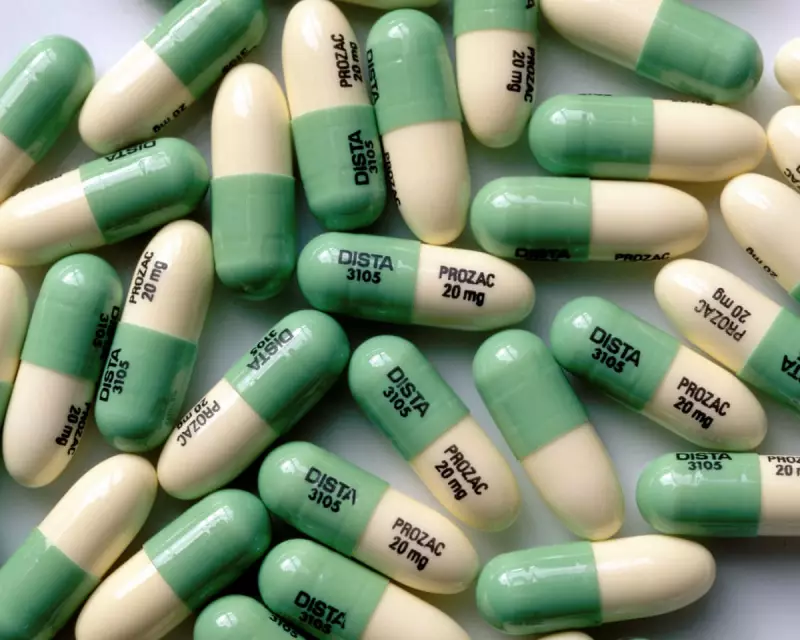
Clinical guidelines should stop recommending Prozac for children and adolescents with depression, experts have declared, following a major international review which found the drug offers no clinical benefit over a placebo.
Questioning established treatment protocols
Researchers from Austria and the UK conducted a comprehensive meta-analysis of 12 large clinical trials published between 1997 and 2024, examining the effects of fluoxetine, commonly sold under the brand name Prozac. Their findings, published in the Journal of Clinical Epidemiology, concluded that the improvement in children's depressive symptoms was so minimal it couldn't be considered clinically meaningful.
Globally, one in seven 10-19 year olds experience mental health conditions, according to World Health Organization statistics. In the UK, the situation is particularly concerning with approximately a quarter of older teenagers and up to a fifth of younger children struggling with anxiety, depression or other mental health issues.
The placebo effect and potential harms
Lead author Martin Plöderl, a clinical psychologist at Paracelsus Medical University in Salzburg, offered a striking analogy: "Consider the analogy of a weight-loss drug that is better than placebo at producing weight loss, but the difference is only 100 grams. This difference is unlikely to be noticeable to the patient or their doctors or produce any difference in their overall condition."
The study identified what researchers call a "novelty bias" in earlier trials, where initial positive results weren't replicated in later studies. More concerningly, the review highlighted that the potential risks of harmful side-effects likely outweigh any minimal benefit.
Weighing risks against negligible benefits
Children taking antidepressants commonly experience several adverse effects including:
- Weight gain
- Sleep disturbances
- Concentration problems
- Increased suicidal ideation
Mark Horowitz, an associate professor of psychiatry at Adelaide University and co-author of the study, stated unequivocally: "Fluoxetine is clearly clinically equivalent to placebo in its benefits, but is associated with greater side effects and risks. It is difficult to see how anyone can justify exposing young people to a drug with known harms when it has no advantage over placebo in its benefits."
The researchers also examined clinical guidelines in the US and Canada, finding they similarly ignored evidence of Prozac's clinical equivalence to placebo while continuing to recommend its use for young people with depression.
Professional responses and support alternatives
In response to the findings, a Nice spokesperson emphasised that psychological therapies remain first-line treatment for children and young people with depression, with antidepressants only considered for moderate to severe cases in combination with therapy and under regular specialist supervision.
However, Professor Allan Young, chair of the Royal College of Psychiatrists' Academic Faculty, urged caution in interpreting the study, noting that "clinical guidelines weigh many factors beyond average effect size, including safety, feasibility, and patient preferences."
For those needing support, Mind is available on 0300 123 3393 and Childline on 0800 1111. In mental health emergencies, the urgent message remains: understanding the underlying causes of depression in young people and addressing contributing factors may offer more meaningful help than medication alone.