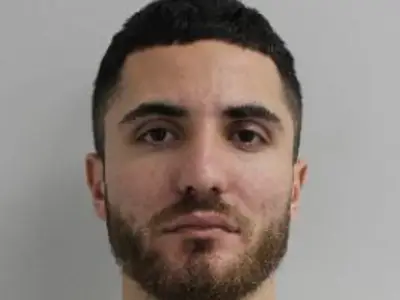
In an unassuming facility where science fiction meets reality, one man has dedicated his life to challenging humanity's oldest certainty: death. Arthur McEwan, a 42-year-old software engineer from Manchester, has become the public face of Britain's growing cryonics movement, investing his savings and soul into the controversial practice of preserving human bodies at ultra-low temperatures.
The Science of Suspended Animation
Cryonics operates on the radical premise that future medical advancements may one day revive people currently considered deceased. Bodies are preserved at temperatures around -196°C using liquid nitrogen, with the hope that nanotechnology and medical breakthroughs of tomorrow could repair the damage that kills us today.
McEwan explains his commitment with calm determination. "I don't see death as an inevitability, but as a medical condition waiting for a cure," he says during a rare interview at the UK Cryonics Institute. His journey began eight years ago after losing both parents to cancer within two years, an experience that transformed his perspective on mortality.
The Practical Realities of Cheating Death
The process begins immediately after legal death is declared. A specialised medical team stabilises the body, replacing blood with cryoprotectant solutions to prevent ice crystal formation that would damage cellular structures. The body then undergoes gradual cooling before reaching its final resting temperature in a cryogenic storage dewar.
This pursuit of potential immortality comes with significant financial commitment. McEwan pays £28,000 for whole-body preservation through a combination of life insurance and monthly savings. Additional costs include annual membership fees and emergency standby team arrangements to ensure rapid response when needed.
"People think it's expensive until they compare it to traditional funeral costs and consider what's at stake," McEwan notes. "For the price of a family car, you're potentially buying centuries of additional life."
Ethical Questions and Scientific Skepticism
The cryonics community faces significant scepticism from mainstream science. Many researchers question whether neural connections preserving memory and personality can survive the preservation process. The Royal Society of Medicine has described current cryonics as "speculative at best," while acknowledging the legitimate scientific questions it raises about the nature of death and consciousness.
McEwan acknowledges the uncertainties but argues the potential reward justifies the risk. "The worst-case scenario is the same outcome everyone else faces," he says. "The best case is waking up in a future where aging and disease are conquered."
Beyond technical challenges, cryonics raises profound ethical questions about resource allocation, population control, and whether indefinite life extension is desirable. Some philosophers argue that mortality gives life meaning, while others see eliminating involuntary death as humanity's ultimate moral imperative.
As medical technology advances at an accelerating pace, the line between science fiction and plausible future grows increasingly blurred. McEwan and the several hundred Britons who have made similar arrangements represent a growing minority willing to bet on science's long-term potential to conquer our oldest enemy.
Whether cryonics represents visionary foresight or expensive self-deception remains unknown. But for Arthur McEwan and his fellow cryonics advocates, the possibility of future revival makes the present investment unquestionably worthwhile.