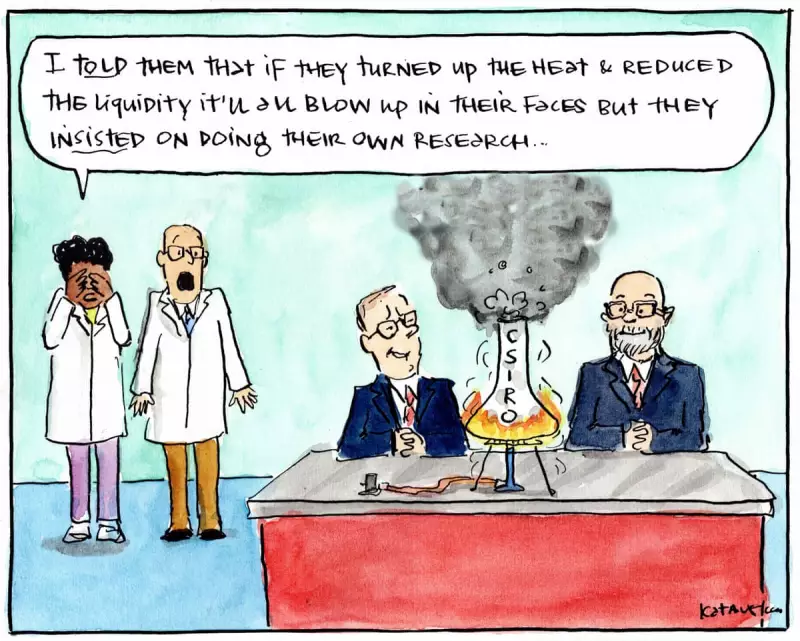
Significant funding reductions to Australia's premier scientific research organisation, the CSIRO, have sparked concerns about the future quality of climate and environmental science in the country. The Australian government's decision to implement substantial budget cuts raises serious questions about whether these measures will achieve their intended outcomes or instead compromise essential research capabilities.
The Scale of CSIRO Funding Reductions
The Commonwealth Scientific and Industrial Research Organisation, known globally for its groundbreaking environmental and climate research, faces deep financial cuts that could fundamentally reshape its operational capacity. These reductions come at a critical juncture when Australia, like the rest of the world, requires robust scientific data to address pressing environmental challenges.
While specific percentage figures for the current round of cuts weren't detailed in the source material, historical context shows that the CSIRO has faced repeated funding challenges over recent years. The organisation has previously weathered budget reductions that forced restructuring of research programmes and staff reductions in key scientific areas.
Potential Impact on Climate Research Quality
The timing of these financial constraints raises particular concern among scientific communities. Australia's unique position as a continent experiencing rapid climate change effects makes the CSIRO's research programmes especially valuable for both national policy and global scientific understanding.
Environmental scientists worry that reduced funding could compromise long-term monitoring projects essential for tracking climate patterns. The continuity of data collection spanning decades provides invaluable insights that cannot be easily replicated once interrupted. Research into marine ecosystems, atmospheric conditions, and biodiversity conservation all stand to be affected by financial constraints.
Questioning the Government's Strategic Approach
The central question remains whether these budget reductions will produce the efficient, focused outcomes the government anticipates, or whether they will instead diminish Australia's scientific standing and capacity to address environmental crises. History suggests that scientific research funding cuts often yield unintended consequences that outweigh short-term financial savings.
Previous restructuring efforts at CSIRO have sometimes resulted in the loss of specialised expertise that took years to develop. The departure of experienced researchers can create knowledge gaps that persist long after funding is eventually restored. This pattern raises doubts about whether the current approach will truly deliver better results or simply cheaper science.
The international scientific community closely watches Australia's treatment of its premier research organisation. CSIRO's reputation for excellence in climate science and environmental research has positioned Australia as a significant contributor to global understanding of pressing ecological challenges. Maintaining this standing requires consistent investment in both equipment and human capital.
As climate-related extreme weather events become more frequent and intense across Australia, the need for reliable scientific data to inform policy decisions and community preparedness has never been greater. The government's funding approach to CSIRO will ultimately reveal much about its priorities regarding evidence-based environmental policy and scientific innovation.