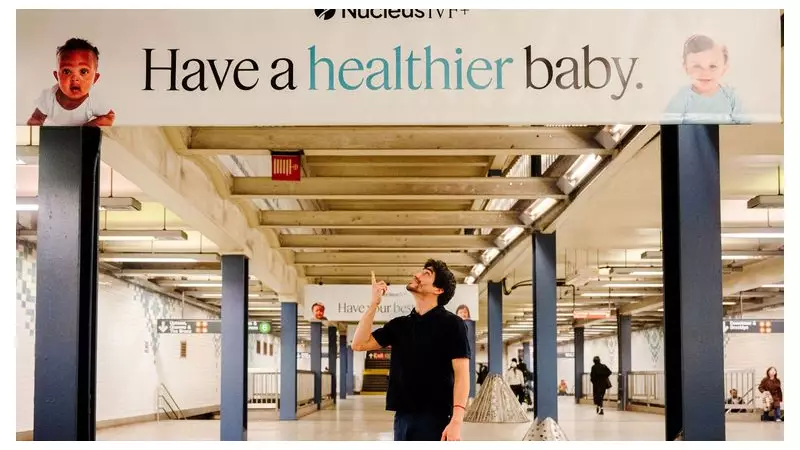
A genetics testing startup has ignited controversy by offering prospective parents the opportunity to genetically optimise their future children through embryo screening.
Nucleus Genomics, a New York-based company, is advertising a service that analyses DNA sequences of embryos created through IVF, allowing couples to review potential genetic traits and disease risks before implantation.
The $8,999 Genetic Optimisation Service
For $8,999 (approximately £6,800), the company provides full DNA sequencing for up to 20 embryos from couples undergoing IVF treatment. Their sophisticated application enables would-be parents to examine embryos for known disease genes, conditions including autism and ADHD, and physical characteristics such as eye colour, height, and even intelligence markers.
The service has been promoted through subway advertisements in New York, with slogans including Have a healthier baby and IVF done right. One banner even suggests parents could select for specific traits like height.
Kian Sadeghi, the 25-year-old founder of Nucleus Genomics, defends the service against accusations of eugenics. What is best is using this advanced science to help reduce disease risk, he stated. And if you're interested, predict something like the height of your baby.
Scientific and Ethical Concerns
Experts in human genetics have raised significant concerns about both the ethics and scientific validity of the company's claims. While screening IVF embryos for serious genetic disorders like Huntington's or Tay-Sachs disease is established medical practice, the extension to common diseases and non-medical traits enters scientifically uncertain territory.
In the UK, regulations strictly limit embryo screening to fatal or life-limiting conditions, but the United States maintains more permissive rules.
The fundamental scientific problem, according to genetic experts, lies in the complexity of predicting outcomes for conditions influenced by multiple genes. The risk of heart disease, high blood pressure, or schizophrenia involves tens, hundreds, or even thousands of genes working in combination.
For neurodevelopmental conditions like autism and ADHD, or traits such as intelligence and height, the genetic influences become even more complicated, with environmental factors playing significant roles that cannot be predicted from DNA alone.
American behavioural geneticist Eric Turkheimer has described Nucleus Genomics and similar embryo-screening companies as new eugenics companies, while one investor commented that the concept left him nauseous.
The Polygenic Risk Score Debate
Nucleus Genomics relies on polygenic risk scores statistical assessments of how large combinations of genes might influence particular traits in population studies. However, the American College of Medical Genetics and Genomics concluded last year that such screening currently offers no proven clinical benefit.
The organisation also highlighted the uncertainty around how genes in an embryo will actually be expressed as the child develops into adulthood.
When questioned about whether the service provides genuine choice or merely the appearance of it, Sadeghi emphasised their careful approach. We take exceptional care with that, he said. Between the design of the product, the genetic counselling and the recognition that these things are probabilistic in nature.
Despite claiming a 1700% increase in sales following their recent advertising campaign, Sadeghi could not confirm whether any couples had successfully used the service to choose a baby.
Silicon Valley's Pronatalist Movement
The emergence of such services coincides with a growing pronatalist movement within Silicon Valley, where tech leaders express concern about declining birth rates in developed nations while advocating for genetic optimisation of future generations.
Elon Musk, reportedly father to 14 children, and Peter Thiel, whose Founders Fund has supported Sadeghi's startup, are among prominent figures associated with these views.
As genetic databases expand and artificial intelligence improves at identifying patterns in DNA, the predictive capabilities of such services are likely to increase. Some scientists believe polygenic risk scores for conditions like breast and prostate cancer may soon approach clinical relevance.
Sadeghi positions his company at the forefront of this development. As we educate physicians, as we educate patients, as you educate policymakers, they're gonna start understanding and seeing the science for what it is, which is a modern way to do preventive medicine, he claims.
However, by offering optimisation for non-medical characteristics like height and intelligence, the company appears to be selling more than just preventative healthcare, raising profound ethical questions about the future of human reproduction and genetic selection.