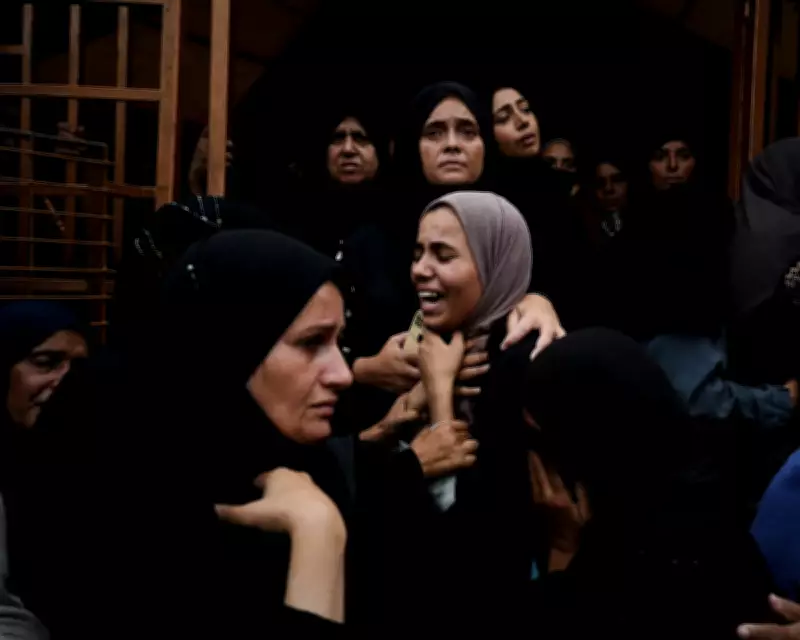
Gaza Conflict Death Toll Substantially Higher Than Official Figures, Lancet Research Reveals
A groundbreaking study published in The Lancet medical journal has uncovered that the death toll during the initial phase of the Gaza conflict was significantly higher than previously reported by local authorities. The research indicates that more than 75,000 individuals lost their lives in the first 16 months of the two-year war, representing a staggering increase of at least 25,000 fatalities compared to the official death toll announced at the time.
Demographic Accuracy of Gaza Health Ministry Reporting Confirmed
The comprehensive study also validated the accuracy of reporting by the Gaza health ministry regarding the demographic breakdown of casualties. Researchers found that between October 7, 2023, when Hamas launched a surprise attack into Israel triggering a devastating Israeli offensive, and January 5, 2025, a total of 42,200 women, children, and elderly individuals perished in Gaza. These vulnerable populations accounted for 56% of all violent deaths documented during this period.
The authors of the peer-reviewed study wrote in The Lancet Global Health: "The combined evidence suggests that, as of 5 January 2025, 3-4% of the population of the Gaza Strip had been killed violently and there have been a substantial number of non-violent deaths caused indirectly by the conflict." The research team included distinguished experts in economics, demography, epidemiology, and survey methodology.
Methodology and Survey Details
The study employed a rigorous methodology based on a representative survey of 2,000 families in Gaza, carefully selected to reflect the territory's population distribution. Experienced Palestinian pollsters, renowned for their work throughout Palestine and the broader region, conducted the sensitive interviews, asking families to provide detailed information about deaths among their members.
Michael Spagat, a professor of economics at Royal Holloway, University of London and one of the study's authors with over two decades of experience calculating conflict casualties, emphasized the importance of cultural sensitivity in the research process. "This is a very sensitive survey, and potentially very upsetting for respondents, so it was important to have Palestinians both asking and answering the questions," Spagat explained.
Indirect Deaths and Comparative Analysis
The research identified approximately 8,200 deaths in Gaza between October 2023 and January 2025 attributable to indirect effects of the conflict, including malnutrition and untreated diseases. Spagat challenged previous estimates suggesting four indirect deaths for every direct fatality, noting that conflict circumstances vary dramatically. "In Kosovo, almost all the deaths were violent. In somewhere like Darfur, you see something very different," he observed.
Spagat further contextualized the findings: "In Gaza, at least initially, there were resources in terms of well-trained doctors and a health system. Also, the territory is very small, so when aid does flow you can reach people." Despite these factors, he cautioned against minimizing the scale of tragedy: "I would push back on the notion that this is a small number of deaths. I think we're experiencing desensitization effects."
Historical Context and Ongoing Disputes
The study covers the most intense and lethal period of Israel's offensive, though it does not encompass the peak of the humanitarian crisis that followed. United Nations-backed experts declared famine in Gaza in August of the previous year, highlighting the catastrophic conditions that developed beyond the research period.
The proportion of combatants to non-combatants among Gaza casualties has been particularly contentious. While Israeli officials have claimed their attacks killed nearly equal numbers of each, the new research contradicts this assertion, instead confirming the high percentage of civilian deaths reported by Gaza health authorities.
Remarkably, the findings align closely with November research from the Max Planck Institute for Demographic Research, which estimated 78,318 deaths in Gaza between October 7, 2023, and December 31, 2024. However, the Max Planck study suggested a significantly higher number of indirect deaths, contributing to a dramatic reduction in life expectancy in Gaza by 44% in 2023 and 47% in 2024.
Challenges in Determining Final Figures
Spagat emphasized the considerable challenges in reaching definitive casualty figures, noting that even the most recent study contains significant margins of error. "It is not a given that there will be a multimillion-pound research project to reconstruct what actually happened," he stated. "It will be a long time before we get to a full accounting of all the people killed in Gaza, if we ever get there."
The research represents a significant development in the ongoing debate about conflict casualties, particularly following years of official Israeli attacks on Gaza health ministry data. Just last month, a senior Israeli security officer told Israeli journalists that figures compiled by Gaza health authorities were broadly accurate, marking a notable reversal in official position.
Gaza health authorities currently report that the direct toll from Israeli attacks has exceeded 71,660 people, including more than 570 killed since a ceasefire took effect in October 2025. The Lancet study suggests these official figures represent a substantial undercount, consistent with previous research indicating Gaza's health ministry estimates were approximately 40% lower than actual casualties during the war's first nine months.