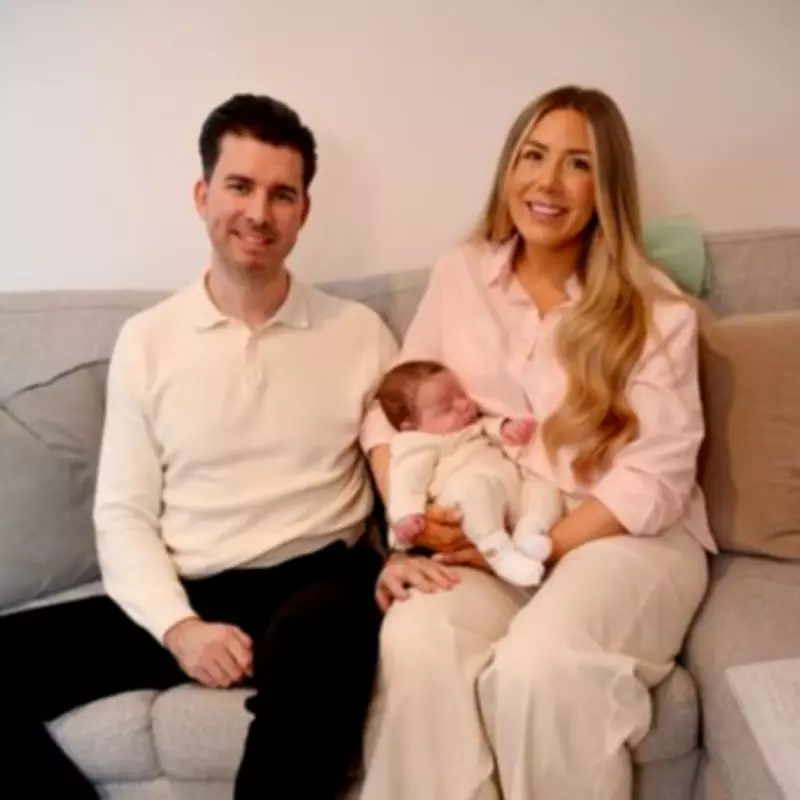
Medical Milestone: UK's First Baby Born Following Womb Transplant from Deceased Donor
In a groundbreaking medical achievement, a baby boy has become the first child in the United Kingdom to be born to a mother who received a womb transplant from a deceased donor. Hugo Powell was delivered weighing 6 pounds 13 ounces (3.1 kilograms) in December at Queen Charlotte's and Chelsea Hospital, which is part of the Imperial College Healthcare NHS Trust.
A Miracle Realized for London Couple
The parents, Grace Bell and Steven Powell, both in their thirties and residing in southern England, described the birth as nothing short of miraculous. Grace Bell, an IT programme manager who was diagnosed with Mayer-Rokitansky-Kuster-Hauser (MRKH) syndrome at age sixteen—a rare condition resulting in an underdeveloped or missing womb—expressed overwhelming joy. "It's simply a miracle. I never, ever thought that this would be possible. I'm the happiest I've ever been in my life," she told the Press Association.
Steven Powell, who works in finance, echoed her sentiments, stating, "From where we started – first meeting – to where we are today, with Hugo, is nothing short of a miracle after everything we've been through."
The Transplant Procedure and Birth Details
This transplant represents the first birth in the UK using a womb from a deceased donor, with only two previous cases reported across Europe. The seven-hour womb transplant was performed on Grace Bell in 2024 at the Oxford Transplant Centre, part of Oxford University Hospitals, by consultant surgeon Isabel Quiroga. Several months later, Bell underwent fertility treatment at The Lister Fertility Clinic in London.
Hugo was delivered via Caesarean section, and Bell recalled the emotional moment: "I remember trying to peek over the drapes, and Hugo finally got put in my arms, and this being the moment that everyone has been working so hard to achieve." She added, "It just felt quite unreal at the time because this has been a long journey for us both."
Honoring the Donor and Medical Team
Grace Bell emphasized her daily gratitude toward the womb donor and the donor's family, saying, "There are no words to say thank you enough to my donor and her family. Their kindness and selflessness to a complete stranger is the reason I have been able to fulfil my lifelong dream of being a mum." She hopes the donor's family finds peace in knowing their daughter's gift created new life.
In a touching tribute, the couple gave Hugo the middle name Richard after Professor Richard Smith, clinical lead of the charity Womb Transplant UK and consultant gynaecological surgeon at Imperial College Healthcare NHS Trust. Hugo's full name is Hugo Richard Norman Powell, with Norman honoring Bell's grandfather.
Professor Smith, present at the birth, described the experience as "fantastic, just amazing," and was moved to tears upon learning Hugo would bear his name. "I've delivered over 1,000 babies in my life. Never has a baby been named after me. That did make me cry, straight up," he said.
Broader Impact and Future Considerations
The donor's generosity extended beyond the womb transplant, as five other organs were transplanted into four people, saving multiple lives. The donor's parents expressed pride in their daughter's legacy, urging others to consider organ donation to provide hope and healing to those in need.
Womb Transplant UK has performed five womb transplants in the UK to date—two involving living donors and three using deceased donors. Hugo's birth follows the UK's first womb transplant in 2023, which involved a living donation between sisters. Currently, about 25 to 30 babies have been born worldwide from deceased womb donations, with over two-thirds of womb transplants generally involving living donors.
Grace Bell and Steven Powell may consider having a second baby, after which surgeons will remove the transplanted womb to avoid lifelong use of immunosuppressant drugs, which carry health risks. The charity reports that all transplant recipients have functioning wombs, with some undergoing private IVF treatments.
Consent and Awareness for Womb Donation
Transplants from deceased donors require specific consent from families, as the womb is not covered by standard organ donation registries or deemed consent laws. Becky Clarke of NHS Blood and Transplant noted that specialist nurses approach families about additional consent for womb donation, with most families agreeing enthusiastically.
This historic birth not only highlights medical advancement but also underscores the profound impact of organ donation, offering new possibilities for individuals facing fertility challenges.