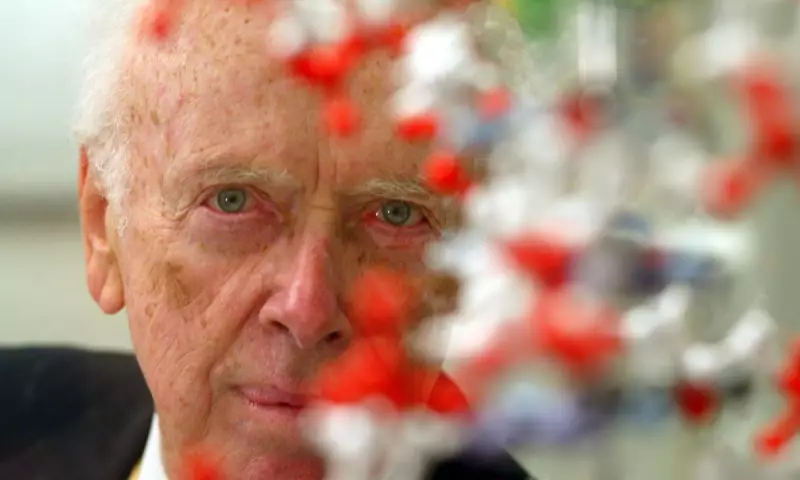
The scientific world mourns the loss of James Watson, the Nobel prize-winning biologist who, alongside Francis Crick, unlocked the secret of life by deciphering the structure of DNA. He was 97.
The Discovery That Changed the World
On 28 February 1953, in Cambridge University's Cavendish Laboratory, Watson and Crick made a breakthrough that would forever alter biology. They demonstrated that DNA (deoxyribonucleic acid) possessed a double helix structure—a gently twisted ladder that could unzip to replicate itself. This elegantly simple model explained the mechanism of genetic inheritance for the first time, showing how the genetic code is written in a chemical alphabet of four letters: A, C, G, and T.
Their seminal paper in the journal Nature contained one of science's most famous understatements, noting that the structure "immediately suggests a possible copying mechanism for the genetic material." For this monumental achievement, Watson, Crick, and their colleague Maurice Wilkins were awarded the Nobel Prize in Physiology or Medicine in 1962.
A Brilliant and Controversial Career
Watson's journey to scientific immortality began early. A child prodigy from Chicago, he entered the University of Chicago at just 15. His conviction that genes were made of DNA, not protein as was then widely believed, led him to Cambridge. There, he formed an unlikely partnership with the older, more intellectually confident Francis Crick.
Their collaboration was synergistic: Watson excelled at model-building, while Crick mastered the complex mathematics of X-ray diffraction. Their work, however, was not without controversy. Watson's 1968 memoir, The Double Helix, revealed that they had used Rosalind Franklin's crucial X-ray diffraction data without her direct involvement, a revelation that sparked enduring criticism.
Beyond the double helix, Watson had a profound impact as director of the Cold Spring Harbor Laboratory in New York from 1968, transforming it into a world-leading research centre. He also played a pivotal role in launching the Human Genome Project in 1990, championing the ambitious goal to sequence the entire human genetic code and insisting the data be made freely available.
A Complex and Troubled Legacy
James Watson's career was as marked by controversy as it was by genius. Known for his blunt and often arrogant demeanour, he once stated that "a goodly number of scientists are not only narrow-minded and dull but also just stupid." This temperament ultimately led to his professional downfall.
In 2007, he told the Sunday Times that he was "inherently gloomy about the prospect for Africa" due to beliefs about intelligence and genetics. The comments, widely condemned as racist, led to his dismissal from Cold Spring Harbor Laboratory. Despite an apology, he repeated these views in a 2019 documentary, prompting the laboratory to revoke his honorary titles.
This sad end stood in stark contrast to his earlier work, which had helped dismantle the pseudoscientific foundations of eugenics. In 2014, he became the first living Nobel laureate to sell his medal, citing a loss of income after becoming an "unperson."
James Watson is survived by his wife, Elizabeth, their two sons, Rufus and Duncan, and a grandson. His discovery of the double helix remains one of the most profound scientific achievements of the 20th century, even as his personal legacy is forever complicated by his own contentious words.