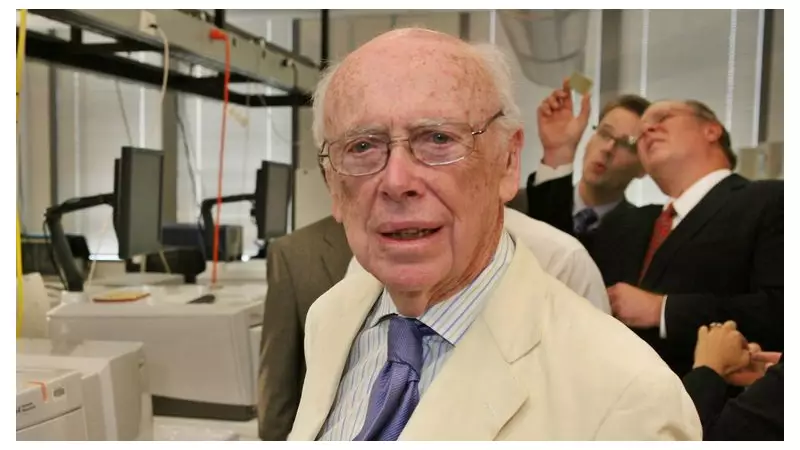
The scientific world is mourning the death of James D. Watson, the brilliant yet controversial biologist who helped unlock one of life's greatest mysteries - the structure of DNA. He passed away at 97 years old after a brief illness, as confirmed by his son.
A Discovery That Changed the World
In 1953, at the remarkably young age of just 24, Watson and his colleagues Francis Crick and Maurice Wilkins identified the now-famous twisted-ladder structure of DNA. This breakthrough finding, known as the double helix, would fundamentally alter our understanding of life itself.
The trio's work earned them the 1962 Nobel Prize and launched a scientific revolution that transformed multiple fields. Their confirmation that DNA consists of two strands coiling around each other paved the way for modern genetic medicine, criminal forensics, genealogy research, and raised new ethical questions about genetic manipulation.
A Legacy Marred by Controversy
Despite his early scientific achievements, Watson faced significant backlash and condemnation in his later years following repeated offensive and racist comments. Most notably, he claimed Black people were less intelligent than white people, remarks that drew widespread criticism from the scientific community and beyond.
The consequences were severe. In 2019, Watson's honorary titles were stripped as institutions distanced themselves from his views. Dr Francis Collins, director of the National Institutes of Health, expressed the disappointment felt by many, stating: 'His outbursts, particularly when they reflected on race, were both profoundly misguided and deeply hurtful. I only wish that Jim's views on society and humanity could have matched his brilliant scientific insights.'
The Enduring Impact of a Complex Figure
Watson's death marks the passing of one of science's most complex figures - a man whose groundbreaking discovery at 24 revolutionized biology and medicine, yet whose later years were overshadowed by prejudice.
His work continues to underpin countless medical advances, from disease treatment to criminal identification through DNA samples. However, his legacy serves as a sobering reminder that scientific genius doesn't preclude harmful beliefs, leaving the world to remember both the extraordinary discovery and the deeply flawed discoverer.