The Real Reason Behind Laziness: It's in Your Brain
We've all encountered people with dramatically different motivation levels. While some consistently go above and beyond, others struggle to muster any enthusiasm, often being labelled as lazy. Conventional wisdom attributes this to personality, circumstances, or upbringing. However, groundbreaking neuroscience research is challenging these assumptions by revealing the specific brain mechanisms that govern our drive to act.
When Motivation Fails: The Case of David
The profound impact of brain function on motivation becomes starkly clear in clinical cases. Professor Masud Husain from the University of Oxford describes a patient named David, once a high-achieving professional who underwent a dramatic transformation. This previously productive and socially active individual suddenly lost all interest in his career and relationships, summarising his state with the phrase "just couldn't be arsed."
Despite losing his job and facing financial hardship, David displayed complete indifference. Even when friends offered him accommodation, he remained passive, waiting for others to cook for him. Antidepressants proved ineffective because, as it turned out, he wasn't depressed. Medical investigation revealed the true cause: two tiny strokes affecting both sides of his basal ganglia, crucial brain nuclei for initiating motivated behaviour.
The Brain's Motivation Engine: How the Basal Ganglia Works
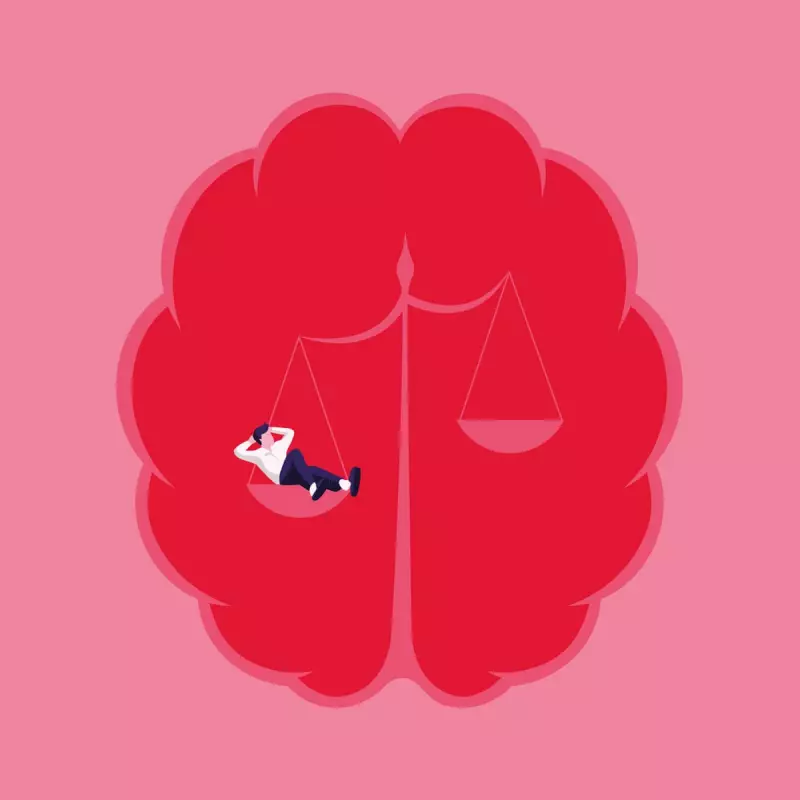
Research involving both animals and humans demonstrates that the basal ganglia function as a critical bridge between our desires and the actions needed to fulfil them. When this system malfunctions, individuals like David fail to initiate activities spontaneously, though they can perform them if prompted. The core issue isn't physical capability but rather the brain's calculation of effort versus reward.
Studies show that people experiencing apathy often don't find action sufficiently rewarding. The perceived cost of effort outweighs the potential benefit, creating a neurological barrier to motivation. Fortunately, treatment targeting the brain's dopamine system—a key chemical messenger driving our desire to seek rewarding outcomes—successfully restored David's motivation. After receiving medication that stimulates dopamine receptors, he regained his drive, found new employment, achieved independence, and even formed a relationship.
What Brain Scans Reveal About Everyday Apathy
The lessons from extreme cases like David's extend to understanding everyday motivation variations. At Oxford University, researchers scanned the brains of students with contrasting motivation levels, from highly driven to severely apathetic. The results revealed significant neurological differences, particularly in how hard motivation-related brain regions had to work during decision-making.
While most people will exert effort for substantial rewards, apathetic individuals show particular reluctance when rewards seem small. In experiments where participants decided whether to squeeze a hand-grip for varying monetary rewards, motivated people made quick decisions. Apathetic individuals, however, hesitated significantly longer over borderline cases, their brains working harder to evaluate whether the effort was worthwhile. This additional mental exertion itself becomes aversive, creating a bias toward simply saying "no" to action.
Practical Strategies to Overcome Apathy
Understanding that apathy has biological roots suggests that chiding or moralising is ineffective. Instead, researchers recommend strategies that work with the brain's natural mechanisms:
Create structured plans in advance to reduce the constant burden of evaluating whether each activity is worth the effort. By making decisions ahead of time, you avoid being derailed by moment-to-moment cost-benefit analyses.
Incorporate regular physical activity such as aerobic exercise three times weekly, dance lessons, or vigorous walking, which may positively affect the brain's dopamine system.
Use external prompts like smartphone alarms or visual cues (such as placing running shoes by the door) to trigger actions without requiring conscious decision-making.
The ultimate goal is to transform the evaluation of costs and benefits into an automatic habit that doesn't feel like hard work. By understanding the neuroscience behind motivation, even the most apathetic among us can learn to shift from automatic refusal to considering saying yes to life's opportunities.